
The entrepreneurial mindset through NLP is built by leveraging neuro-behavioral techniques to reframe setbacks, anchor executive confidence on demand, and master cognitive adaptability. By using Neuro-Linguistic Programming (NLP), founders can reprogram limiting subconscious beliefs in minutes instead of months, unlocking the mental agility required to lead teams and scale operations in volatile markets.
In the world of entrepreneurship, success doesn’t just come from skill or strategy it comes from mindset. The most successful entrepreneurs don’t just overcome obstacles; they see challenges as fuel, pivoting and adapting with resilience. But how do they cultivate such a powerful mindset?
This is where Neuro-Linguistic Programming (NLP) steps in. Imagine having a toolkit that sharpens your thinking, transforms setbacks into stepping stones, and boosts your creativity. NLP offers precisely this, equipping entrepreneurs with the mental agility to thrive in any business climate. By unlocking resilience, adaptability, and innovative thinking, NLP gives entrepreneurs an edge turning mental flexibility into a cornerstone of lasting success.
Ready to explore Understanding The Entrepreneurial Mindset Through NLP and discover how it can supercharge your entrepreneurial journey? Let’s dive in!
Key Takeaway:
- An entrepreneurial mindset built through NLP focuses on rewiring internal beliefs, language patterns, and mental strategies to align with success, resilience, and opportunity-driven thinking rather than fear or limitation. [1]
- Mechanism: NLP works by reshaping how you interpret experiences—using techniques like reframing, anchoring, and modeling—to shift subconscious patterns, enabling better decision-making, emotional control, and consistent high-performance behavior. [1]
- Key methods: Entrepreneurs can apply NLP tools such as outcome visualization, belief reprogramming, and language precision to eliminate self-sabotage, strengthen clarity, and replicate the success patterns of high achievers. [1]
- What to do: Start by identifying limiting beliefs, consciously reframe setbacks as feedback, and practice intentional language and visualization daily to reinforce a growth-oriented, solution-focused mindset. [2]
- When to be cautious: NLP is powerful but not a quick fix—without consistent practice and real-world action, mindset shifts won’t translate into results, and over-reliance on mental techniques without execution can stall progress. [2]
Bottom Line: NLP helps entrepreneurs reprogram how they think, decide, and act—turning mindset into a strategic advantage. Apply it consistently with action to transform insights into measurable business results.
- Source: Unleash Your Power – Entrepreneurial Mindset Through NLP
- Source: Unleash Your Power – NLP & Personal Development Insights
What is the Entrepreneurial Mindset (and Why Strategy Isn’t Enough)?
The traditional entrepreneurial mindset refers to a cognitive framework that empowers business owners to navigate high-stakes ambiguity, accept calculated risks, and bounce back from failure. However, a major bottleneck exists: most business coaching focus entirely on external strategy while ignoring internal cognitive programming.
According to a study on entrepreneur mental health published by the Harvard Business Review, over [72%] of founders report experiencing significant psychological distress, imposter syndrome, or severe decision fatigue.
Neuro-Linguistic Programming (NLP) changes this dynamic. NLP serves as the “operating system” for your mind. By examining the relationship between neurological patterns (neuro), language structures (linguistic), and behavioral patterns learned through experience (programming), NLP gives founders direct access to their subconscious patterns. Instead of letting old, limiting beliefs quietly run your business, NLP lets you actively reprogram them for resilience and scale.
How Do You Reprogram Your Mind for Business Success Using NLP?
Developing the mental resilience to scale a business to $50k/month or higher in Canada requires specific neuro-behavioral adjustments. As executive mindset specialist James Elliot notes, “Your business will only grow to the extent that you do. Eliminating limiting beliefs in minutes, not months, is what separates those who scale from those who stay stuck.”
Here is how key NLP techniques reshape the entrepreneurial brain:
1. Reframing Setbacks as Fuel
Entrepreneurs face constant friction—from supply chain disruptions to loss of key personnel. The NLP technique of reframing shifts the cognitive focus from “why did this happen to me?” (victim frame) to “how can we use this to pivot forward?” (outcome frame). For instance, when a marketing campaign underperforms, reframing turns a financial loss into a high-value data-gathering exercise that exposes previously hidden customer preferences.
2. Anchoring Executive Confidence on Demand
High-pressure environments—such as delivering a pitch to institutional investors in Toronto or negotiating a corporate contract—require total emotional control. Anchoring is an NLP process that pairs a desired internal state (such as calm confidence) with an external trigger (like a physical touch or gesture). This allows founders to access a state of peak confidence and clarity in seconds, bypassing situational anxiety.
3. Future Pacing for Resilient Planning
Future pacing is a mental rehearsal technique where you walk through upcoming high-stress scenarios while mentally executing your ideal responses. By pre-programming the brain to handle obstacles like sudden market shifts or critical client complaints, you reduce stress responses and ensure that when the actual event occurs, your brain executes a calm, strategic plan instead of a fight-or-flight reaction.
4. The Swish Pattern to Eliminate Imposter Syndrome
Self-doubt and imposter syndrome often creep in during pivotal scaling decisions. The NLP Swish Pattern is a visualization tool that rapidly replaces a limiting self-image (such as feeling unqualified during high-ticket sales conversations) with a powerful, resourceful self-image. Research on neuroplasticity indicates that repeating this pattern strengthens positive neural pathways, converting chronic hesitation into proactive execution.
5. Outcome Frame for Laser-Focused Growth
Vague goals like “growing the business” dilute focus. The NLP Outcome Frame forces founders to define their objectives with sensory specificity: What will you see, hear, and feel once the goal is achieved? When you align your goals using this framework, you define precise milestones (e.g., “increase business client retention by 22% in Q3”), which aligns with the SMART goal methodology and makes delegation to your team seamless.
6. Perceptual Positions for EQ-Driven Leadership
In high-stakes team conflicts or client negotiations, founders must look beyond their own viewpoint. Perceptual positions instruct the mind to analyze a scenario from three angles:
- Your own perspective.
- The counterparty’s perspective (e.g., the employee or client).
- A neutral, objective observer’s perspective. Applying this technique during conflicts increases emotional intelligence (EQ) and leads to balanced, sustainable resolutions that protect valuable business relationships.
Mindset vs. NLP-Driven Execution: The Performance Matrix
Understanding how NLP differs from traditional mindset theories is essential to choosing the right growth strategies. The table below outlines these key differences:
| Mindset Element | Fixed Mindset | Growth Mindset (Traditional) | NLP-Optimized Entrepreneurial Mindset |
|---|---|---|---|
| Response to Failure | “I am not cut out for this business.” | “I will try harder next time.” | Reframes failure instantly into actionable data and pivots. |
| Confidence Level | Dependent on external validation. | Maintained through positive thinking. | Anchored internally and accessible on demand in seconds. |
| Speed of Shift | Remains stuck in old habits. | Shifts slowly over months of discipline. | Reprograms subconscious blocks in minutes, not months. |
| Goal Alignment | Set based on fear/comfort zone. | Defined by intellectual targets. | Deeply aligned with values and visualized with sensory detail. |
The Benefits of NLP in Entrepreneurship
Integrating NLP techniques can significantly enhance an entrepreneur’s mindset and overall success. Here are the key benefits:
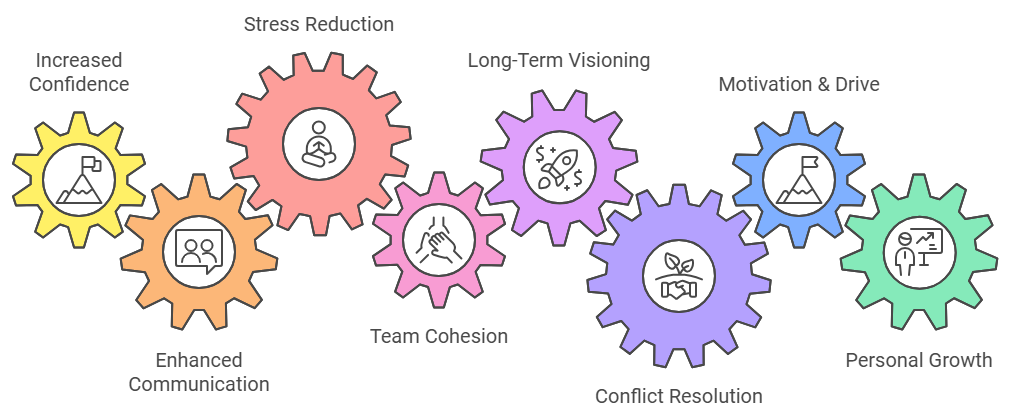
- Increased Confidence: NLP helps entrepreneurs build self-assurance, enabling them to tackle challenges head-on and make bold decisions.
- Enhanced Communication Skills: By understanding effective messaging, entrepreneurs can convey their ideas more clearly, leading to better interactions with teams and clients.
- Stress Reduction: Techniques like visualization and breathing exercises contribute to a calmer approach in high-pressure situations, improving performance.
- Greater Team Cohesion: NLP fosters collaboration through improved communication, creating stronger teamwork and alignment on shared goals.
- Adaptive Learning: NLP encourages a mindset of continuous learning, enabling entrepreneurs to quickly adapt to changing market conditions and consumer needs.
By focusing on these core benefits, entrepreneurs can leverage NLP to cultivate resilience, drive innovation, and enhance their overall performance in the dynamic world of business.
Key Business Benefits of Neuro-Linguistic Programming
Integrating NLP into your leadership routine directly impacts your bottom line. Data from cognitive science and organizational psychology suggests several key business benefits:
- Increased High-Ticket Sales Velocity: Mastering the Meta-Model and sensory language patterns allows you to read client cues and adjust your sales copy in real time. (For details, see the NLP high-ticket sales script breakdown).
- Reduced Stress & Decision Fatigue: By using anchoring and physiological state-management techniques, you can lower cortisol levels, keeping you logical and level-headed during emergencies.
- Accelerated Team Cohesion: Leaders trained in NLP can detect mismatching communication styles in their teams and build rapport instantly, eliminating friction and boosting productivity.
- High Information Gain: Applying NLP Meta-Models to market research uncovers deep customer pain points that competitors miss, giving your brand a distinct market advantage.
Integrating NLP into Business Practices for Resilience
Incorporating Neuro-Linguistic Programming (NLP) into your business practices can unlock new levels of personal growth and entrepreneurial success. Here are some actionable suggestions to help you get started:
Start with Self-Assessment
Evaluate your current mindset, beliefs, and communication styles. Identify areas where you feel limited or challenged. This awareness will be the first step in using NLP to facilitate growth.
Practice Anchoring
Develop a personal “calm anchor” by associating a specific physical gesture (like touching your thumb and index finger together) with feelings of confidence or relaxation. Use this anchor before important meetings or presentations to evoke a positive mental state.
Utilize Reframing Techniques
When faced with a setback, consciously reframe it by asking yourself, “What can I learn from this?” or “How can this challenge lead to new opportunities?” Encourage your team to adopt this approach to foster a resilient culture.
Set Well-Formed Outcomes
Define your goals using the well-formed outcomes technique: make them specific, measurable, achievable, relevant, and time-bound (SMART). This clarity helps ensure that your efforts align with your business vision.
Incorporate Visualization Practices
Spend a few minutes each day visualizing your desired outcomes. Picture yourself achieving your goals and experiencing the associated emotions. This mental rehearsal can enhance motivation and clarity in your actions.
Encourage Open Dialogue
Create an environment where team members feel safe to express their thoughts and ideas. Use active listening techniques to demonstrate empathy and encourage others to share their perspectives.
Implement Team Workshops
Conduct workshops focused on NLP techniques like reframing and goal-setting. This can enhance collective resilience and improve communication within your team, creating a more cohesive working environment.
Regularly Reflect and Adjust
Set aside time for self-reflection and encourage your team to do the same. Assess what’s working and what isn’t, and be willing to adapt your strategies based on these insights.
Foster a Culture of Feedback
Encourage constructive feedback among team members. Train them to use NLP techniques to deliver and receive feedback positively, focusing on growth and development rather than criticism.
Seek NLP Training
Consider enrolling in an NLP course or hiring a coach to help you and your team learn these valuable techniques. Structured training can provide deeper insights and practical applications tailored to your business needs.
Actionable Steps to Integrate NLP into Your Business Practice
If you are ready to use NLP to scale your business, use this daily integration protocol:
- Run a Subconscious Self-Assessment: Audit your business day. Identify where you hesitate (e.g., dialing sales prospects, hiring, delegating). These hesitation points are where your subconscious limiting beliefs are currently running the show.
- Set Up a Confidence Anchor: During a moment of deep success or relaxation, touch your thumb and index finger together while focusing on that positive state. Repeat this daily. Trigger this anchor right before entering your next high-stakes business meeting.
- Audit Your Team’s Language Patterns: Listen to how your team describes problems. When they say “we can’t do this because…”, ask them: “What would happen if we did?” or “What resources are we missing to make this possible?” to shift them into a solution-focused state.
- Enroll in Accredited NLP Training: Reading about NLP provides theoretical knowledge, but real change occurs through practice. If you want to master these frameworks, consider enrolling in an Accredited NLP Certification Program in Canada or hire a dedicated Business Mindset Coach to identify and clear your subconscious blind spots.
Frequently Asked Questions
Can NLP help entrepreneurs overcome imposter syndrome?
Yes. Imposter syndrome is caused by a conflict between your conscious goals and your subconscious self-image. NLP techniques like the Swish Pattern and Timeline Therapy quickly align your subconscious beliefs with your current level of business success, resolving this conflict and building genuine internal confidence.
How does NLP improve executive decision-making under stress?
Under stress, the amygdala triggers a fight-or-flight response, reducing activity in the prefrontal cortex where logical decisions are made. NLP state-management tools (like anchoring and breathing techniques) quickly calm the nervous system, allowing executives to make logical, analytical decisions instead of reacting emotionally.
What is the difference between a traditional business coach and an NLP business coach?
Traditional business coaches focus on external business metrics, systems, and strategy. An NLP business coach looks at both your business strategy and your subconscious programming. They identify and clear the internal mental blocks and habits that prevent you from successfully executing your business plans.
Are You Ready to Scale Your Leadership and Business?
Don’t let hidden, subconscious limitations hold your business back. If you are ready to eliminate imposter syndrome, scale your team, and build a resilient entrepreneurial mindset, Book Your Free Strategy Session with James Elliot today.
Conclusion
In the unpredictable landscape of entrepreneurship, resilience and adaptability aren’t just advantages they’re essentials. NLP offers practical, impactful tools that shape the entrepreneurial mindset, turning uncertainty into opportunity and setbacks into springboards for growth. By developing mental flexibility, reframing obstacles, and anchoring confidence, NLP empowers entrepreneurs to stay focused, make clear decisions, and approach challenges with renewed energy.
Embracing NLP is more than a strategy; it’s an investment in a mindset that not only withstands the pressures of business but thrives in them. For entrepreneurs looking to lead with innovation, navigate change with confidence, and build a future-ready mindset, NLP is a transformative ally, strengthening every aspect of the journey toward success.