
Canadian consultants secure predictable monthly retainers by selling a defined, ongoing outcome instead of hours, and by putting the terms in writing. Start with a client who has already seen results from a project. Choose a model: pay for work, pay for access, or a hybrid. Then agree scope, monthly fee, term, notice, response times and exclusions.
In Canada, check whether your revenue passes the GST/HST small-supplier threshold of $30,000 over four consecutive quarters, and make sure a long single-client retainer doesn’t start to look like employment, because contract wording alone doesn’t settle that. Fee ranges and success rates you’ll find online are mostly informal and often come from people selling training, so test your own numbers with a three-month trial. This isn’t tax or legal advice. Confirm the details with an accountant or lawyer in your province.
Key Takeaway:
- Canadian consultants secure predictable monthly retainers by selling ongoing outcomes or access to expertise rather than hours. The best time to propose a retainer is after a successful project, when the client has already experienced measurable results and understands the value of continued support. [1]
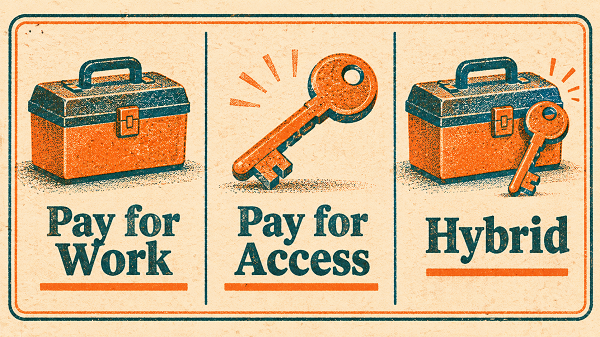
- Three retainer models work for consultants: Pay for Work (fixed monthly deliverables), Pay for Access (reserved expertise and availability), and Hybrid (a base access fee plus separate deliverable charges). Beginners should start with a clearly defined pay-for-work model before introducing more complex arrangements. [1]
- What to include: Put the scope, monthly fee, payment schedule, contract term, renewal conditions, cancellation notice, response times, workload caps, and exclusions in writing. A three-month trial gives both parties time to evaluate the arrangement before committing to a longer term. Send the proposal within 48 hours of an agreed conversation. [1]
- Canadian tax considerations: Most businesses must register for GST/HST after exceeding the $30,000 small-supplier threshold over four consecutive calendar quarters. Exceeding the threshold within a single quarter can trigger registration and tax collection immediately. Confirm your specific obligations with an accountant. [2]
- When to be cautious: A long-term retainer with only one client can raise employee or dependent-contractor classification questions. The CRA considers factors such as control, financial risk, ownership of tools, subcontracting, and opportunity for profit. Contract wording alone does not establish independent contractor status. [1]
Bottom Line: Predictable consulting income comes from proving results, pricing ongoing value, and establishing clear written agreements. Start with a successful client, propose a three-month retainer trial, define exactly what is included, and review the arrangement before renewal. Protect your business by monitoring GST/HST obligations and maintaining genuine contractor independence.
- Source: Unleash Your Power – How Canadian Consultants Secure Predictable Monthly Retainers
- Source: Canada Revenue Agency – When to Register for and Start Charging the GST/HST
The Quiet Month After a Great Project
You finish a strong project. The client thanks you, you invoice, and then your calendar goes quiet. You’re good at the work. What’s missing is a way to keep it going. If you’re still building the practice, our guide on how to start a management consulting business covers the groundwork.
Many consultants hold back from asking for ongoing money because it feels pushy, or because they’re unsure what a retainer includes. Both are fixable. Courageous Action, one of James R. Elliot’s 5 Pillars, begins with a clear plan. James is an NLP Board Designated Trainer with more than 20 years of experience, and the pattern he sees often is clarity first, confidence second.
So here’s the path, told through one consultant. Priya is a hypothetical Ontario operations consultant. She isn’t a real client, and her story is invented to show the sequence in three conversations.
The Wrap-Up: Prove It, Then Ask What’s Next
Priya is finishing a four-month process project for a mid-sized logistics firm. Before she mentions a retainer, she makes sure the client can name the result: fewer late shipments, a clearer weekly report, whatever the win was. She writes it down in the client’s words. A retainer offered before the client has seen results is one of the pitfalls Consulting Success lists, and it’s easy to see why.
Then she asks two questions. What does the next quarter look like if this keeps going well? What would slip if I stepped away? It’s a light version of future pacing, an NLP technique James teaches. The research on specific NLP techniques is mixed, so treat it as a way to listen, not a way to push. If you want more on the conversational side, see mastering sales with NLP and NLP for enhanced negotiation.
The client names two things that would slip. Priya doesn’t pitch. She says she’ll send a short proposal.
What if the client says not now? Priya doesn’t push. She asks what would need to be true for the timing to work and puts a check-in on her calendar for 30 days out. A soft no often becomes a yes once the project’s results have settled in.
A retainer is easier to accept when the client says the need out loud first.
The Offer: Choose a Model and Name the Fee
Priya has three shapes to choose from. The verdict: if you’re new to retainers, start with pay for work, because it’s the easiest to explain and to scope.
| Model | How it works | Best for | Watch out |
| Pay for work | A defined set of monthly deliverables for a fixed fee. | Newer retainers and clear, repeatable work. | It still ties income to effort, so cap the volume. |
| Pay for access | The client pays to reserve your expertise and quick responses, used or not. | Clients who already trust you. | Quiet months can make clients question the value. |
| Hybrid | A base access fee plus separate fees for deliverables or milestones. | Consultants who’ve run one model before. | More moving parts to explain and invoice. |
Those three types come from Consulting Success, which sells consulting coaching, so its advice leans toward retainers. Its own suggestion is to master one model before blending them. That’s sensible. A retainer you can explain in one sentence beats a clever one nobody follows.

Priya prices on the value of the result, not her hours. The same publisher suggests a monthly fee near 20% of the value you create and shows ranges of roughly $1,500 to $10,000 or more a month. Those are one publisher’s rules of thumb, with no stated currency, so Priya treats them as a starting point and checks them against her own market. She proposes a three-month trial at a modest rate. For help holding your number calmly, see these negotiation tips using NLP.
She also explains why the trial exists: it lets both sides check that the rhythm works before anyone commits for longer. A client who hears that the trial protects them tends to relax. A client who hears a long lock-in as the only option tends to tighten.
Name the fee plainly. Don’t defend it with hourly math.
The Paper: What the One-Page Agreement Says
Within two days, Priya sends a one-page term sheet. It isn’t a full contract, and she has a lawyer review the final agreement. In plain language, it covers six things.
Scope. Up to a set number of calls a month, one written review and email questions between calls. Implementation and new projects are quoted separately, which keeps the retainer from turning into unlimited availability.
Fee and payment. A monthly amount in Canadian dollars plus any applicable GST/HST, invoiced at the start of the month. A late-payment term and a yearly fee review keep cash flow steady.
Term and renewal. Three months to start, then month-to-month or a six-month term. Renewal talks begin 60 to 90 days before the term ends, which is the timing Consulting Success suggests.
Notice and exit. Thirty days’ written notice either way. That’s my suggested starting point, not a legal standard, so have a lawyer check it for your province.
Response times and caps. For example, email within four to six business hours and a call within a day. Those timings are examples from one source, so promise only what you can keep. Add a monthly hour cap and say that unused time doesn’t roll over, since the source warns that rollover hours can strain the relationship.
Independence. A line saying she runs her own business, uses her own tools and methods and may serve other clients. The next section explains why this matters.
If you’ve drafted your own and want help presenting it with confidence, book a 30-minute connection call and bring the draft.
GST/HST and the Contractor Question

GST/HST. The CRA says most businesses are small suppliers until they pass $30,000 in taxable revenue over four consecutive calendar quarters. Go over $30,000 within a single quarter and you need to register from the supply that put you over. Below the threshold, registering is optional. Provincial taxes such as QST and PST can work differently, so ask your accountant.
Looking like an employee. A CPA British Columbia article explains that the CRA weighs control, tools, subcontracting, financial risk, investment and chance of profit, and that the wording of a contract doesn’t decide status. It also notes that a single client and a long relationship raise dependent-contractor questions: the more permanent the arrangement, the more dependent it can look. The article is a 2019 summary and doesn’t address monthly retainers directly.
If reclassified, a payer can face back taxes, CPP and EI amounts, so Priya keeps two other clients and her own tools. Our overview of the best small business strategy in Canada is a useful companion if you’re also sorting out the wider business setup. Talk to an accountant or employment lawyer about your own facts. This isn’t legal or tax advice.
Month Three: The Renewal Conversation
At the end of the trial, Priya and the client review what changed. They extend for six months. Priya adds the renewal date to her calendar 90 days ahead and spreads her renewals across the year so they don’t all land in the same month. Her income becomes steadier, though not guaranteed. Habits like this usually take 3 to 6 months of practice to feel natural.
Take decisive action while the conversation is warm. Send the term sheet within 48 hours of a yes.
What the Sources Can and Can’t Tell You
The CRA page and the CPA BC article are solid on tax and classification, within the limits noted above. The retainer advice comes from a publisher that sells coaching, and its figures are its own heuristics. None of these sources measure how often consultants win retainers or how much they earn, so use the numbers as a start and test them in your own market.

Frequently Asked Questions
What is a consulting retainer?
It’s a recurring monthly arrangement where a client pays for ongoing work or for reserved access to your expertise. The terms, such as scope, fee and notice, are agreed in writing.
Do I charge GST/HST on a retainer in Canada?
If you’re registered, yes. Most businesses need to register once taxable revenue passes $30,000 over four consecutive quarters, and small suppliers may register voluntarily. Provincial taxes differ, so confirm with an accountant.
How much should a consulting retainer cost?
There’s no single figure. One publisher suggests pricing near 20% of the monthly value you create and cites about $1,500 to $10,000 or more per month. Treat that as a heuristic, not market data.
Could a retainer make me look like an employee?
It can raise questions if you have one client for a long time and little business risk of your own. Contract wording alone doesn’t decide it. Ask an accountant or employment lawyer.
How long should a retainer last?
A three-month trial is a common starting point, followed by a month-to-month or fixed term. Begin renewal talks 60 to 90 days before it ends.
Conclusion
Predictable income doesn’t come from asking louder. It comes from proving a result, pricing on value and writing clear terms. Take decisive action this week by drafting a one-page term sheet for your best current client, then ask the two questions Priya asked.
Unleash Your Power: Stand Out, Take Action, and Create the Success You Want.
Ready to ask for the retainer with confidence?
Book a 30-minute connection call with Unleash Your Power. Bring your draft term sheet or your best current client, and we’ll plan the conversation together. Book your 30-minute connection call