
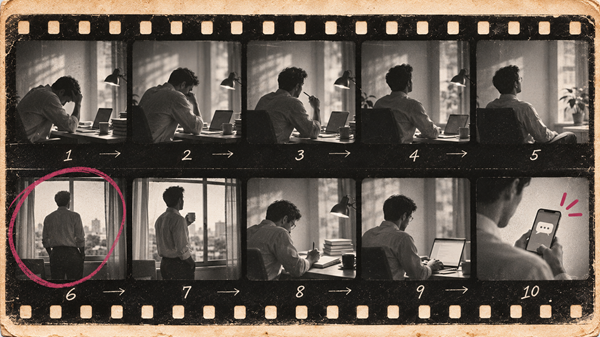
Your nervous system freezes before a big move because it reads high stakes as a possible threat and pauses to assess before it acts. Research on human freezing describes a slower heart rate and less body movement under threat, and that pause can grow stronger when you’re preparing to act. A survey of university students found that frequent procrastinators felt more anxiety about their goals, even though they valued those goals and could picture success. In a small trial of healthy volunteers, five minutes a day of slow breathing with long exhales improved mood.
A tiny first step then gives the pause somewhere to go. Freezing is a stress response, not a character flaw. Expect to build the habit over 3 to 6 months of practice. The evidence comes from small lab and student studies, so treat it as guidance, and see a licensed professional if freezing is severe.
Key Takeaway:
- Your nervous system may freeze before a major decision or life change because your brain interprets high-stakes situations as potential threats. This stress response can cause physical stillness, a slower heart rate, mental fog, and hesitation. Freezing is not a character flaw or a lack of ambition. [1]
- Why it happens: Research on human freezing links perceived threats to reduced body movement and a slower heart rate. A survey of 111 UK university students also found that frequent procrastinators experienced greater anxiety about achieving their goals, despite valuing those goals. This suggests emotional discomfort, rather than a lack of motivation, can drive avoidance. [1]
- The 10-Minute Thaw: Name the response without judging yourself, practise slow breathing with longer exhales, move your body, and ground yourself by identifying five things you can see. Then break the avoided task into a specific action that takes no more than two minutes. Complete it and share your progress with someone for accountability. [1]
- Why breathing helps: A Stanford-led trial involving 111 healthy volunteers found that five minutes of daily breathing exercises improved mood, with cyclic sighing and longer exhales showing the greatest improvement in positive mood. Treat breathing as a supportive tool, not a cure, and stop if it causes dizziness or increased anxiety. [2]
- When to pause or seek help: Not every delay is a freeze. If you can identify a genuine risk or missing information, take a deliberate pause and set a decision date. If freezing is frequent, severe, or involves panic, numbness, lost time, or trauma-related experiences, consult a licensed healthcare or mental health professional. Polyvagal theory also remains scientifically contested, so these practical techniques do not depend on accepting it. [1]
Bottom Line: Your nervous system may freeze when a decision feels too important or risky, but that pause does not mean you lack the ability to move forward. Name the response, regulate your breathing, and take one manageable two-minute action. Consistent practice over 3 to 6 months can help build a more reliable habit of taking action when it matters most.
- Source: Unleash Your Power – Why Your Nervous System Freezes Before Big Moves
- Source: Stanford Medicine – Research on Cyclic Sighing and Breathing Exercises
What a Freeze Actually Is
You’ve picked the date. You’ve drafted the email, priced the offer or booked the meeting. Then your body goes quiet. Your chest tightens, your thoughts go fuzzy and suddenly the laundry looks urgent. That’s the freeze.
A freeze is a pause, not a failure. When the brain senses a possible threat, one early response is to hold still and take in information before choosing between acting and retreating. Your brain doesn’t separate a tiger from a big, public, costly decision. It reacts to the stakes.
Here’s a hypothetical to make it concrete. A consultant has a proposal ready and a client she wants badly. She stares at the send button for forty minutes, rewrites the first line three times, then answers six unrelated emails. Nothing is wrong with her. Her system is protecting her from a risk it can’t weigh in the moment.
Notice what a freeze is not. It isn’t laziness, because lazy people don’t lose sleep over the thing they’re avoiding. It isn’t a lack of ambition either. The bigger the move matters to you, the louder the pause tends to get. That’s why high performers freeze at the edge of the work that counts most.
What the Research Does and Doesn’t Say
A review by Karin Roelofs describes freezing in humans as a slowing of the heart rate, called fear bradycardia, along with less body sway when people face a threat. The review also describes a stronger freeze when people could act than when they couldn’t. In plain terms, the pause can show up when you’re getting ready to move. It’s a narrative review, and most of the human work uses picture-viewing and mild-shock tasks, so real-world decisions are a stretch.
The link to stalling at work comes from a survey of 111 UK university students. Frequent procrastinators reported more anxiety about failing their goals, especially short-term ones. They rated the goals as just as important and pictured success just as vividly. The authors suggest the issue is managing the feeling, not seeing the future. Everything in that survey was self-reported, and I’m working from a news summary of it.
One more caution. Many popular explainers lean on polyvagal theory. Psychologist David Ley, writing in Psychology Today, argues the theory has limited empirical support while still seeing value in it as a way to talk about body states. The theory’s originator, Stephen Porges, answers critics in a 2025 paper and says many critiques target claims the theory doesn’t make. I read only the first part of that paper. You don’t need the theory to use anything below.
Also worth knowing: NLP tools are practical techniques that many people find useful. They aren’t proven treatments, and nothing here replaces care from a licensed professional.
The 10-Minute Thaw
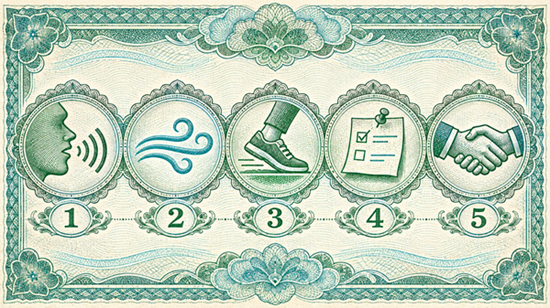
Treat these five blocks as a countdown. Each one has a job, and you don’t need to do them perfectly. James R. Elliot, an NLP Board Designated Trainer with 20+ years of experience, teaches that small, repeatable states beat big bursts of willpower. Take decisive action on block one, and the rest gets easier.
Name it
Say it in one sentence: “This is a freeze, not a verdict.” Naming the state puts a little distance between you and the feeling. It also moves you from “what’s wrong with me?” to “what’s happening in my body?”, a question you can answer.
TRY THIS Say it out loud or write it at the top of a page.
Lengthen the exhale
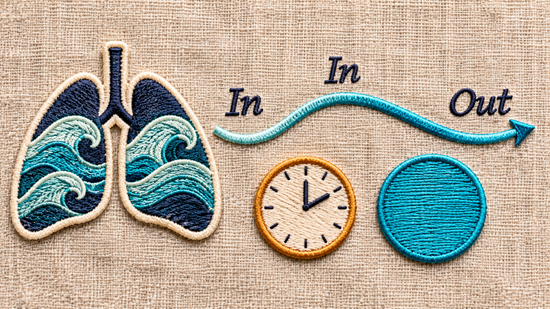
Breathe in through your nose, take a second short sip of air on top, then exhale slowly through your mouth. Repeat for about three minutes. A Stanford-led trial of 111 healthy volunteers compared several breathing styles and mindfulness, all practiced five minutes a day for a month.
Every group improved, and the long-exhale group, called cyclic sighing, showed the largest gain in positive mood. It was a preliminary study of healthy people, and mood was self-reported. So treat breathing as a helper, not a cure. If you want more calming tools, see our post on NLP tools for stress management.
TRY THIS If breathing makes you dizzy or more anxious, stop and breathe normally.
Move, then look up
Stand up. Roll your shoulders, shake out your hands or walk to a window for a minute. Then look around the room and name five things you can see. This is a practical grounding habit, not a tested finding. It works because it gives the body a small job and turns your attention outward, away from the loop in your head.
TRY THIS Keep it small enough that you can do it in a hallway.
Shrink the move
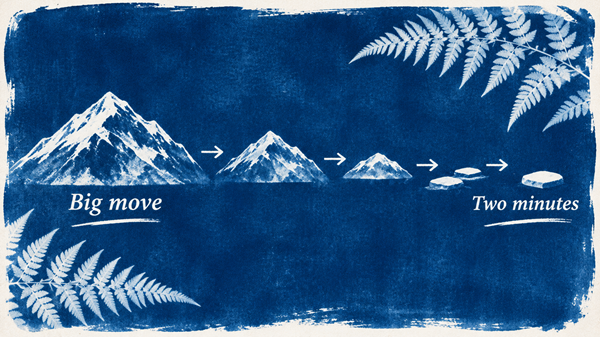
Cut the big move into the smallest action that still counts. Not “launch the offer.” Try “write the first sentence of the announcement.” If it takes more than two minutes, cut it again. Write it down in one line. For a deeper look at stalling, read our post on overcoming procrastination.
TRY THIS A good first step starts with a verb and fits on a sticky note.
Do it, then tell someone
Do the two-minute action now. Put it into practice now, even if your hands still feel shaky. Then tell one person what you did, in a text or a quick call. That’s Courageous Action from the 5 Pillars: a small step, taken in public, with someone watching.
TRY THIS Send the message before you decide what to feel about it.
If the thaw doesn’t work the first time, that’s normal. Try one block again, shrink the step further or take a short walk and return in an hour. Skipping the step is the only version that doesn’t help. Many people find the first few rounds feel awkward, and the routine smooths out as it becomes familiar.
Freeze, Fight or Flight, or a Prudent Pause?
Not every stall is a freeze. Sometimes waiting is smart. The table below is a practical guide based on the points above and my own judgment, not a diagnostic tool.
| Particulars | Freeze | Fight or flight | Prudent pause |
| Feels like | Fog, heaviness, stuck in place | Irritation, urgency, restlessness | Calm and curious |
| Looks like | Over-researching, tidying, small tasks | Rushing, snapping, sudden quitting | Asking specific questions |
| Test | You can’t name what’s missing | You want to escape or win now | You can name a real risk and a gap in information |
| First response | Slow exhale, then a two-minute step | Slow down before you send or decide | Get the missing information, set a date |
| Related post | Overcome fear and procrastination | NLP for public speaking anxiety | Set a date to decide |
When It’s More Than a Work Problem
This article is general education, not medical, mental health or legal advice. If you freeze often, feel panic or numbness, lose time, or have a history of trauma, talk with a licensed doctor or therapist. They can assess what’s going on and recommend care that fits you.
If you’re in crisis or thinking about harming yourself, reach out right away. In the US, call or text 988. In Canada, call or text 9-8-8. Outside those countries, contact your local emergency number.
Build the Habit Before the Big Day
Run the thaw once on a small thing, like an email you’ve avoided. That way the routine feels familiar when the stakes rise. Expect to build the habit over 3 to 6 months of practice. A simple schedule helps: run the full ten minutes once a week on a low-stakes task, and run just the exhale block whenever you notice the pause starting. Keep a one-line note of what you did and how it went, so you can see your own progress. For a daily practice, try our NLP exercises to boost daily confidence. Or if you’d like a thinking partner for the move you’re facing, you can book a 30-minute connection call.
Frequently Asked Questions
Why do I freeze when I need to act?
Your brain treats high stakes as a possible threat and pauses to weigh them. Research on human freezing describes a slower heart rate and less movement in that state. It’s a normal stress response, and you can work with it.
Is a freeze response the same as anxiety?
Not exactly. Freezing is a body response, and anxiety is a feeling about what might happen. They often travel together. In the student survey above, frequent procrastinators reported more goal anxiety, though that study can’t prove one causes the other.
Does slow breathing really calm the nervous system?
It helped mood in a small trial of healthy volunteers, and slow breathing lowered breathing rate more than other methods. The authors call the study preliminary, and mood was self-reported. Use it as one tool, and ask a professional if you have a health condition.
How long should I wait before I act?
Use the 10-minute thaw as a ceiling for the stall, not a deadline for the decision. If you can name a real risk or missing information, pause on purpose and set a date. If you can’t, take the two-minute step.
Is polyvagal theory proven?
No. Critics say it has limited empirical support, and its originator disputes that. You can use breathing, grounding and small steps without taking a side.
Conclusion
A freeze isn’t a flaw in your character. It’s your nervous system pausing at the edge of something that matters. Name it, slow your exhale, move your body, shrink the step and do it. Master this skill in small reps, and the big moves get lighter.
Pick one move you’ve been avoiding and start the 10-minute thaw today. You don’t need to feel ready. You need one small step, taken while the feeling is still there.
Unleash Your Power: Stand Out, Take Action, and Create the Success You Want.
Ready to move on the thing you’ve been avoiding?
Book a 30-minute connection call and bring the one big move you keep circling. We’ll shape a first step you can take this week. Book your 30-minute connection call