
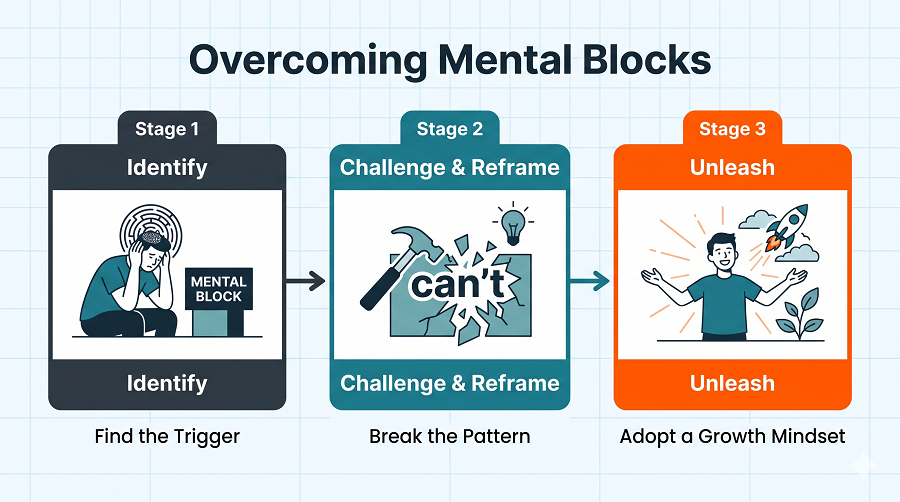
Mental blocks are psychological barriers like fear, self-doubt, and overthinking that prevent action and decision-making. To overcome them, identify the root cause, challenge limiting beliefs, and take small, consistent actions to build momentum and confidence.
Think about a time when your business felt full of promise, yet somehow, progress was slow. You had the vision, resources, and plans, but something just wasn’t clicking. Chances are, the real obstacle wasn’t external it was internal. Mental blocks, those subtle patterns of self-doubt, fear, and overthinking, can quietly hold you back in ways you don’t even realize.
Now, imagine breaking free from those barriers. Picture yourself making bold moves with confidence, unlocking the kind of growth you’ve always envisioned. Overcoming mental blocks is about intentional mindset shifts that clear the path to progress. Let’s explore what mental blocks really are, how they hold you back, and actionable strategies to overcome them because clearing these obstacles is key to achieving unstoppable momentum.
Key Takeaway:
- Yes, mental blocks can significantly limit your growth by creating psychological barriers like fear, self-doubt, and overthinking. These patterns prevent action, delay decisions, and reduce overall productivity. [1]
- Common triggers: Mental blocks often stem from fear of failure, perfectionism, past negative experiences, and cognitive biases. These factors create cycles of overthinking and inaction that keep you stuck. [1]
- What to do: Break mental blocks by identifying the root cause, challenging limiting beliefs, and taking small, consistent actions. Techniques like reframing thoughts and focusing on progress over perfection can help build momentum. [2]
- When to be cautious: Persistent mental blocks, burnout, or extreme self-doubt may indicate deeper psychological patterns that require structured mindset work or professional guidance. Ignoring them can lead to long-term stagnation. [2]
Bottom Line: Mental blocks are internal barriers that stop you from taking action and achieving growth. By shifting your mindset, taking small steps, and staying consistent, you can break these patterns and unlock your full potential.
- Source: Unleash Your Power – Overcoming Mental Blocks
- Source: Unleash Your Power – Personal Growth Insights
What Are Mental Blocks, and Why Do They Hold Us Back?
Mental blocks are psychological barriers limiting thought patterns, fears, and self-doubts that stop us from acting, making decisions, or seizing opportunities. Often rooted in fear of failure, perfectionism, or deeply ingrained beliefs about our potential, they creep into our daily choices, stalling progress.

For example:
- Hesitating to launch a product because it might not be “good enough.”
- Avoiding delegating tasks out of fear that no one will do it as well as you.
- Spending endless time overanalyzing decisions leads to “analysis paralysis.”
These thought patterns may feel normal, but they create an invisible ceiling that limits your growth.
How to Identify Mental Blocks
Mental blocks often show up as recurring patterns of behavior or thought. Recognizing these signs is the first step to overcoming them.
7 Signs You’re Facing Mental Blocks
- Procrastination: Delaying tasks or decisions because of fear of failure or perfectionism.
- Overthinking: Spending too much time analyzing options, leads to “analysis paralysis.”
- Negative Self-Talk: Hearing thoughts like, “I’m not good enough,” or “I’ll mess this up.”
- Fear of Risk-Taking: Avoiding bold moves and staying in your comfort zone.
- Feeling Overwhelmed: Struggling to focus because everything feels urgent, leading to burnout.
- Recurring Patterns: Facing the same struggles repeatedly like starting projects but never finishing them.
- Seeking External Validation: Needing others’ approval before making decisions, doubting your instincts.

The Psychology Behind Mental Blocks
Mental blocks are deeply connected to behavioral psychology and cognitive patterns. They often stem from cognitive biases, fear responses, and limiting beliefs formed through past experiences.
For example, the brain is wired to avoid risk, which can trigger fear of failure and lead to procrastination. Similarly, imposter syndrome can create self-doubt, even when you are capable.
However, through neuroplasticity, the brain can rewire itself. By consistently taking small actions and reframing negative thoughts, you can gradually eliminate these mental barriers.
How Mental Blocks Impact Business Growth
Mental blocks don’t just stay in your head they affect every aspect of your business. Here’s how they ripple outward:
- Stalled Projects: Fear of failure or perfectionism can lead to endless tweaking and delayed launches.
- Missed Opportunities: A scarcity mindset or imposter syndrome might stop you from pitching to a big client, collaborating, or scaling your business.
- Burnout: Overthinking and self-doubt drain emotional and mental energy, leading to exhaustion and decreased focus.
- Ineffective Decision-Making: Second-guessing yourself leads to decision fatigue, making it harder to act quickly when opportunities arise.
- Poor Team Morale: Your mental blocks can trickle down to your team, creating a risk-averse culture and lowering motivation.
- Loss of Revenue: Missed opportunities and delayed action ultimately hurt your bottom line, costing your business its growth potential.
The MBR Framework: A Simple System to Break Mental Blocks

The MBR Framework helps you quickly overcome mental barriers and take action:
- M – Map the Block: Identify what is stopping you (fear, doubt, or overthinking).
- B – Break the Pattern: Interrupt negative thinking by questioning your beliefs.
- R – Replace with Action: Take a small, immediate step to build momentum.
This simple system turns overthinking into action and helps you regain control quickly.
Practical Ways to Break Mental Blocks
To effectively overcome mental blocks, focus on small, consistent actions rather than waiting for perfect conditions.
- Use the 2-minute rule to start tasks instantly
- Write down limiting beliefs and challenge them
- Focus on progress instead of perfection
- Take action even when you feel uncertain
- Track small wins to build confidence
7 Proven Strategies to Overcome Mental Blocks and Embrace Challenges
Breaking free from mental blocks requires intentional effort and actionable steps. Let’s explore seven strategies to help you take control, push past internal barriers, and create unstoppable momentum for your business.
1. Shift Your Perspective From Failure
Failure isn’t the opposite of success it’s part of the process. Every entrepreneur faces setbacks, but how you respond makes all the difference. View failure as feedback, not finality. Each misstep provides insights that improve your decisions over time.
- How This Helps: Reduces fear of taking risks and encourages action instead of hesitation.
- Try This: After a setback, ask yourself, “What can I learn from this?” Write down one lesson and one actionable step you’ll take to move forward.
2. Stop Dwelling on the Past and Focus on the Future
Holding onto past mistakes or missed opportunities is like dragging an extra weight around it slows you down. Instead of replaying what went wrong, redirect your energy toward what you can control today. Remember, the past is a lesson, not a life sentence.
- How This Helps: Frees up mental energy to make proactive decisions.
- Try This: Identify one mistake or regret that’s been weighing on you. Write it down, acknowledge what you’ve learned from it, and replace it with one actionable goal for today.
3. Break Big Goals Into Bite-Sized Steps
Big goals can feel overwhelming, especially when mental blocks like self-doubt or fear of failure are at play. The key is to break those big goals into smaller, more manageable steps. Small, consistent wins build confidence and make progress feel achievable.
- How This Helps: Makes large tasks feel less intimidating and builds momentum.
- Try This: Take a long-term goal and break it into three smaller tasks to complete this week. Celebrate each step you accomplish to reinforce the habit of moving forward.
4. Focus on Learning and Growth
Every challenge holds valuable lessons if you’re willing to look for them. Instead of brushing off failures or missteps, take the time to analyze what went wrong and how you can improve. This growth mindset turns setbacks into stepping stones for future success.
- How This Helps: Promotes adaptability and resilience.
- Try This: After each project, conduct a brief “lessons learned” session. Write down what worked, what didn’t, and one adjustment for next time.

5. Keep Moving Forward Even When It’s Hard
Progress doesn’t happen overnight. Mental blocks often tempt us to stop when things get tough. But small, consistent actions build momentum over time. Remember, success is a marathon, not a sprint.
- How This Helps: Builds mental toughness and resilience.
- Try This: Set one small, achievable goal each day that aligns with your larger vision. Celebrate every step forward, no matter how small.
6. Cultivate a Positive, Solution-Oriented Mindset
A positive attitude isn’t about ignoring challenges it’s about believing in your ability to overcome them. Focus on solutions rather than problems. This simple mindset shift can transform frustration into progress.
- How This Helps: Encourages creativity and proactive problem-solving.
- Try This: When faced with a challenge, ask, “What’s one step I can take to solve this?” This keeps you focused on action rather than obstacles.
7. Surround Yourself with the Right People
Your environment has a profound impact on your mindset. Surround yourself with supportive, growth-minded individuals who can help you push through mental blocks. Whether it’s mentors, accountability partners, or peers, the right people can inspire and motivate you.
- How This Helps: Provides encouragement and fresh perspectives.
- Try This: Join a mastermind group or connect with a coach who can challenge and guide you. Share your goals and roadblocks they may offer insights you hadn’t considered.
What If You Embrace This Mindset?
By viewing challenges as lessons, you become unstoppable. You’ll face each new challenge with confidence, knowing it’s an opportunity to learn and grow. This shift in perspective leads to greater innovation and a more successful business journey.
What Challenges Are Really Teaching Us?

Every challenge is an opportunity to grow.
- Resilience and Perseverance: Each setback builds the grit to tackle bigger challenges.
- Problem-Solving Skills: Challenges push you to innovate and adapt.
- Progress Over Perfection: They remind you that forward motion even imperfectly is what drives growth.
When you embrace challenges, you shift your mindset from frustration to learning, unlocking the lessons you need to move forward.
Real-Life Example of Overcoming Mental Blocks
A startup founder struggled with overthinking and delayed launching their product for months. By applying a simple rule of taking action within 48 hours, they broke the cycle of hesitation.
Within 90 days of consistent action, they successfully launched their product and increased revenue by 30%. This shows how overcoming mental blocks can directly impact real-world results.
Frequently Asked Questions About Overcoming Mental Blocks
What causes mental blocks?
Mental blocks are caused by fear, self-doubt, past experiences, and cognitive biases. For example, fear of failure can stop you from taking action, while overthinking can delay decision-making.
How do you break a mental block quickly?
You can break a mental block quickly by taking a small action immediately. For instance, using the 2-minute rule helps overcome procrastination and builds momentum.
Are mental blocks permanent?
No, mental blocks are not permanent. With consistent effort, mindset shifts, and small actions, you can rewire your thinking patterns and overcome them.
How long does it take to overcome a mental block?
The time varies depending on the cause. Some blocks can lift within hours by resting or shifting focus, while deeper blocks from stress or fear may take weeks of consistent mindset work, therapy, or coaching to fully resolve.
How does overthinking create mental blocks?
Overthinking leads to analysis paralysis, where you spend too much time evaluating options instead of taking action. This delays progress and increases self-doubt.
Final Thoughts: Clear The Path For Growth
Challenges aren’t permanent barriers they’re temporary roadblocks. By embracing them as teachers and using these actionable strategies, you can clear the way for growth, confidence, and momentum. Remember, it’s not the challenges you face that define you, but how you respond.
Start small. Choose one strategy from this list and put it into action today. With consistent effort and the right mindset, you’ll break through those mental barriers and take your business to the next level.
Take the first step today. Identify one mental block you’re struggling with and choose one strategy from this article to tackle it. Check out our workshops and resources on breaking mental barriers, and start clearing the path to success today.
If you’re tired of overthinking and want a proven system to take action, start applying the MBR Framework today.
Focus on small steps, stay consistent, and remember, progress beats perfection every time.