

Business coaching is rapidly evolving through artificial intelligence (AI), virtual coaching platforms, data analytics, and hybrid coaching models. Rather than replacing human coaches, technology is making coaching more personalized, accessible, scalable, and measurable while allowing coaches to focus on leadership development, strategic thinking, and emotional intelligence.
Organizations that combine digital tools with human coaching are better equipped to improve leadership performance, employee engagement, decision-making, and long-term business growth.
Key Takeaway:
- Digital business coaching combines expert coaching with AI, virtual meeting platforms, data analytics, and cloud-based collaboration tools to make coaching more accessible, personalized, and measurable. Rather than replacing coaches, technology enhances the coaching experience and expands its reach.[1]
- Modern coaching platforms help business owners and leaders track goals, monitor progress, receive real-time feedback, and collaborate from anywhere. AI-powered insights, automated assessments, and performance analytics enable coaches to tailor strategies to each client’s unique challenges and objectives.[1]
- The most effective digital coaching blends technology with human expertise. While AI improves efficiency through automation and data analysis, coaches continue to provide strategic thinking, emotional intelligence, accountability, leadership development, and personalized guidance that technology cannot replicate.[2]
- Businesses that embrace hybrid coaching models can improve leadership effectiveness, decision-making, employee engagement, and organizational performance while making professional coaching more flexible and scalable across teams and locations.[2]
Bottom Line: Digital business coaching is transforming leadership development by combining AI-powered insights with human coaching expertise. Organizations that integrate technology without losing the personal connection gain more personalized support, measurable outcomes, and scalable coaching that drives long-term business success.
- Source: Unleash Your Power – Digital Business Coaching: The Future of AI, Leadership and Business Transformation
- Source: Unleash Your Power – The AI Formula for Better Small Business Profit Margins
In this digital age, virtual platforms, AI-driven tools, and data analytics are reshaping how coaching is delivered and experienced. The future of business coaching is becoming more dynamic, personalized, and accessible, offering new opportunities for growth and development. This article explores the profound impact technology is having on business coaching, highlighting emerging trends, challenges, and the exciting opportunities that lie ahead. Whether you’re a coach or a business leader, understanding these changes is key to thriving in a rapidly changing world.
What Is Digital Business Coaching?
Digital business coaching is the process of helping business owners, executives, entrepreneurs, and leadership teams improve performance using a combination of human coaching, virtual communication platforms, AI-powered tools, data analytics, and online collaboration software.
Unlike traditional business coaching that primarily depends on face-to-face meetings, digital coaching allows coaching sessions, progress tracking, assessments, and accountability to happen from anywhere in the world. This makes coaching more flexible, scalable, and accessible while maintaining personalized support.
How Digital Business Coaching Works
Assess Leadership and Business Needs
Every coaching program begins by identifying business objectives, leadership challenges, communication gaps, and performance goals. Coaches often use assessments, interviews, or leadership evaluations to understand where improvement is needed.
Create a Personalized Coaching Plan
Based on the assessment, the coach develops a customized roadmap with measurable objectives, milestones, and accountability systems aligned with the client’s business goals.
Deliver Coaching Through Digital Platforms
Sessions are conducted using video conferencing platforms such as Zoom or Microsoft Teams. Between meetings, coaches often use digital workspaces, messaging platforms, and coaching software to maintain communication.
Track Progress Using Data
Many modern coaching programs use dashboards, assessments, and goal-tracking tools to measure leadership development, productivity, and business performance over time.
Review, Adjust and Improve
Business coaching is an ongoing process. Coaches regularly evaluate progress, refine strategies, and help clients adapt to changing business challenges.
Traditional vs Digital Business Coaching
| Traditional Coaching | Digital Coaching |
|---|---|
| In-person meetings | Virtual sessions anywhere |
| Fixed schedules | Flexible scheduling |
| Manual progress tracking | Automated analytics |
| Local coach availability | Global coach access |
| Limited between sessions | Continuous digital support |
| Higher travel costs | Lower operational costs |
The Impact of Technology on Business Coaching
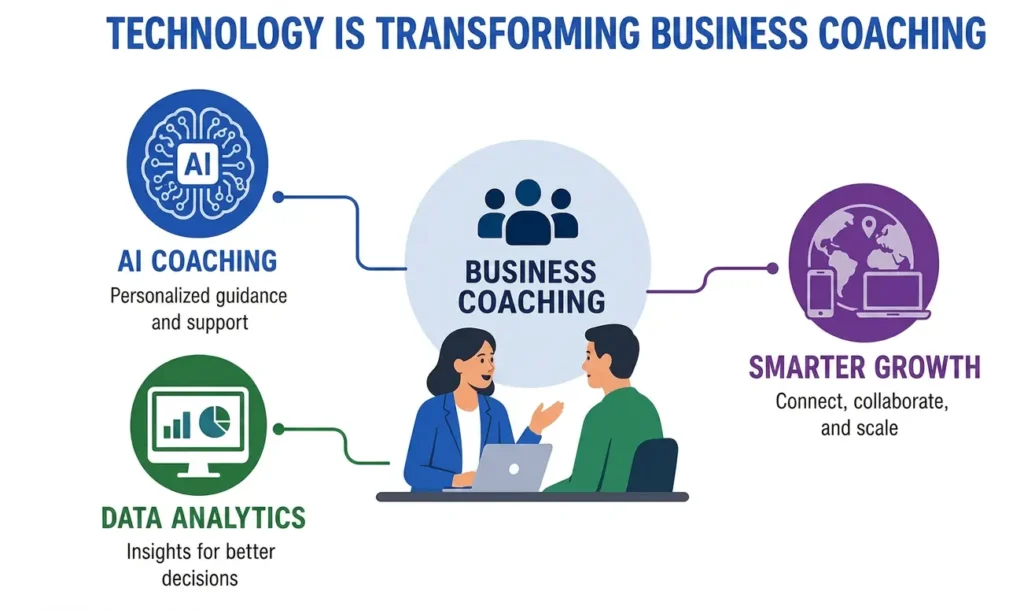
Business coaching has changed significantly as virtual communication, artificial intelligence (AI), cloud-based collaboration, and data analytics become part of everyday business operations. Leaders can now work with experienced coaches regardless of location while benefiting from personalized insights, continuous progress tracking, and more flexible coaching experiences. These innovations improve accessibility, efficiency, and measurable outcomes without replacing the value of human expertise.
Virtual Coaching Platforms
Virtual coaching platforms have made professional coaching more accessible for entrepreneurs, executives, and business leaders. Video conferencing, shared workspaces, and online scheduling allow clients to meet with coaches from anywhere while maintaining regular communication and accountability. Features such as progress tracking, resource libraries, and session recordings help clients stay engaged between meetings, making coaching more flexible and convenient for busy professionals.
AI and Machine Learning in Coaching
AI and machine learning are making business coaching more personalized by analyzing leadership behaviors, performance trends, and coaching progress. These insights help coaches identify strengths, recognize potential challenges, and recommend targeted development strategies. Rather than replacing human coaches, AI supports better decision-making through real-time feedback, predictive analytics, and objective performance data.
Coaching Apps and Digital Tools
Coaching apps extend learning beyond scheduled sessions by helping clients set goals, build habits, complete assignments, and monitor progress. Many platforms also provide reminders, shared action plans, and messaging features that strengthen accountability between coach and client. This continuous support encourages consistent development rather than limiting growth to occasional meetings.
Together, these digital capabilities are changing how coaching is delivered, measured, and experienced. By combining human expertise with AI-driven insights and online collaboration, coaches can provide more personalized guidance while helping clients make steady, measurable progress toward their business and leadership goals.
Data-Backed Benefits of Digital Business Coaching
Business coaching supported by digital tools offers measurable advantages for organizations and leaders.
| Benefit | Business Impact |
|---|---|
| Virtual coaching | Greater accessibility |
| AI insights | Personalized coaching |
| Analytics | Better decision-making |
| Progress tracking | Higher accountability |
| Automation | Saves administrative time |
| Hybrid coaching | Increased flexibility |
According to the International Coaching Federation (ICF), organizations increasingly use virtual coaching because it expands access to coaching while maintaining high levels of client satisfaction. Research from McKinsey also highlights leadership development and digital transformation as key drivers of long-term organizational performance.
Data and Findings: Business Coaching in Canada and Globally
Business coaching is experiencing steady growth as organizations invest more in leadership development, digital transformation, and employee performance. Research from Canadian and international organizations indicates that coaching is becoming an essential part of modern business strategy rather than an optional professional development activity.
| Finding | Why It Matters |
|---|---|
| Coaching continues to grow globally, with more than 122,000 professional coach practitioners worldwide. | Demonstrates increasing demand for professional coaching services across industries. (ICF) |
| The global coaching industry generated approximately US$5.34 billion in annual revenue, reflecting sustained market growth. | Indicates that organizations continue investing in leadership and business coaching despite changing economic conditions. |
| Canada is identified as one of the world’s mature coaching markets, where AI, digital coaching platforms, and analytics are becoming standard components of coaching programs. | Shows that Canadian businesses are well-positioned to adopt hybrid coaching models that combine technology with human expertise. (ICF Coaching Futures Report) |
| Leadership and executive coaching remain the largest coaching specialties worldwide, serving managers, executives, and business leaders. | Reinforces the growing importance of leadership development in modern organizations. (Amazon Web Services, Inc.) |
Key Trends Shaping the Future of Business Coaching
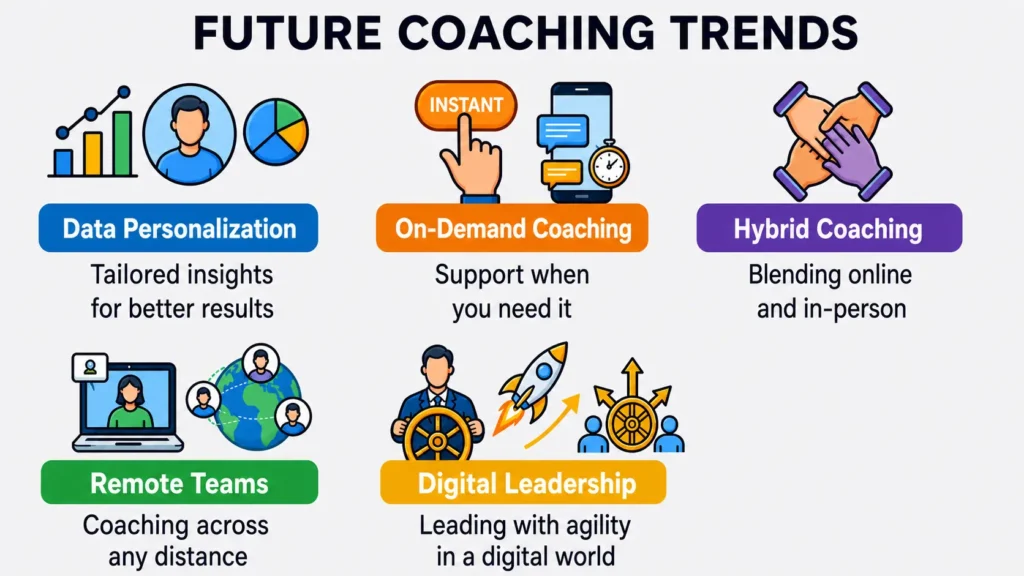
The future of business coaching is being shaped by advances in technology, changing workplace expectations, and the growing demand for flexible leadership development. These trends are helping coaches deliver more personalized, scalable, and measurable coaching experiences.
Personalization Through Data
Data analytics allows coaches to tailor coaching programs to each client’s goals, leadership style, and performance. Instead of relying only on observation, coaches can use measurable insights to make better decisions.
By tracking progress over time, coaches can identify strengths, address challenges earlier, and adjust coaching strategies to improve long-term results.
On-Demand Coaching
On-demand coaching gives leaders access to guidance whenever they need it instead of waiting for scheduled sessions. This is especially valuable during important meetings, negotiations, or business decisions.
Digital platforms, messaging tools, and AI assistants provide timely support, helping clients respond more confidently to real-world challenges.
Blended Coaching Models
Blended coaching combines virtual sessions with occasional in-person meetings. This approach offers greater flexibility while maintaining the personal connection that many clients value.
Online tools support goal tracking, communication, and accountability, while face-to-face sessions allow for deeper discussions and relationship building.
Coaching for Remote Teams
As remote and hybrid work become more common, leaders need new skills to manage distributed teams effectively. Digital coaching helps improve communication, collaboration, and employee engagement across different locations.
Coaches also help leaders build trust, strengthen virtual team culture, and maintain accountability despite geographical distance.
AI Coaches vs. Human Coaches: Striking the Perfect Balance
In the rapidly evolving world of business coaching, AI-powered coaches and chatbots are emerging as innovative tools that provide scalable, efficient solutions. These technologies are transforming the coaching experience, making it more accessible and data-driven. However, while AI tools bring numerous benefits, they also have limitations that highlight the enduring value of human insight and emotional intelligence.
| AI Coaching | Human Coaching |
|---|---|
| 24/7 availability | Personal relationship |
| Data analysis | Emotional intelligence |
| Goal tracking | Strategic thinking |
| Instant responses | Empathy |
| Pattern recognition | Complex decision support |
| Automation | Leadership development |
The Future Role of Business Coaches in Digital Transformation
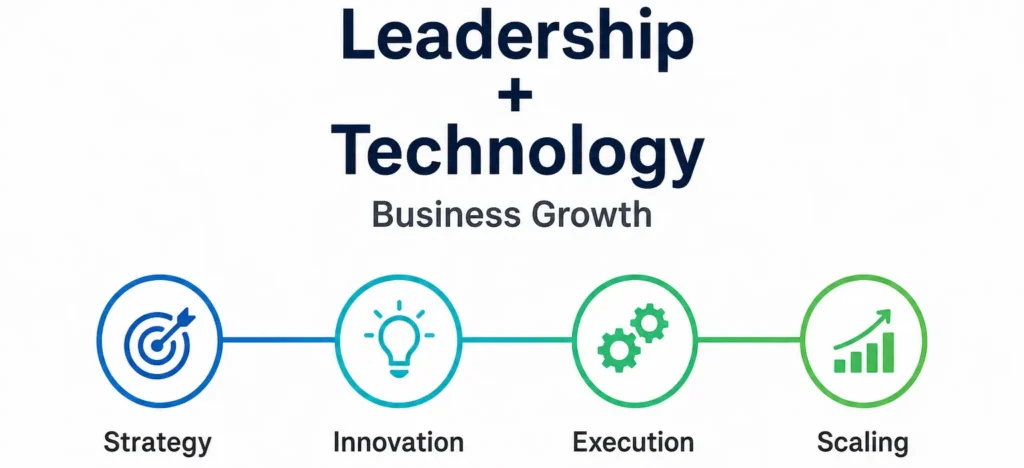
As organizations adopt artificial intelligence (AI), automation, cloud technologies, and data-driven decision-making, the role of business coaches is expanding beyond traditional leadership development. Modern business coaches increasingly help leaders navigate digital transformation, improve adaptability, strengthen change management, and align technology adoption with long-term business goals. Rather than focusing only on personal development, coaches now act as strategic partners who help organizations build resilient leadership in an increasingly digital workplace.
Coaches as Digital Transformation Advisors
Business coaches are increasingly helping organizations make informed decisions about adopting new technologies while minimizing disruption. Instead of focusing solely on leadership behaviors, coaches now guide executives through digital transformation strategies, organizational change, workforce development, and technology adoption. Their role includes helping leaders identify opportunities for automation, improve digital collaboration, and ensure technology investments support long-term business objectives rather than becoming isolated initiatives.
As businesses continue investing in digital transformation, coaches help leaders develop strategic thinking, prioritize innovation, and create implementation roadmaps that balance technological advancement with employee engagement.
Bridging the Gap Between Technology and People
Successful digital transformation depends on people as much as technology. Business coaches help leaders manage the human side of change by improving communication, reducing resistance, and building trust throughout the organization. They support leaders in creating a workplace culture that encourages innovation while addressing employee concerns about new systems, automation, and changing job responsibilities.
By strengthening communication, emotional intelligence, and change management skills, coaches help organizations achieve higher employee engagement and smoother technology adoption.
Developing Digital Skills in Leaders
Modern leaders are expected to understand emerging technologies alongside traditional leadership skills. Business coaches help executives develop digital literacy by improving their understanding of artificial intelligence, automation, cybersecurity awareness, data analytics, and digital collaboration tools. This knowledge enables leaders to make more informed strategic decisions while confidently leading teams through technological change.
Beyond technical knowledge, coaches also develop adaptability, critical thinking, resilience, and continuous learning skills that remain essential as technology continues to evolve.
Long-Term Growth Through Digital Coaching
Digital business coaching supports long-term organizational growth by helping leaders continuously improve rather than reacting only when challenges arise. Through ongoing coaching, performance tracking, regular feedback, and leadership development, organizations can build stronger decision-making processes, improve employee engagement, and respond more effectively to changing market conditions.
Rather than replacing traditional coaching, digital tools make coaching more scalable and measurable while allowing human coaches to focus on strategic leadership development, accountability, and organizational transformation.
Skills Future Business Coaches Will Need
As business coaching becomes increasingly digital, coaches will need a broader range of technical and interpersonal skills. Success will depend on combining leadership expertise with digital literacy and data-informed decision-making.
| Skill | Why It Matters |
|---|---|
| AI literacy | Understand how AI supports coaching without replacing human judgment. |
| Data interpretation | Use performance metrics and analytics to personalize coaching strategies. |
| Change management | Help organizations navigate digital transformation successfully. |
| Emotional intelligence | Build trust, empathy, and stronger coaching relationships. |
| Digital communication | Deliver effective coaching through virtual platforms. |
| Strategic thinking | Align coaching outcomes with long-term business objectives. |
| Cybersecurity awareness | Protect confidential client information when using digital tools. |
| Continuous learning | Stay current with emerging technologies and evolving coaching practices. |
Challenges and Opportunities in Digital Business Coaching
As digital business coaching continues to grow, new technologies introduce both significant challenges and exciting opportunities. Coaches must navigate these complexities to deliver effective and meaningful experiences for their clients.
| Challenge | Solution |
|---|---|
| Digital fatigue | Shorter sessions |
| Technology issues | Reliable platforms |
| Building trust | Video-first communication |
| Accountability | Progress dashboards |
| Privacy concerns | Secure coaching software |
Common Mistakes Businesses Make
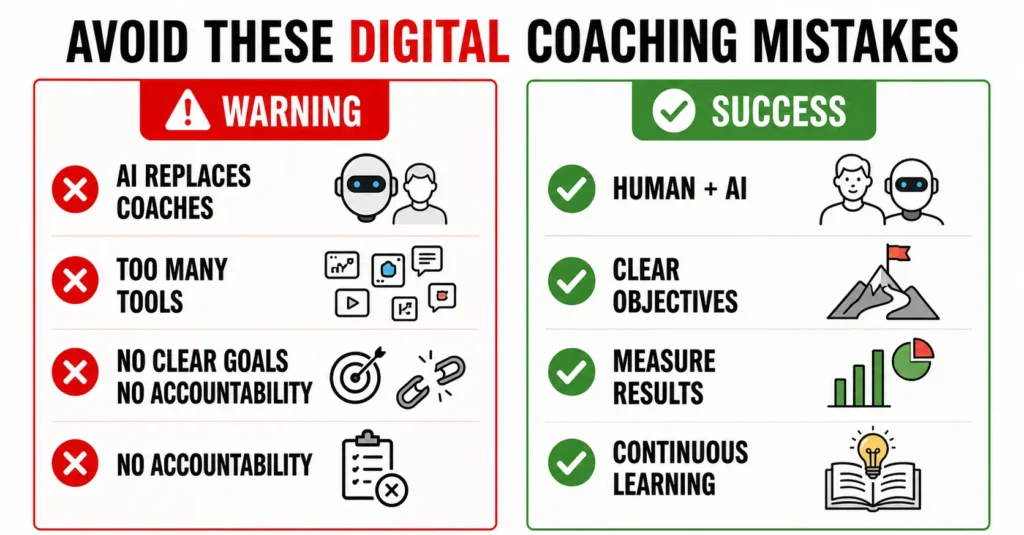
Many organizations fail to achieve the full value of digital coaching because they make avoidable mistakes.
Treating AI as a Replacement for Human Coaches
AI should support coaching, not replace leadership conversations.
Choosing Technology Before Defining Goals
Software cannot compensate for unclear business objectives.
Ignoring Accountability
Regular follow-up is essential for sustained behavioral change.
Measuring Activity Instead of Outcomes
Focus on leadership effectiveness, communication quality, employee engagement, and business performance rather than simply counting coaching sessions.
Using Too Many Digital Tools
Too many disconnected platforms create confusion and reduce adoption.
Best Practices for Digital Business Coaching
Successful coaching programs typically follow several best practices.
- Combine AI insights with human expertise.
- Define measurable coaching objectives.
- Review progress regularly.
- Protect client confidentiality.
- Encourage continuous learning.
- Use secure collaboration platforms.
- Adapt coaching methods as business needs evolve.
Organizations following these principles are more likely to achieve sustainable leadership growth and stronger business outcomes.
Opportunities in Digital Business Coaching
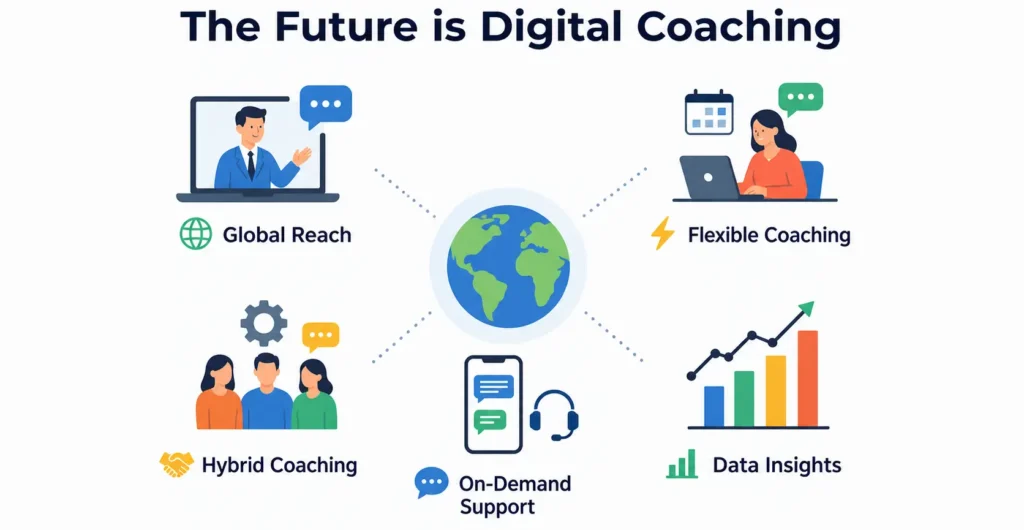
- Expanding Global Reach: With virtual coaching, geographical boundaries disappear. Coaches can now work with clients from all over the world, expanding their client base and making their services more accessible to diverse audiences.
- Flexibility and Convenience: Virtual coaching provides unparalleled flexibility. Clients can fit coaching sessions into their busy schedules, eliminating the need for travel and allowing them to engage from the comfort of their homes or offices. This flexibility can lead to higher engagement and consistency in coaching.
- Data-Driven Insights: The use of technology allows coaches to track client progress and provide real-time feedback through data-driven insights. Coaches can use performance metrics, goal tracking, and behavioral data to offer more precise, actionable advice, ensuring that coaching is tailored to each client’s needs.
- On-Demand Coaching: With the availability of digital platforms, clients can access just-in-time coaching when they need it most. This is particularly valuable in high-stress situations, such as navigating negotiations or making strategic decisions, allowing clients to get immediate guidance without waiting for a scheduled session.
- Hybrid Coaching Models: Hybrid coaching, which blends in-person interaction with digital tools, offers the best of both worlds. Clients benefit from the personalized connection of face-to-face sessions, while digital tools provide ongoing support, progress tracking, and real-time feedback. This model ensures that coaching is both scalable and deeply personal.
The Balance Between Challenges and Opportunities
The future of business coaching lies in effectively balancing these challenges and opportunities. Coaches who can adapt to the digital landscape without sacrificing the personal elements of coaching will be the most successful in fostering lasting growth for their clients. By leveraging the power of technology while maintaining a human-centered approach, business coaching will remain a powerful tool for transformation in the digital age.
Conclusion
Digital business coaching is no longer an emerging trend; it is becoming a standard approach to leadership development in modern organizations. Advances in artificial intelligence, virtual collaboration platforms, analytics, and hybrid coaching models have made coaching more accessible, scalable, and personalized than ever before.
However, technology works best as an enhancement rather than a replacement. Human coaches continue to provide emotional intelligence, strategic thinking, accountability, and leadership expertise that AI cannot fully replicate. Organizations that combine digital innovation with human coaching are better positioned to navigate change, develop resilient leaders, and achieve sustainable long-term growth.
FAQ
How do I find the right business coach in a digital setting?
Look for a coach with expertise that matches your goals, read reviews or testimonials, and consider trying a free consultation. Many digital coaches offer introductory sessions to ensure a good fit before you commit to a full program.
What platforms are commonly used for virtual business coaching?
Common platforms include Zoom, Microsoft Teams, and specialized coaching tools like Coach Accountable and Better Up. These platforms enable video sessions, goal tracking, and progress monitoring to enhance the coaching experience.
Can AI-powered coaching fully replace human business coaches?
No, AI coaching tools offer data-driven insights but lack the empathy, creativity, and personal connection that human coaches provide. AI complements human coaching but can’t fully replace the emotional intelligence and strategic thinking of a human coach.
How do digital business coaches maintain accountability with clients?
Digital coaches use apps, progress trackers, and regular check-ins to ensure accountability. Automated reminders, goal-setting tools, and performance dashboards keep clients on track and engaged with their coaching programs.
Is digital business coaching effective for entrepreneurs and startups?
Yes, digital coaching is effective for entrepreneurs, offering tailored strategies, flexible scheduling, and real-time feedback. It’s especially valuable for startups needing affordable guidance to navigate early-stage challenges and growth.
What should I expect from a hybrid coaching model?
A hybrid model combines digital and in-person sessions, offering flexibility through online tools with the personal touch of face-to-face meetings. This approach provides convenience and depth for personalized, effective coaching.