
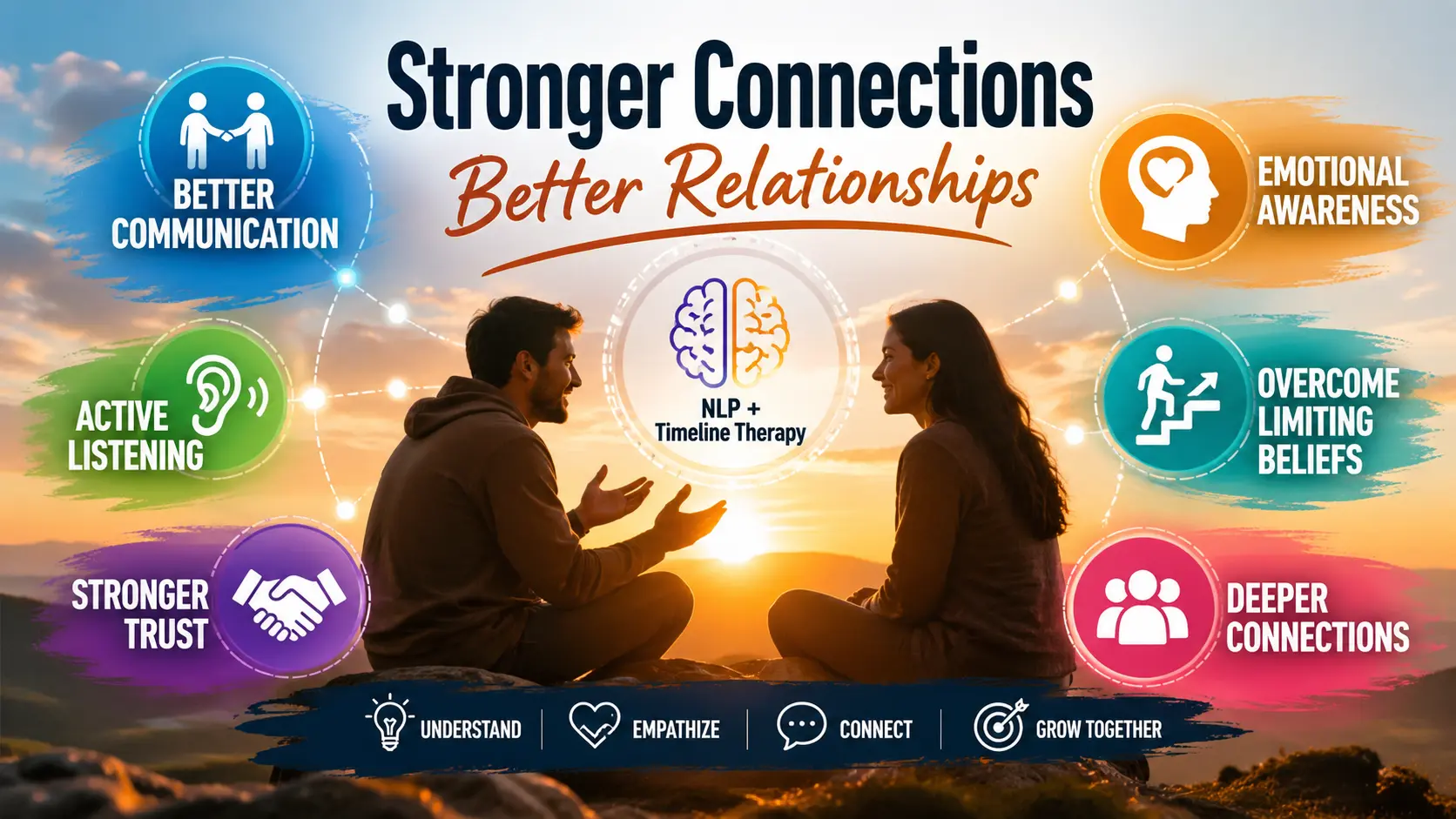
NLP (Neuro-Linguistic Programming) and Timeline Therapy help build stronger connections by improving communication, increasing emotional awareness, and clearing limiting beliefs that create distance in relationships. NLP strengthens rapport, listening, and trust, while Timeline Therapy helps release old emotional patterns so you can communicate more clearly and confidently.
Key Takeaway:
- NLP and therapy-based communication techniques help build stronger connections by improving empathy, active listening, and emotional awareness in personal and professional relationships.
- Techniques like mirroring, sensory language, and reframing help people feel understood, reduce misunderstandings, and create deeper trust during conversations.
- Timeline Therapy and NLP tools can help release unresolved emotional triggers, limiting beliefs, and negative assumptions that often damage relationships.
- Stronger connections are built when communication styles, values, and emotional needs are aligned instead of reacting from past patterns or assumptions.
- Small shifts in language, listening, and emotional response can quickly improve trust, connection, and long-term relationship quality.
Bottom Line: NLP and therapy-based communication tools strengthen relationships by improving trust, empathy, and emotional clarity, helping people connect more deeply and communicate with greater confidence and understanding.
Building strong, lasting connections is essential for success in every area of life. Yet, in today’s fast-paced world, it’s easy to fall into shallow interactions that leave you feeling disconnected. This is where NLP (Neuro-Linguistic Programming) and Timeline Therapy come in. These powerful techniques build stronger connections using NLP, enhance communication, align values, and help you break through limiting beliefs, allowing you to connect more deeply and authentically in both personal and professional relationships.
Whether you’re improving your relationship with a spouse, aligning your corporate team’s goals, or clearing emotional blocks that limit your confidence, NLP and Timeline Therapy offer tools to transform the way you communicate and build trust.
Let’s explore how to build stronger connections using NLP & timeline therapy and how they can help you forge stronger, more meaningful connections.
Why Stronger Connections Matter

Strong relationships are one of the biggest drivers of happiness, confidence, and success. Whether in personal life, school, friendships, or work, the quality of your communication often shapes the quality of your results.
Yet many people struggle with misunderstandings, assumptions, emotional triggers, and low confidence. Conversations become reactive instead of thoughtful. Trust becomes harder to build.
This is where NLP and Timeline Therapy can help.
These techniques focus on improving how you think, communicate, and respond emotionally, allowing you to create deeper, more authentic relationships.
What Is NLP?
Neuro-Linguistic Programming (NLP) is a communication and mindset framework that explores how thoughts, language, emotions, and behavior influence outcomes.
In simple terms, NLP helps you understand:
- How people process information.
- How language shapes emotions.
- How beliefs affect behavior.
- How trust and rapport are built.
NLP is widely used in communication coaching, leadership development, personal growth, and relationship improvement.
What Is Timeline Therapy?
Timeline Therapy is a personal development method focused on releasing unresolved emotional patterns connected to past experiences.
Sometimes old experiences create automatic reactions, such as:
- Fear of rejection.
- Overthinking conversations.
- Assuming negative intent.
- Feeling “not good enough.
Timeline Therapy helps identify these emotional patterns and replace them with healthier beliefs and responses.
This creates more freedom in how you communicate with others.
How NLP Helps Build Stronger Connections

Builds Instant Rapport
Rapport is the feeling of trust and comfort between two people.
NLP techniques such as mirroring and matching communication style help people feel understood.
Examples include:
- Matching speaking pace.
- Using similar language patterns.
- Reflecting emotional tone naturally.
- Maintaining comfortable body language.
When used ethically, this improves trust and openness.
Improves Listening Skills
One major reason relationships struggle is poor listening.
NLP helps improve:
- Active listening.
- Emotional awareness.
- Observation of body language.
- Recognition of unspoken concerns.
This reduces misunderstandings and helps conversations feel more supportive.
Reframes Conflict
NLP teaches reframing, which means changing the meaning you attach to a situation.
For example:
Instead of thinking, “They are criticizing me because I’m failing.”
You can reframe it as: “They may be offering feedback to help me improve.”
This simple shift reduces emotional defensiveness and supports healthier.
Common Communication Mistakes That Weaken Connections
Many relationships suffer not because people do not care, but because communication habits slowly create distance over time. Common mistakes include interrupting, assuming meaning without asking questions, reacting emotionally instead of listening, and focusing on defending yourself rather than understanding the other person.
These patterns can make others feel unheard or misunderstood. By becoming aware of these habits, you can start replacing them with active listening, empathy, and clearer communication that strengthen trust and emotional closeness.
Powerful NLP Techniques for Better Relationships
Mirroring:
Subtly matching posture, tone, and energy level to create trust.
Anchoring:
Associating a positive emotional state with a gesture, word, or memory. For example, before an important conversation, you can mentally anchor calmness and confidence.
Meta-Model Questions:
These are clarifying questions that challenge vague assumptions.
Examples:
- What makes you feel that way?
- What specifically happened?
- Is there another way to see this?
These questions improve understanding and reduce assumptions.
How These Methods Apply to Relationships
- Personal Connections: Deepen understanding and create a foundation of trust with loved ones.
- Professional Settings: Build rapport with colleagues and managers while fostering collaboration.
- Corporate Teams: Align team values and improve organizational communication for better results.
The Power of Building Genuine Connections
In our fast-paced, digital world, authentic connections are becoming increasingly rare. Yet, these meaningful relationships are vital; they build trust, improve collaboration, and foster fulfillment. Whether it’s with a colleague, spouse, or child, strong connections lead to better communication and deeper understanding.
However, barriers like unresolved emotions, past traumas, and miscommunication often prevent us from forming these bonds. For example:
- Misinterpreting actions or words, such as “When my friend says this, it must mean they’re upset with me.”
- Assuming false equivalences, like “When my boss critiques me, it means I’m not good enough.”
NLP and Timeline Therapy help you overcome these mental blocks, allowing you to break free from assumptions and approach relationships with openness and clarity.
How Timeline Therapy Removes Emotional Blocks

Many relationship issues are not caused by the present moment. They are often caused by unresolved emotions from the past.
Examples:
- Fear of previous rejection.
- Trust issues from betrayal.
- Criticism sensitivity from childhood experiences.
Timeline Therapy helps clear these emotional triggers so you can respond to the present instead of reacting to the past.
This can improve:
- Self-confidence.
- Emotional control.
- Trust-building.
- Healthy communication.
Daily Habits to Build Stronger Connections
Strong relationships are built through small, consistent actions rather than one big conversation. Daily habits such as making eye contact, listening without distractions, asking thoughtful questions, and expressing appreciation can significantly improve connection over time.
Even simple gestures like checking in with someone, acknowledging their feelings, or giving honest encouragement help create emotional safety and trust. When practiced consistently, these habits support deeper communication and stronger personal and professional relationships.
How to Rebuild Trust After Miscommunication
Miscommunication can create distance, frustration, and doubt in any relationship, but trust can be rebuilt with patience and intentional effort. The first step is to acknowledge the misunderstanding without becoming defensive. Listen carefully to the other person’s perspective and validate how they feel, even if your intention was different.
Clear, honest communication combined with empathy helps reduce tension and reopen trust. Using NLP techniques such as reframing and active listening can help both people move away from blame and focus on understanding, growth, and stronger future communication.
Data & Findings:
Why Stronger Connections Matter in Canada
- According to Statistics Canada, nearly 63% of Canadians aged 15 and older report high satisfaction with their personal relationships. This shows that strong human connections are closely linked to overall well-being and quality of life.
- 77% of Canadians with strong personal relationships report having a strong sense of meaning and purpose in life, compared with only 32% among those with lower relationship satisfaction.
- In workplace settings, Canadian mental health data shows that 45% of workers do not feel they have trusted relationships at work, which is strongly linked to stress, isolation, and lower productivity.
- Research from Canada also highlights that people with stronger communication and emotional support systems are more likely to experience higher confidence, lower stress, and better life satisfaction.
- These findings clearly support why building stronger connections through NLP, emotional awareness, and better communication skills is essential for both personal growth and professional success in Canada.
NLP for Professional and Team Communication
NLP is also highly effective in professional settings.
It helps improve:
- Leadership communication.
- Team collaboration.
- Conflict resolution.
- Workplace trust.
- Goal alignment.
Leaders often use NLP communication principles to create better engagement and team understanding.
For example, recognizing different communication styles can help teams work more efficiently and reduce misunderstandings.

Benefits of Combining NLP and Timeline Therapy
NLP vs Timeline Therapy:
| Method | Primary Focus | Best For | Key Outcome |
| NLP | Communication patterns, language, behavior and mindset | Improving conversations, rapport, confidence, and leadership | Better trust, clearer communication, stronger relationships |
| Timeline Therapy | Emotional triggers, past beliefs, subconscious patterns | Releasing fear, self-doubt, and negative emotional responses | Emotional freedom, confidence, healthier reactions |
| Combined Approach | Communication patterns, language, behavior, and mindset | Personal growth, relationships, team alignment | Emotional freedom, confidence, and healthier reactions |
How to Start Using These Techniques
You can begin with simple daily practices:
- Listen carefully before responding.
- Notice body language and tone.
- Challenge negative assumptions.
- Reframe conflict into growth.
- Practice confidence anchoring.
- Reflect on emotional triggers.
Consistency matters more than perfection.
Practical Use Cases:
| Situation | NLP Technique | Timeline Therapy Support | Expected Result |
| Conflict with partner or friend | Reframing + active listening | Release past emotional triggers | Calmer, more constructive conversations |
| Workplace team misalignment | Mirroring + pacing and leading | Remove fear-based assumptions | Better collaboration and alignment |
| Low confidence in social settings | Anchoring + meta-model questions | Clear limiting beliefs | Conflict with a partner or friend |
| Leadership communication | Rapport building + clarity questions | Reduce emotional reactivity | More confidence and an authentic connection |
Conclusion
Building meaningful connections is essential for both personal and professional success. NLP and timeline therapy offer a powerful combination of tools to enhance communication, clear emotional roadblocks, and align values. Whether you’re seeking to improve personal relationships, foster collaboration in a team, or simply connect more deeply with others, these techniques can help you create stronger, more authentic bonds.
Start using NLP and Timeline Therapy today to break free from limiting beliefs, communicate with confidence, and transform your relationships into sources of trust, growth, and fulfillment.
Frequently Asked Questions
How does NLP improve relationships?
NLP improves relationships by strengthening listening, empathy, communication clarity, and trust-building.
Is Timeline Therapy safe?
When practiced ethically and guided by a qualified professional, it is generally used as a personal development technique for emotional growth.
Can NLP help with confidence?
Yes. NLP techniques such as reframing and anchoring are commonly used to improve confidence and reduce anxiety in conversations.
Can NLP help improve family relationships?
Yes. NLP techniques such as active listening, mirroring, and reframing can help reduce misunderstandings and build stronger trust with family members, partners, and close friends.
How long does it take to see results from NLP and Timeline Therapy?
Some people notice improvements in communication and confidence within a few conversations, while bigger emotional changes may take several sessions and consistent practice.