

When you decide to drop the mask, authenticity is one of the strongest predictors of confidence, meaningful relationships, and personal well-being. When people stop hiding behind roles, expectations, or people-pleasing behaviors, they often experience greater self-trust, reduced stress, and stronger connections with others. Dropping the mask is not about changing who you are; it is about allowing your true self to be seen.
Dropping the mask means letting go of behaviors and identities used primarily to gain approval or avoid rejection. Research shows that authenticity is associated with higher psychological well-being, stronger relationships, and increased life satisfaction. Learning to live authentically can improve confidence, reduce emotional exhaustion, and support personal growth.
Key Takeaway:
- Many people wear a “mask” to gain approval, avoid rejection, or meet others’ expectations, but constantly hiding your authentic self can lead to stress, self-doubt, and a feeling of being disconnected from your true potential.[1]
- Dropping the mask begins with self-awareness. By identifying limiting beliefs, recognizing people-pleasing behaviors, and understanding the fears driving them, you can start making choices that align with your values and goals.[1]
- Authenticity strengthens confidence, relationships, leadership, and personal fulfillment. When you communicate honestly and show up as your real self, you create deeper trust and attract opportunities that align with who you truly are.[2]
- NLP techniques such as reframing, belief change work, and behavioral pattern interruption can help replace fear-based habits with empowering perspectives, allowing you to express yourself more confidently and consistently.[2]
Bottom Line: Your greatest power emerges when you stop performing for acceptance and start living authentically. By dropping the mask, challenging limiting beliefs, and embracing who you truly are, you can build stronger relationships, greater confidence, and a more meaningful life aligned with your values.
- Source: Unleash Your Power – Drop the Mask, Find Your Power
- Source: Unleash Your Power – Be Yourself and People Will Like You
What Does It Mean to Drop the Mask?
Dropping the mask refers to expressing your genuine thoughts, feelings, values, and personality instead of presenting a version of yourself designed to please others or avoid judgment.
In psychology, this concept is often linked to authentic living, which involves acting in alignment with personal values rather than external expectations.
Why We Wear the Mask
Most of us don’t start wearing a mask on purpose; it’s something we learn along the way. From childhood, we hear things like “be polite,” “don’t make waves,” or “fit in.” These messages teach us it’s safer to hold back parts of ourselves, even if it means hiding what we really feel. Over time, it becomes a habit.
Fear adds another layer. Many of us are afraid of rejection, failure, or simply being too vulnerable. So we create a “safer” version of ourselves. At work, the mask may look like constant confidence; in relationships, it may look like keeping quiet. On the surface, it protects us but inside, it keeps us from being known.
| Common Cause | How It Appears |
|---|---|
| Fear of rejection | Hiding opinions |
| Need for approval | People-pleasing |
| Workplace pressure | Pretending confidence |
| Social expectations | Avoiding vulnerability |
| Fear of failure | Playing it safe |
The Hidden Cost of Pretending

There comes a point when the mask we wear starts to feel heavier than the fear of removing it. At first, pretending seems safer; it protects us from judgment, rejection, or failure. But over time, it begins to cost us more than it protects. The price of hiding our true selves shows up in almost every corner of life.
Emotional Exhaustion
Keeping up appearances is tiring. Constantly thinking about how you look, what to say, or how to act drains energy that could be spent on things that actually matter. Instead of feeling alive and free, you end up disconnected from your real emotions, carrying a quiet sense of fatigue that no amount of rest can fix.
Strained Relationships
It’s hard to build meaningful connections when people only meet the version of you that you think they’ll accept. Deep down, you may crave closeness, but the mask creates distance. Others sense when something isn’t fully real, and relationships stay surface-level instead of becoming the supportive, honest bonds we all need.
Stifled Growth
Masks don’t just hide who we are; they hold us back. When you’re busy second-guessing yourself, you avoid risks, creativity, and new opportunities. Growth requires authenticity, and when we pretend, we unintentionally keep ourselves small.
Life on Autopilot
Pretending often leads to living by default rather than by design. You go through the motions, checking boxes, playing roles, doing what’s “expected,” but something inside feels unfulfilled. Over time, you can lose sight of your true desires and what actually makes life meaningful.
Why Authenticity Matters
Authenticity affects nearly every area of life. Studies have linked authentic living with higher self-esteem, greater psychological well-being, lower stress levels, and stronger social relationships. When people consistently act in alignment with their values, they tend to experience greater fulfillment and resilience.
| Area | Impact of Authenticity |
|---|---|
| Confidence | Increased self-trust |
| Relationships | Greater emotional connection |
| Mental Health | Lower stress and anxiety |
| Career Growth | Better leadership and communication |
| Personal Growth | More willingness to take healthy risks |
Data & Findings on Authenticity and Well-Being
Research suggests that authenticity is closely connected to emotional well-being, confidence, and relationship quality. Key findings include:
- People who live authentically tend to report higher levels of life satisfaction and psychological well-being than those who frequently suppress their true thoughts and feelings.
- Authenticity is associated with stronger self-esteem and greater self-acceptance, helping individuals rely less on external validation.
- Studies indicate that authentic communication can lead to deeper trust and stronger interpersonal relationships.
- Living in alignment with personal values may help reduce the stress and emotional exhaustion that often come from maintaining a false persona.
- Research has linked authenticity with greater resilience, allowing people to navigate challenges while staying true to themselves.
- Individuals who feel free to express their genuine thoughts and emotions often experience a stronger sense of purpose and personal fulfillment.
How Authenticity Works
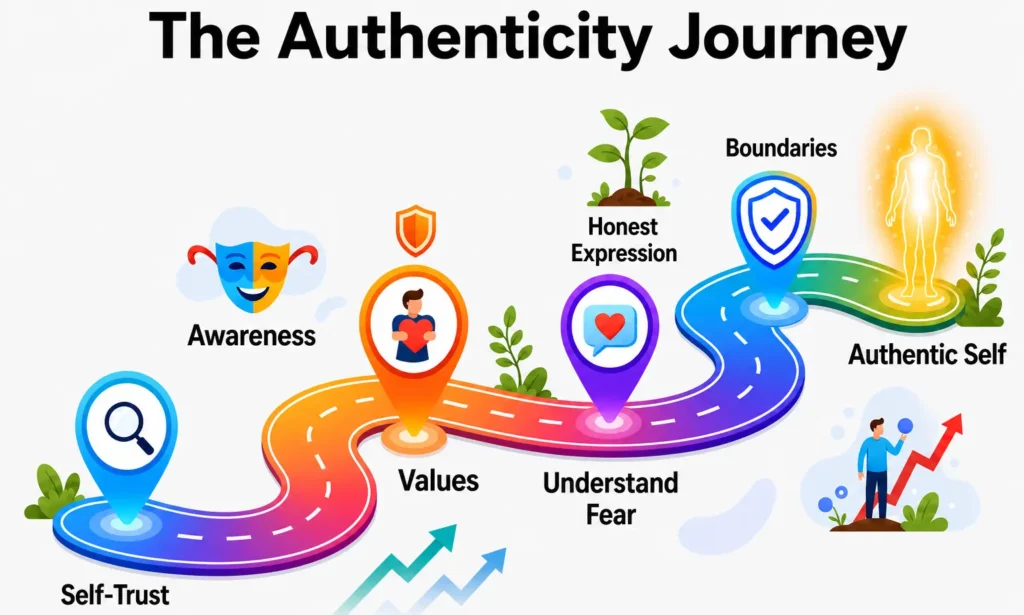
Authenticity is not about revealing everything about yourself or abandoning social skills. It means acting in alignment with your values, beliefs, and genuine feelings instead of constantly seeking approval or avoiding judgment. The process happens gradually through awareness, honest self-expression, and self-trust.
Recognize the Mask
The first step is noticing when you’re acting differently to gain acceptance or avoid criticism.
Common signs include:
- Saying “yes” when you want to say “no”
- Hiding your opinions
- Constantly seeking approval
- Feeling drained after social interactions
Awareness helps you identify where authenticity is being replaced by performance.
Understand the Fear
Most masks are rooted in fear, fear of rejection, failure, conflict, or vulnerability.
When you notice yourself holding back, ask:
“What am I afraid might happen if I show up as myself?”
Understanding the fear behind the behavior makes it easier to challenge it.
Practice Honest Self-Expression
Authenticity grows through small actions, not dramatic changes.
This might mean:
- Sharing your genuine opinion
- Asking for help when needed
- Admitting you don’t have all the answers
- Communicating your needs respectfully
These moments build confidence and reinforce self-trust.
Set Healthy Boundaries
Being authentic often requires protecting your time, energy, and values.
Healthy boundaries help you stop people-pleasing, reduce resentment, and create more honest relationships.
Build Self-Trust Over Time
Every time your actions align with your values, self-trust grows.
The goal is not perfection. It is making consistent choices that reflect who you truly are, even when it feels uncomfortable.
| Authenticity Step | Benefit |
|---|---|
| Awareness | Recognize limiting patterns |
| Understanding Fear | Reduce self-protection behaviors |
| Honest Expression | Improve confidence |
| Healthy Boundaries | Protect your energy |
| Self-Trust | Strengthen authentic living |
What Happens When You Drop the Mask?

Taking off the mask doesn’t mean spilling every secret or exposing your deepest fears. It’s not about oversharing, it’s about showing up without the pressure of pretending. It’s choosing to be genuine, instead of performing. And that choice opens doors you may not even realize are waiting for you.
Reclaiming Self-Trust
When you stop shaping yourself to fit into everyone else’s expectations, you begin to trust your own voice again. Your opinions, ideas, and instincts become your compass instead of outside approval.
Natural Confidence
Confidence feels lighter when it isn’t built on acting. Suddenly, you’re not worried about being “perfect.” You make decisions more easily because you’re not stuck in a role, you’re simply being yourself.
Authentic Relationships
Real connection begins when you stop hiding. People can sense when you’re being genuine, and it gives them permission to do the same. The friendships and partnerships that form from this place are deeper and more fulfilling.
Inner Power
Research in positive psychology suggests that individuals who live more authentically often report higher levels of life satisfaction, self-esteem, and emotional well-being than those who frequently suppress their true thoughts and feelings.
Without the mask weighing you down, your creativity, intuition, and resilience come alive. You stop holding yourself back, and instead, you start stepping forward with clarity and strength.
Real-World Example
One client once shared: “For years, I thought my confidence came from being polished. But the first time I admitted in a meeting that I didn’t have all the answers, people respected me more. I felt freer than I ever had before.”
Results
- Improved confidence
- Better communication
- Reduced stress
- Stronger workplace relationships
- Increased self-trust
How to Begin Removing the Mask
Taking off the mask doesn’t happen overnight; it’s a gentle process, but every small step can open big doors.
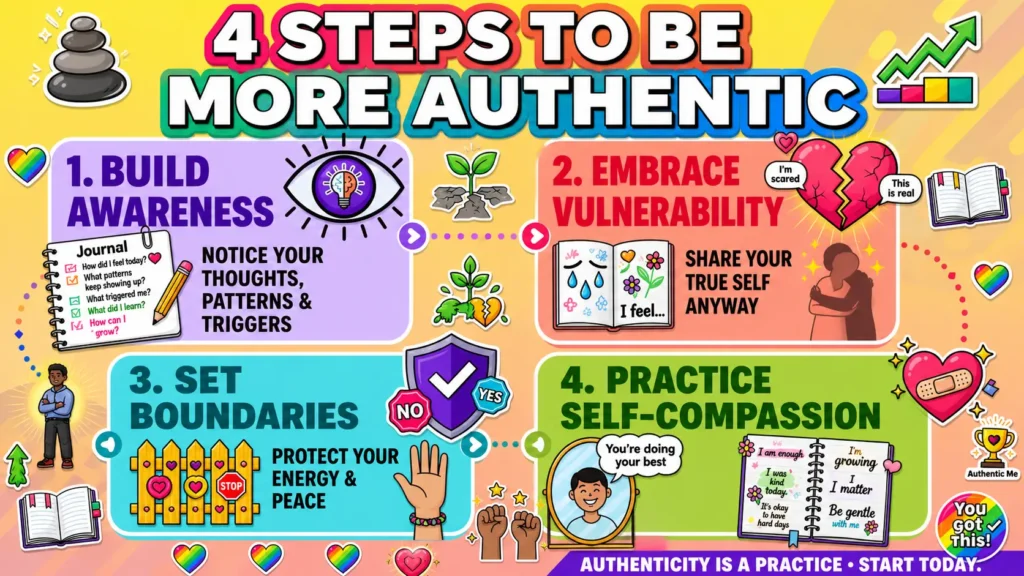
Build Awareness
Start by simply noticing. Pay attention to moments when you feel like you’re “performing” instead of being yourself. A quick journal entry or a short reflection after a conversation can help you spot these patterns.
See Vulnerability as Strength
Being open doesn’t make you weak; it makes you real. Try sharing something honest with a close friend or admitting when you don’t have all the answers. This kind of openness deepens trust and connection.
Set Boundaries
Your time and energy matter. Saying “no” or choosing what feels right for you isn’t selfish; it’s a way of respecting yourself and teaching others to do the same.
Practice Self-Compassion
Some days you’ll fall back into old habits, and that’s okay. What matters is progress, not perfection. Treat yourself with kindness, just like you would a good friend.
Quick Action Plan
- Notice where you’re performing.
- Identify what fear is driving the behavior.
- Share something honest with someone you trust.
- Set one healthy boundary.
- Practice self-compassion daily.
- Repeat consistently.
Stepping Into Your Power
For so long, many of us learned to hide parts of ourselves just to fit in. But over time, that mask grows heavier, it drains energy and distances us from the life we truly want. Dropping the mask is not about becoming someone new; it’s about permitting yourself to finally be you.
Authenticity is where your real strength lies. When you stand in your truth, you stop second-guessing and start living with clarity and calm. You realize the most powerful thing you can do isn’t impress others, it’s to be genuine.
And this is where real connection begins. Masks may win approval, but authenticity wins trust, depth, and love. When you show up as yourself, unpolished but real, you invite others to do the same. That’s when life stops feeling like performance and starts feeling like freedom.
Common Mistakes When Removing the Mask
- Trying to Change Overnight: Authenticity develops gradually.
- Oversharing Everything: Being authentic does not require revealing every detail of your life.
- Seeking Universal Approval: Not everyone will agree with your choices.
- Ignoring Boundaries: Authenticity and boundaries work together.
- Expecting Perfection: Growth is a process.
Best Practices for Authentic Living
- Journal regularly.
- Identify your core values.
- Practice honest communication.
- Spend time with supportive people.
- Celebrate small wins.
- Focus on progress, not perfection.
- Review your boundaries regularly.
Conclusion: Authenticity Is Your Greatest Strength
Dropping the mask is not about becoming someone new. It is about removing the barriers that prevent you from being who you truly are. Authenticity strengthens confidence, improves relationships, reduces emotional exhaustion, and creates greater fulfillment in everyday life.
While the process takes time, every small act of honesty, self-awareness, and self-compassion moves you closer to lasting personal freedom. The more you align your actions with your values, the more natural confidence and genuine connection become.
Your greatest power has never been in the mask; it has always existed beneath it.
FAQs
Why do people wear a mask in daily life?
People often wear a mask to avoid rejection, judgment, or failure. It’s a defense mechanism learned early in life, shaped by social pressures and expectations. While it may protect us temporarily, over time, it distances us from our true selves.
What is the cost of pretending to be someone else?
Pretending drains emotional energy, strains relationships, and limits personal growth. It can make life feel like autopilot, where you’re performing roles instead of living authentically. Eventually, the mask feels heavier than the fear of being real.
How does authenticity improve relationships?
Authenticity builds trust, depth, and emotional closeness. When you show up as your true self, others feel safe to do the same, leading to more supportive and genuine bonds. This openness is what creates lasting connections.
Is vulnerability really a strength?
Yes, vulnerability allows you to be real and approachable, which strengthens confidence and relationships. Instead of being a weakness, it creates trust, shows courage, and opens the door to deeper self-acceptance and connection.
How can I start dropping the mask in everyday life?
Begin with small steps, notice when you’re “performing,” practice honesty with trusted people, and set healthy boundaries. Add self-compassion into the process, knowing progress matters more than perfection. Over time, this leads to lasting freedom and inner power.
Can authenticity improve mental health?
Authentic living can reduce emotional stress associated with constantly managing different versions of yourself.
Is being authentic the same as being vulnerable?
Not exactly. Vulnerability is one aspect of authenticity, but authenticity also includes acting according to your values and beliefs.
Why is authenticity important for confidence?
Confidence becomes more sustainable when it comes from self-acceptance rather than external validation.
What are the signs that I am wearing a mask?
Common signs include people-pleasing, fear of disagreement, emotional exhaustion, and constantly seeking approval.