

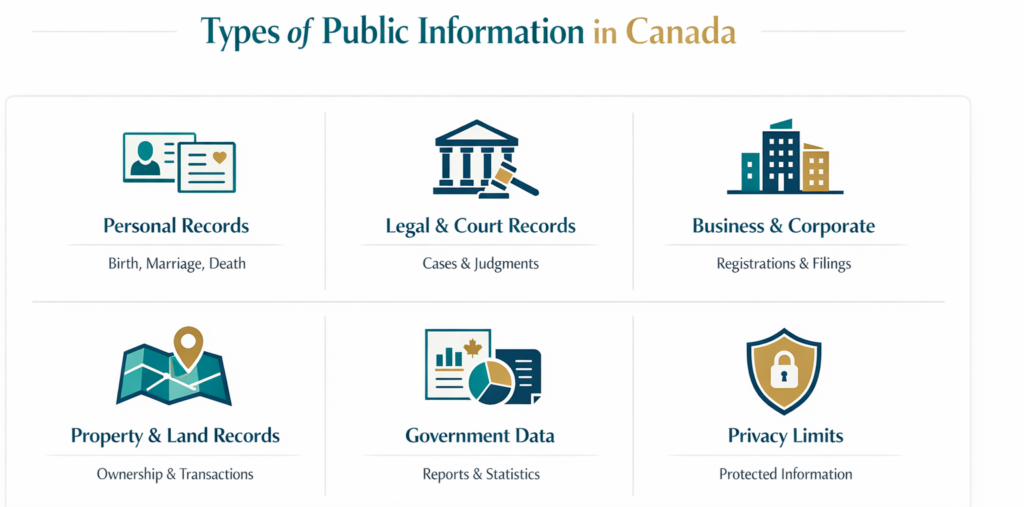
Public information in Canada can be accessed through government databases, court records, and public registries. The process typically involves identifying the right source, submitting a request if required, and complying with privacy laws.
Most people think public information in Canada is hard to access. It’s not. The real problem is knowing where to look, and how to do it legally without wasting time.
Trust is the foundation of any smart financial decision, whether you’re investing in a company, partnering with a supplier, or making a major purchase. But how can you be sure a business is legitimate, financially stable, and operating within the law? The answer lies in public business information.
If you’re wondering How to Find Public Information About a Business in Canada, you’ll be glad to know that government agencies, financial databases, and regulatory bodies provide valuable insights into a company’s history, ownership, and financial health. Accessing these records isn’t just for corporations or investors; it’s a crucial tool for anyone looking to make informed decisions, avoid fraud, and minimize risk.
In this guide, we’ll explore why public business information matters, where to find it, and how leveraging these resources can help safeguard your financial and professional interests.
Key Takeaway:
- Can you find public information in Canada? Yes, public records such as court documents, business registrations, property records, and government data are accessible through official federal, provincial, and municipal databases under transparency laws like the Access to Information Act. [1]
- Where to search public records in Canada: Use government portals, corporate registries, court systems, and open data platforms. Most are searchable online, while some require formal requests or small administrative fees. [1]
- Key sources include federal open data portals, provincial registries, municipal databases, and legal record systems. Choosing the correct jurisdiction (federal vs provincial) is essential for accurate and efficient searches. [2]
- What information is NOT public? Sensitive data such as health records, personal financial details, and certain legal or identity information are protected under privacy laws and cannot be accessed without proper authorization. [2]
- Best practice: Start with official government sources, verify information across multiple databases, and follow legal guidelines to ensure ethical and compliant use of public data. [2]
Bottom Line: Public information in Canada is accessible through verified government sources, but success depends on using the right databases and understanding privacy boundaries that restrict sensitive data.
- Source: Unleash Your Power – How to Find Public Information in Canada
- Source: Unleash Your Power – Research & Data Insights
Why Public Business Information Matters
Before investing in a company, starting a business partnership, or making a big purchase, you need to know if the business is trustworthy. Public business records give you valuable insights that help you make smart decisions, avoid scams, and reduce financial risks.
Here’s why checking public business information is so important:

- Investors: Imagine putting your money into a company that looks promising only to find out later it’s drowning in debt or facing lawsuits. Public records help investors check a company’s financial health, leadership, and legal history before making a commitment.
- Entrepreneurs & Business Owners: Whether you’re researching competitors, looking for reliable suppliers, or considering a partnership, business records give you key details about ownership, finances, and past performance. This can help you make informed decisions and avoid costly mistakes.
- Consumers: Planning to buy from a new company? A quick check of public records can confirm if the business is registered, licensed, and has a clean track record. This extra step can save you from falling victim to scams or shady businesses.
- Regulators & Legal Professionals: From fraud investigations to compliance checks, public records help regulators and legal experts ensure businesses follow the rules and operate ethically.
Where to Find Public Business Information in Canada
Whether you’re investing, partnering, or making a major purchase, checking public business records can help you avoid risks and make informed decisions. Canada has multiple government databases, financial records, legal filings, and business directories that provide valuable insights into a company’s legitimacy, financial health, and reputation. Here’s where you can find the information you need.
- Government of Canada Open Data Portal
- Provincial court websites
- Land registry offices
- Corporate registries (federal and provincial)
- Library and Archives Canada
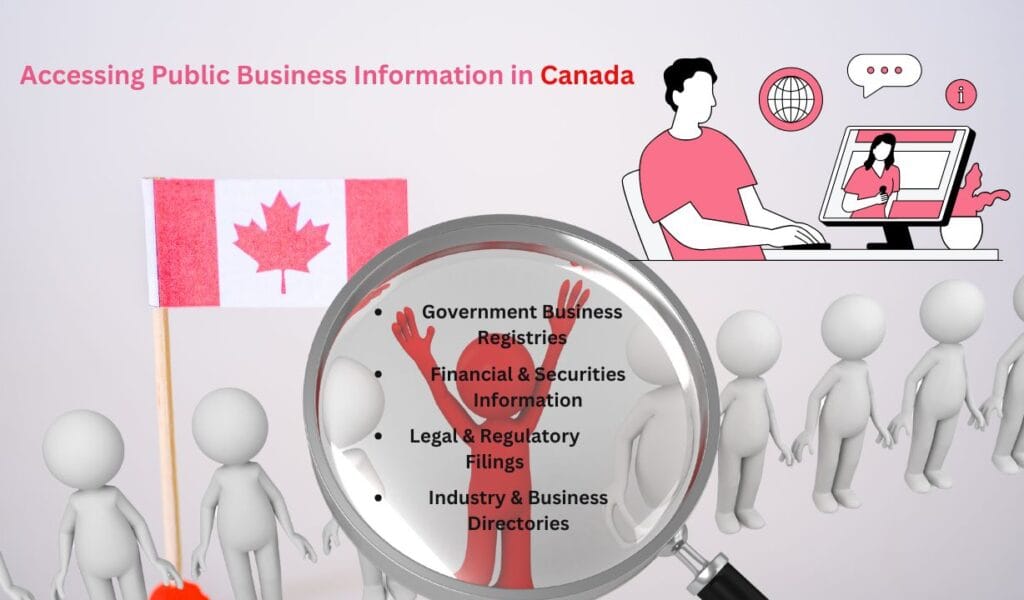
Government Business Registries: Check If a Business Is Legally Registered
All businesses in Canada must be registered at either the federal or provincial level. These registries confirm whether a company exists, operates legally, and is in good standing.
Where to Search:
- Corporations Canada (canada.ca) – For federally incorporated businesses under the Canada Business Corporations Act (CBCA).
- Provincial Registries: Businesses registered at the provincial level can be found here:
- Ontario: Ontario Business Central
- British Columbia: BC Registries and Online Services
- Alberta: Corporate Registry
- Quebec: Registraire des entreprises
- Saskatchewan, Manitoba, and other provinces have their own business registries.
Why It Matters:
- Ensures the company is legally registered and not operating under a false name.
- Helps verify directors, business status, and incorporation date.
- Confirms whether the company is active, dissolved, or in default.
Financial & Securities Information: Check a Business’s Financial Health
If a company is publicly traded or operates within a regulated industry, financial reports and investor disclosures are often publicly available.
Where to Search:
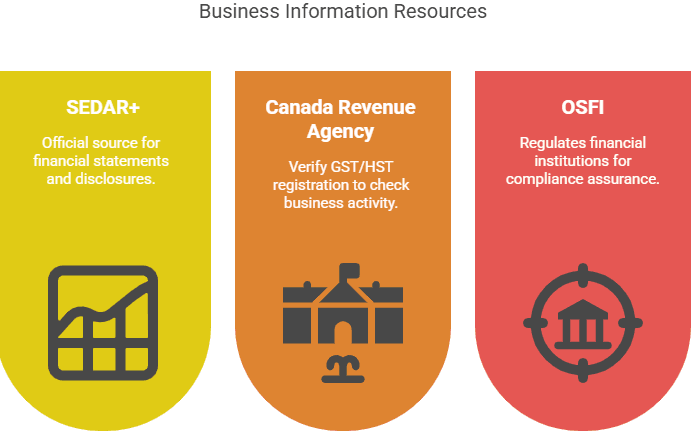
- SEDAR+ (sedarplus.ca) – Official source for financial statements, annual reports, and investor disclosures of publicly traded companies.
- Canada Revenue Agency (CRA) – While full tax records aren’t public, you can verify if a business is registered for GST/HST, which can indicate whether it’s actively operating.
- Office of the Superintendent of Financial Institutions (OSFI) – Regulates banks, insurance companies, and financial institutions to ensure compliance.
Why It Matters:
- Helps investors evaluate financial stability and past performance.
- Verifies if a business is registered for taxation, avoiding potential fraud risks.
Legal & Regulatory Filings: Check for Lawsuits or Bankruptcies
A company’s legal history can reveal red flags, including lawsuits, bankruptcies, or regulatory actions. Before signing a contract or making a major financial commitment, it’s crucial to check if a company has a history of legal trouble.
Where to Search:
- Bankruptcy & Insolvency Records (osb.ic.gc.ca) – Lists businesses that have filed for bankruptcy or insolvency.
- CanLII (canlii.org) – A free legal database where you can search for lawsuits, tribunal decisions, and court cases involving businesses.
- Competition Bureau Canada – Investigates companies involved in fraud, misleading advertising, or anti-competitive behavior.
Why It Matters:
- Protects against scams, lawsuits, and financial risk.
- Helps confirm if a business is facing or has settled legal disputes.
Industry & Business Directories: Find Market Insights and Company Reputation
Business directories and industry databases provide more than just contact details. They help identify a company’s credibility, industry standing, and potential business partnerships.
Where to Search:
- Canadian Company Capabilities Database (ic.gc.ca) – Lists companies based on industry category, great for supplier or B2B research.
- Dun & Bradstreet Canada – Offers business credit reports, useful for evaluating financial stability before entering into contracts.
- Local Chambers of Commerce – Many regional chambers maintain business directories and can provide credibility ratings or references.
Why It Matters:
- Useful for finding partners, suppliers, or business clients in specific industries.
- Helps assess a company’s market reputation and credibility.
Consumer Protection & Reputation Checks: Verify Customer Complaints and Reviews
Before engaging with a business, checking customer feedback and complaint records can reveal potential issues related to scams, fraud, or poor customer service.
Where to Search:
- Better Business Bureau (BBB) Canada – Tracks consumer complaints, business ratings, and dispute resolutions.
- Provincial Consumer Protection Agencies – Each province has an agency that handles consumer complaints and fraud investigations.
- Online Reviews & Social Media – Google Reviews, LinkedIn, and industry forums offer firsthand customer insights into reliability and service quality.
Why It Matters:
- Ensures a business has no history of fraud, unresolved complaints, or shady practices.
- Reveals customer experiences, refund policies, and potential risks before doing business.
How to Find Public Information in Canada (Step-by-Step)
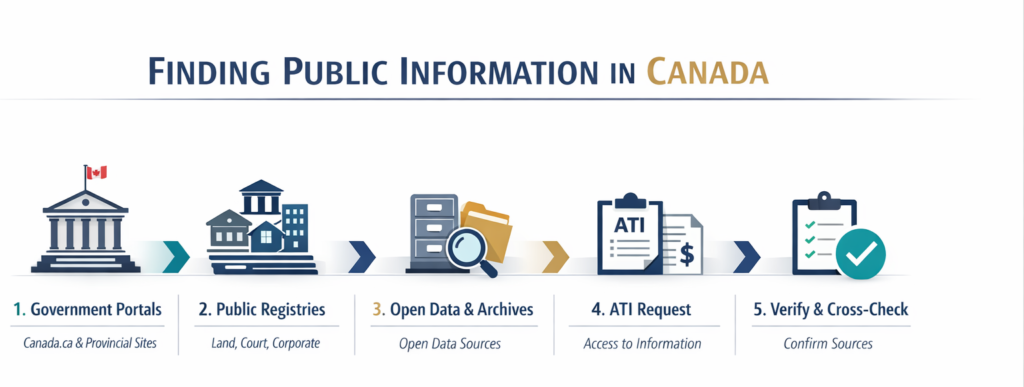
- Identify the type of information you need: Determine whether you’re looking for court records, business registrations, property data, or personal public records.
- Use official government sources: Access federal and provincial databases such as court registries, land title offices, and corporate registries.
- Submit a formal request if required: Some records require an Access to Information (ATI) request, depending on the data sensitivity.
- Verify legal access and privacy limits: Ensure your request complies with Canadian privacy laws and restrictions on personal data.
Consequences of Not Researching a Business
Skipping a background check on a business can have serious consequences, from financial losses to legal troubles. Whether you’re investing, partnering, or making a purchase, failing to verify a company’s legitimacy and track record can put you at risk. Here’s what can happen if you don’t take the time to research:
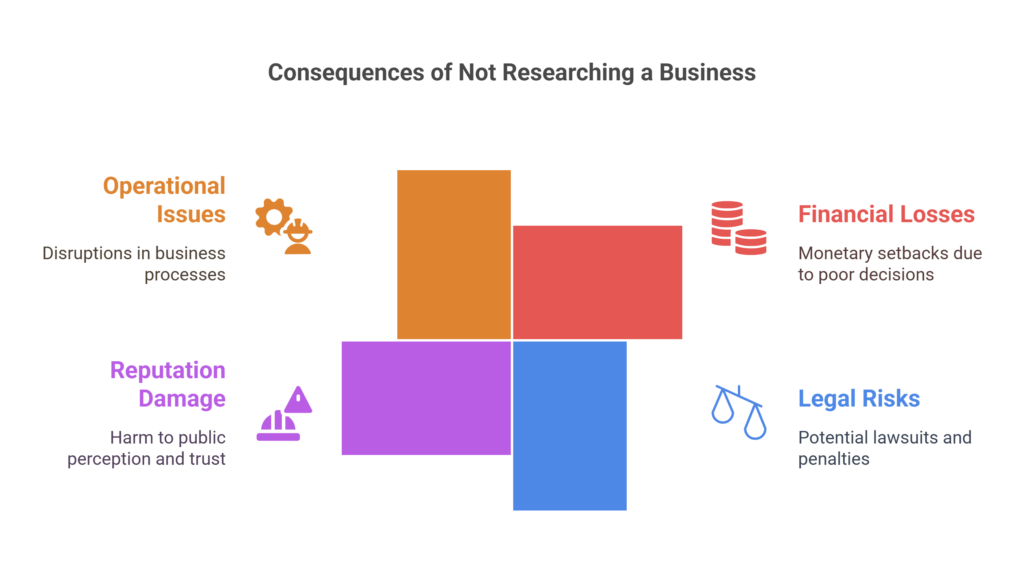
Financial Losses
Investing in or buying from an unverified business can lead to significant financial setbacks. Fraudulent companies may present themselves as stable and trustworthy, only to disappear after securing funds. Consumers who skip this step may end up paying for products or services that never arrive, while investors risk losing capital in unstable or non-existent enterprises. Even businesses that appear legitimate may be struggling financially, which could mean unpaid invoices, missed deliveries, or even bankruptcy.
Legal Risks
A company may seem reliable on the surface but could be entangled in lawsuits, regulatory violations, or tax issues. Entering into contracts with such businesses can expose you to legal disputes, financial penalties, and regulatory scrutiny. For instance, partnering with a company that has ongoing legal troubles might lead to compliance violations, liability claims, or unexpected contract terminations. Checking public business records helps you avoid these costly legal entanglements.
Reputation Damage
Your reputation is one of your most valuable assets, and partnering with unethical or poorly managed businesses can harm it. If a company you work with is caught in fraudulent activities, labor violations, or environmental scandals, your association with them could lead to loss of trust among customers, investors, and other stakeholders. This is especially important for businesses that rely on strong branding, ethical sourcing, and corporate responsibility.
Operational Issues
For business owners, unreliable suppliers or vendors can disrupt daily operations. If a supplier has a history of failing to meet deadlines, providing low-quality goods, or breaching contracts, your business may face unexpected service delays or financial losses. A simple background check can help you identify potential red flags before committing to long-term agreements.
How to Avoid These Risks
Before you invest, partner with, or buy from a business, take a few simple steps to make sure it’s legitimate. Doing a little research upfront can save you from major headaches later. Here’s what you should check:
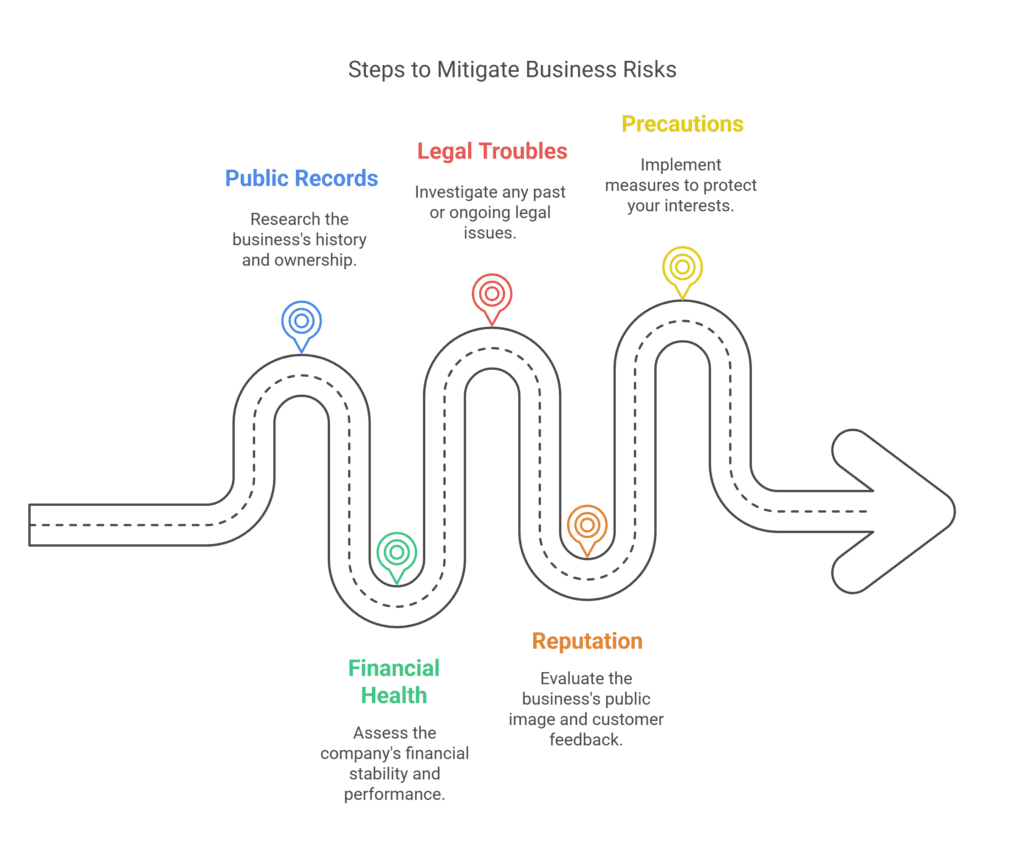
Look Up the Business in Public Records
- Is it officially registered? Check Corporations Canada or provincial business registries to see if the company is legally recognized.
- What kind of business is it? Is it a sole proprietorship, partnership, or corporation? This helps you understand how it operates and who’s responsible for it.
- Can you see who owns it? Some provinces provide ownership details, but others don’t. If the information isn’t available, you may need to dig deeper using legal or financial searches.
Check Financial Health
- Does the business have debt or legal claims? A Personal Property Security Act (PPSA) search can show if the company has loans or liens against its assets.
- Has it filed for bankruptcy? The Office of the Superintendent of Bankruptcy Canada keeps records of businesses that have gone under.
- Is it a public company? If so, check SEDAR+ for financial reports and investor filings.
Find Out If It’s Been in Legal Trouble
- Has the business been sued? Search provincial court records to see if it has been involved in lawsuits.
- Does it follow industry rules? Some businesses need special licenses or approvals. You can check with government regulators to make sure they comply.
- Are there customer complaints? Look up the company on the Better Business Bureau (BBB) or consumer protection websites to see if people have reported scams or poor service.
Look at Its Reputation
- What do customers say? Read reviews on Google, Trustpilot, and the BBB to see if people have had good or bad experiences.
- Is it mentioned in the news? Search for news articles to check for fraud accusations or scandals.
- Does it have an online presence? A real business usually has a website, active social media, and a professional image. If you can’t find much about it, that’s a red flag.
Take Precautions Before Doing Business
- Ask for proof, request business licenses, tax records, or references from suppliers before making any deals.
- Talk to a professional if you’re investing a lot of money, get a lawyer or financial advisor to review the details.
- Don’t rush if a company is pushing you to act fast or making promises that seem too good to be true, take a step back and investigate further.
Conclusion
Finding public information about a business in Canada isn’t complicated if you know where to look. Whether you’re verifying a company’s legitimacy, checking financial stability, or researching legal history, resources like federal and provincial business registries, financial disclosure databases, and court records provide valuable insights.
Taking a few extra steps such as reviewing customer feedback, searching news reports, and consulting professionals can help you avoid risks and make informed decisions.
Before entering into any business transaction, always do your due diligence. A quick background check can save you from financial losses, legal troubles, and unreliable partnerships. If you’re unsure, consider seeking legal or financial advice to ensure you’re making the right move.
Frequently Asked Questions About Finding Public Information in Canada
What types of public information are available in Canada?
Public information includes court records, business registrations, property records, and certain government documents, depending on legal accessibility.
Can anyone access public records in Canada?
Yes, many public records are accessible to anyone, but access may be limited by privacy laws, especially for sensitive personal information.
Is it safe to use online databases for Canadian public records?
Yes, official government websites and licensed registries are safe to use. However, third-party sites may charge hidden fees or share inaccurate data, so always verify the source and ensure it complies with Canadian privacy laws.
How much does it cost to access public records in Canada?
Many public records are free, such as federal statutes or some court decisions. Others, like land title searches or detailed corporate filings, typically cost between CAD $5–$30. Freedom of Information requests may also include small processing fees.
Are public records free in Canada?
Some public records are free, especially through government websites, while others may require a fee depending on the type of information and access method.