

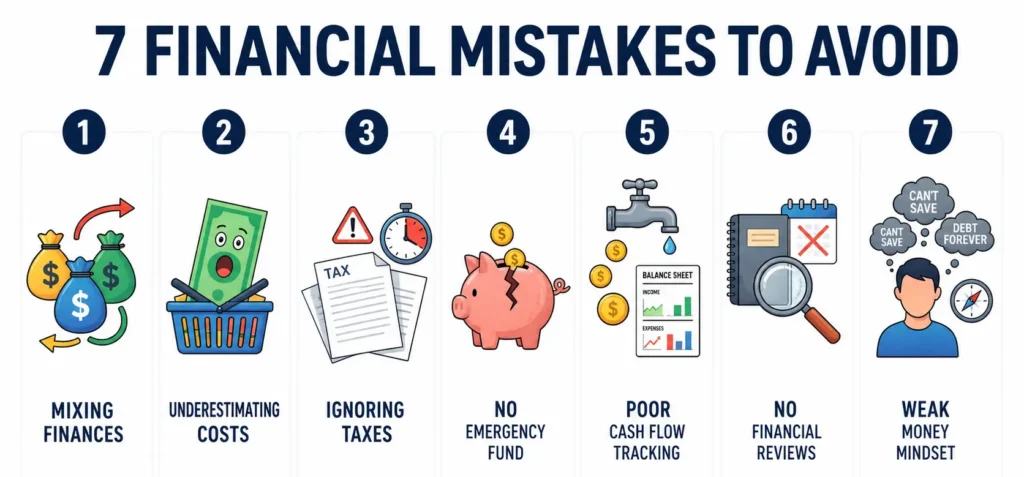
Financial planning helps Canadian entrepreneurs manage cash flow, prepare for taxes, and make confident business decisions. The most common mistakes are mixing business and personal finances, underestimating startup costs, ignoring tax obligations, lacking emergency savings, poor expense tracking, skipping financial reviews, and neglecting money mindset. Avoiding these mistakes can reduce financial stress and improve long-term business sustainability.
Key Takeaway:
- Financial planning helps Canadian entrepreneurs manage business income, expenses, cash flow, taxes, debt, and investments through a structured roadmap that supports profitability, stability, and long-term business growth. [1]
- A strong financial plan includes realistic budgeting, cash flow forecasting, tax planning, emergency reserves, debt management, retirement savings, business insurance, and measurable financial goals to improve decision-making and reduce financial uncertainty. [1]
- Canadian entrepreneurs should regularly monitor financial statements, separate business and personal finances, leverage available tax deductions and credits, automate savings where possible, and review their financial plan as the business grows or market conditions change. [2]
- Financial planning is an ongoing process—not a one-time task. Reviewing your strategy regularly and working with qualified financial or tax professionals helps ensure compliance, improve cash flow, minimize tax liabilities, and prepare for future business opportunities or unexpected challenges. [2]
Bottom Line: Financial planning gives Canadian entrepreneurs greater control over cash flow, taxes, business risks, and future growth. By combining budgeting, forecasting, tax optimization, and regular financial reviews, business owners can build a more resilient, profitable, and sustainable business.
The 7 Most Costly Financial Mistakes for Canadian Entrepreneurs
| Mistake | Risk |
|---|---|
| Mixing finances | Tax confusion & poor visibility |
| Underestimating costs | Cash shortages |
| Ignoring taxes | Penalties & large tax bills |
| No emergency fund | Business instability |
| Poor tracking | Missed deductions |
| Skipping reviews | Reactive decisions |
| Limiting money mindset | Underpricing & fear-based decisions |
What Is Financial Planning for Canadian Entrepreneurs?
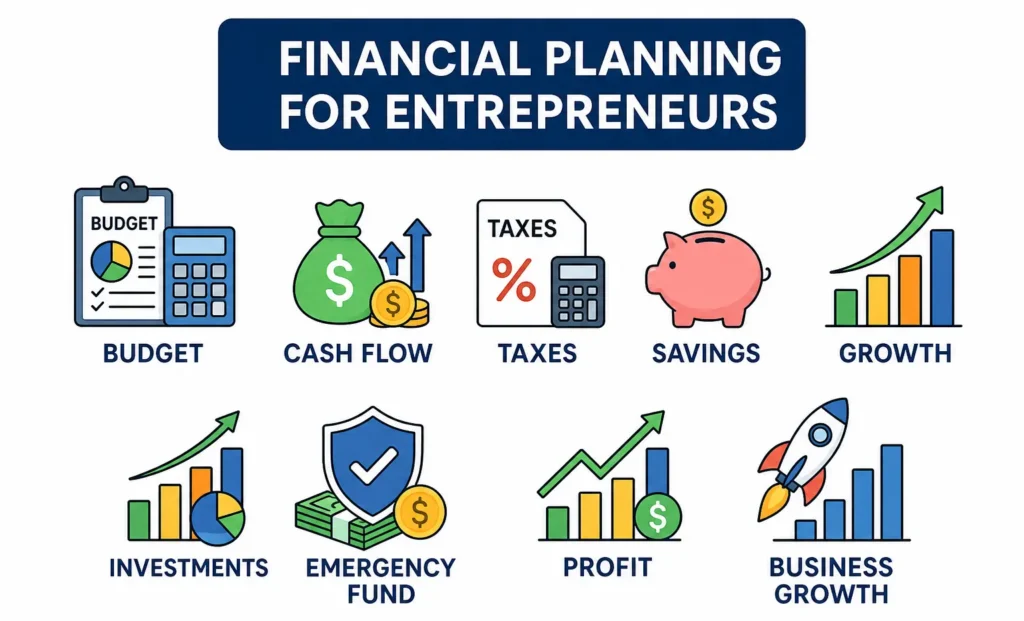
Financial planning for Canadian entrepreneurs is the process of managing business income, expenses, cash flow, taxes, savings, debt, and long-term financial goals to build a profitable and sustainable business. It provides a structured framework for making informed financial decisions, preparing for unexpected expenses, and supporting business growth.
Unlike personal financial planning, entrepreneurial financial planning must account for variable income, operating costs, tax obligations, and ongoing business investments. A strong financial plan typically includes budgeting, cash flow forecasting, expense tracking, tax planning, emergency savings, and regular financial reviews. These practices help business owners maintain healthy cash flow, reduce financial risk, and identify opportunities to improve profitability.
Whether you’re launching a startup, running a coaching practice, or growing a service-based business, a clear financial plan helps you make confident decisions and build a business that supports both your professional and personal financial goals.
Why Most Canadian Entrepreneurs Get Financial Planning Wrong
Many Canadian entrepreneurs launch their businesses with a clear vision but without a financial plan. Their focus is often on attracting clients, delivering services, and generating revenue, while budgeting, cash flow management, and tax planning are left until problems arise.
One of the biggest mistakes is treating business and personal finances as separate. In reality, they’re closely connected. Your business income supports your personal financial goals, while personal obligations influence how much you can invest, save, or reinvest in your business. Without a clear financial system, it’s difficult to understand profitability or make informed decisions.
Most cash flow problems are preventable. They often result from underestimating expenses, failing to plan for taxes, or not tracking where money is going. These issues can create unnecessary stress and limit growth, even when the business is generating consistent revenue.
The solution is proactive financial planning. By separating finances, monitoring cash flow, preparing for taxes, and reviewing your finances regularly, you gain the clarity needed to make confident decisions, reduce financial stress, and build a more resilient business.
What Are The Most Common Financial Mistakes First-Time Business Owners Make?
Starting a business involves more than offering a great product or service; it also requires sound financial management. Many first-time Canadian entrepreneurs make the same financial mistakes, often because they’re focused on growth rather than building strong financial systems. While these mistakes are common, they’re also preventable. By recognizing the risks early and implementing a few practical habits, you can improve cash flow, reduce financial stress, and build a more sustainable business.
Mixing Business and Personal Finances
What is the mistake
Many new entrepreneurs use their personal bank account and credit card for business transactions. While it may seem convenient at first, it quickly becomes difficult to distinguish personal spending from business expenses.
Why it matters
Mixing finances complicates bookkeeping, makes cash flow harder to monitor, and increases the risk of missing legitimate tax deductions. It also makes it difficult to understand whether your business is truly profitable.
How to fix it
Open a dedicated business bank account and apply for a business credit card as soon as you start operating. Use them exclusively for business income and expenses. This simple separation improves bookkeeping accuracy, simplifies tax filing, and provides a clearer picture of your financial performance.
Quick Tip: Separate your business and personal finances from day one; it saves hours of work at tax time.
Underestimating Startup Costs
What is the mistake
Many entrepreneurs budget only for obvious expenses such as website development, equipment, or licensing, while overlooking recurring costs like software subscriptions, insurance, professional services, and marketing.
Why it matters
Unexpected expenses can quickly drain your cash reserves and create unnecessary financial pressure during the critical early stages of your business.
How to fix it
Create a realistic startup budget and include a contingency fund of 20–30% to cover unexpected costs. Conservative financial forecasting reduces the likelihood of cash shortages and helps you make more informed investment decisions.
Quick Tip: Always expect startup costs to be higher and revenue to arrive later than planned.
Ignoring Tax Planning and Quarterly Obligations
What is the mistake
Unlike employees, self-employed Canadians are responsible for managing their own income taxes and, in many cases, GST/HST obligations. Many entrepreneurs wait until tax season before thinking about their tax responsibilities.
Why it matters
Without proper planning, year-end tax bills can create serious cash flow problems and may result in interest or penalties if payments are missed.
How to fix it
Set aside 25–30% of every payment you receive in a separate tax savings account. Understand your obligations with the CRA, including GST/HST registration requirements and quarterly tax installment payments when applicable. Working with an accountant can help you maximize deductions while remaining compliant.
Quick Tip: Treat tax money as untouchable; it belongs to the government, not your business.
Operating Without an Emergency Fund
What is the mistake
Unexpected expenses are inevitable, whether it’s replacing equipment, losing a major client, or facing a seasonal revenue decline.
Why it matters
Without financial reserves, even a temporary setback can disrupt operations or force you to rely on debt.
How to fix it
Aim to build an emergency fund covering three to six months of operating expenses. If that’s not possible initially, start with a smaller savings goal and contribute consistently.
Quick Tip: Small, regular contributions are more effective than waiting until you have extra money.
Failing to Track Cash Flow and Expenses
What is the mistake
Many entrepreneurs know how much revenue they generate but don’t regularly monitor where the money goes.
Why it matters
Poor expense tracking can lead to cash shortages, missed tax deductions, and delayed financial decisions.
How to fix it
Use accounting software such as QuickBooks or Wave to record every transaction. Reconcile your bank accounts weekly and review cash flow reports regularly to understand your financial position.
Quick Tip: Revenue is important, but cash flow keeps your business operating.
Skipping Regular Financial Reviews
What is the mistake
Some entrepreneurs only review their finances when preparing taxes or applying for financing.
Why it matters
Without regular reviews, small financial issues can grow into larger problems before they’re noticed.
How to fix it
Schedule monthly reviews of revenue, expenses, cash flow, and profitability. Every quarter, compare your actual performance against your financial goals and adjust your strategy as needed.
Quick Tip: A one-hour financial review each month can prevent costly mistakes later.
Neglecting Your Money Mindset
What is the mistake
Financial success isn’t only about numbers; it’s also influenced by how you think about money. Limiting beliefs, such as fearing higher prices or avoiding financial discussions, can affect business decisions.
Why it matters
A negative money mindset often leads to underpricing services, delaying investments, or avoiding financial planning altogether. These habits can limit business growth even when opportunities exist.
How to fix it
View financial management as a skill that can be developed. Invest time in improving your financial knowledge, seek guidance from trusted professionals, and regularly review your pricing, spending, and financial goals with confidence rather than fear.
Quick Tip: Strong financial habits begin with believing you can learn and improve, not with knowing everything from the start.
Common Financial Planning Mistakes and How to Avoid Them
| Financial Mistake | Potential Impact | Best Practice |
|---|---|---|
| Mixing business and personal finances | Poor bookkeeping and missed tax deductions | Open separate business bank accounts and use a business credit card |
| Underestimating startup costs | Cash shortages and delayed growth | Include a 20–30% contingency buffer in your budget |
| Ignoring tax planning | Unexpected tax bills and CRA penalties | Set aside 25–30% of every payment for taxes |
| No emergency fund | Financial stress during slow periods | Save 3–6 months of operating expenses |
| Poor cash flow tracking | Overspending and missed financial issues | Monitor income and expenses weekly |
| Skipping financial reviews | Delayed decisions and missed opportunities | Review financial performance monthly and quarterly |
| Limiting money mindset | Underpricing services and avoiding growth | Treat financial management as a learnable business skill |
How to Create a Financial Plan for Your Business
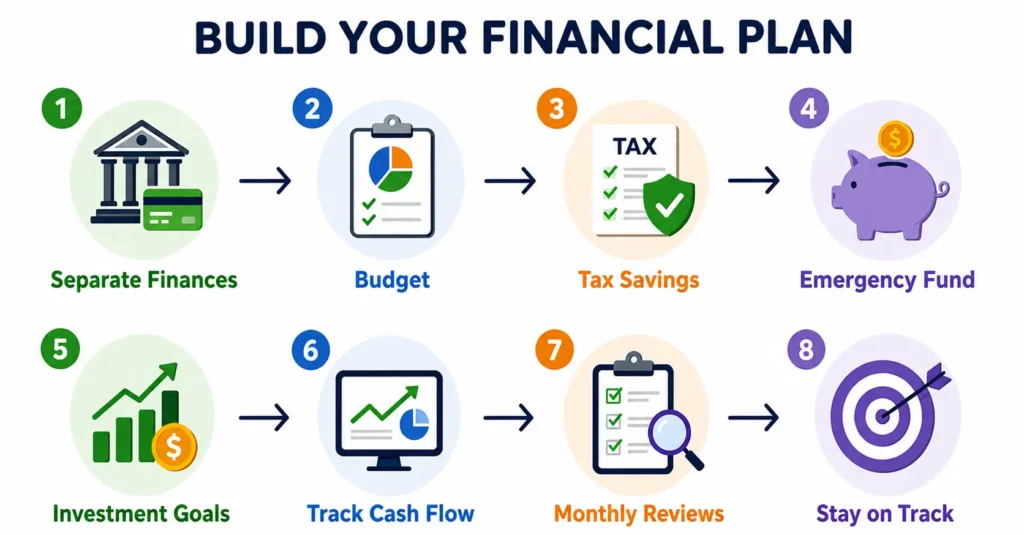
Creating a financial plan doesn’t require advanced accounting knowledge. By following a few consistent practices, you can improve cash flow, prepare for unexpected expenses, and make more informed business decisions.
Separate Your Business and Personal Finances
Open a dedicated business bank account and use a business credit card exclusively for business transactions. Keeping your finances separate makes bookkeeping easier, improves cash flow visibility, simplifies tax preparation, and helps you accurately measure your business’s financial performance.
Create a Realistic Budget
List your fixed expenses, estimate variable costs, and forecast your expected income for the next 12 months. Be conservative with revenue projections and include a 20–30% contingency buffer to cover unexpected expenses or slower-than-expected business growth.
Set Up a Tax Savings System
As a self-employed entrepreneur, you’re responsible for setting aside your own taxes. Transfer 25–30% of every payment you receive into a separate savings account dedicated to income tax and GST/HST obligations. This habit helps you avoid cash flow problems and unexpected tax bills.
Build an Emergency Fund
Set a goal of saving three to six months of operating expenses. Even small, consistent contributions create a financial safety net that can help your business recover from unexpected costs, seasonal slowdowns, or the loss of a major client.
Track Your Cash Flow
Monitor every dollar coming into and leaving your business. Accounting software such as QuickBooks or Wave can automate expense tracking, generate financial reports, and help you identify trends before they become financial problems.
Review Your Finances Regularly
Schedule a monthly financial check-in and a more detailed quarterly review. Compare your actual income and expenses with your budget, evaluate your cash flow, and adjust your financial strategy as your business grows. Consistent reviews help you stay proactive instead of reacting to financial challenges after they occur.
Best Practices for Financial Planning
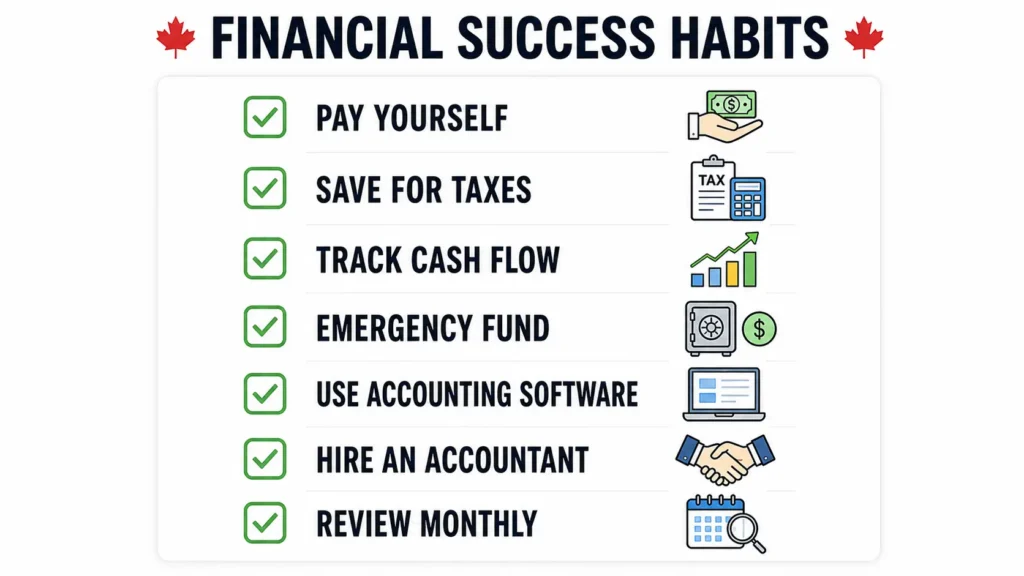
Strong financial habits don’t develop overnight; they’re built through consistent systems and regular review. While every business has unique financial needs, following these best practices can help Canadian entrepreneurs improve cash flow, stay compliant with tax obligations, and build a more resilient business.
- Pay yourself a consistent salary whenever possible to create a predictable personal income and simplify budgeting.
- Set aside 25–30% of your income for taxes to prepare for income tax and GST/HST obligations.
- Review your cash flow weekly to identify potential issues before they become larger financial problems.
- Maintain an emergency reserve with enough savings to cover at least three to six months of operating expenses.
- Use accounting software such as QuickBooks or Wave to automate bookkeeping and monitor financial performance.
- Work with a qualified accountant to maximize tax deductions, maintain compliance, and support long-term planning.
- Set annual financial goals and review your progress quarterly to ensure your business stays aligned with your growth objectives.
Real-World Example: How One Canadian Business Coach Improved Financial Stability
Sarah, a new business coach in Canada, quickly attracted clients but struggled to manage her finances. She deposited client payments into her personal bank account, used the same credit card for personal and business purchases, and spent most of her income without setting money aside for taxes. At the end of her first year, she faced an unexpected tax bill that placed significant pressure on both her business and personal finances.
To regain control, Sarah opened separate business banking accounts, began saving 30% of every client payment in a dedicated tax account, and started tracking her income and expenses using accounting software. She also built an emergency fund covering three months of operating expenses to prepare for slower seasons and unexpected costs.
Within a year, she had greater visibility into her cash flow, felt more confident making financial decisions, and no longer worried about surprise tax bills. By creating simple financial systems, she reduced financial stress and built a stronger foundation for sustainable business growth.
Key takeaway: Simple financial systems can have a significant impact on cash flow, tax readiness, and long-term business stability.
Strategic Financial Planning for Coaches and Service-Based Entrepreneurs
If you’re launching your coaching practice or building a service-based business, you face unique financial challenges. Variable income makes budgeting trickier. You’re selling your expertise, not physical products, which affects how you think about pricing and value. Payment processing fees and software subscriptions can quietly eat into margins.
Here’s what works: establish clear payment terms upfront. Require deposits or payment plans for longer engagements. Build pricing that reflects your expertise and the transformation you deliver, not just your time. When clients invest appropriately, they’re more committed to the work.
The reinvestment question haunts many service entrepreneurs: how much should you reinvest versus pay yourself? Apply smart reinvestment strategies by first ensuring you’re paying yourself a consistent base amount monthly. Then allocate percentages to taxes, savings, and reinvestment. A common split: 50% owner pay, 25% taxes, 15% operating expenses, 10% growth/savings.
You need both a business and a personal financial plan that work together. Your business supports your personal financial goals, retirement savings, emergency funds and lifestyle needs. But your personal financial stability also reduces pressure on your business to generate unrealistic returns immediately.
Conclusion
Financial planning is one of the most important skills a Canadian entrepreneur can develop. Separating finances, planning for taxes, tracking cash flow, maintaining emergency savings, and reviewing financial performance regularly can help prevent the most common business money problems. Entrepreneurs who build these systems early are better positioned to reduce stress, make confident decisions, and grow sustainable businesses.
FAQs
Why is financial planning important for Canadian entrepreneurs?
Financial planning helps Canadian entrepreneurs manage cash flow, prepare for taxes, control expenses, and make informed business decisions. A well-structured financial plan reduces financial stress, improves profitability, and supports long-term business growth.
What are the biggest financial planning mistakes new business owners make?
The most common mistakes include mixing business and personal finances, underestimating startup costs, ignoring tax obligations, failing to track cash flow, operating without an emergency fund, skipping regular financial reviews, and overlooking the impact of money mindset on business decisions.
How much should self-employed Canadians set aside for taxes?
A common recommendation is to set aside 25% to 30% of your gross business income for income taxes and other tax obligations. The exact amount depends on your income, province, business structure, and applicable tax rules, so working with an accountant is advisable.
Should I open a separate business bank account?
Yes. A dedicated business bank account makes it easier to track income and expenses, simplify bookkeeping, identify tax deductions, and understand your business’s financial performance. It also helps maintain clear separation between personal and business finances.
How often should entrepreneurs review their financial plan?
Review your finances at least monthly, with a more comprehensive review every quarter. Regular reviews help you monitor cash flow, compare actual results with your budget, identify potential issues early, and adjust your financial strategy as your business grows.
What financial tools should Canadian entrepreneurs use?
Many entrepreneurs use accounting software such as QuickBooks or Wave to manage bookkeeping, invoicing, expense tracking, and financial reporting. Combining these tools with budgeting software and guidance from a qualified accountant can improve financial accuracy and efficiency.
Is hiring an accountant or financial advisor worth it for entrepreneurs?
For many entrepreneurs, yes. A qualified accountant or financial advisor can help with tax planning, financial forecasting, compliance, and identifying deductions that may reduce your overall tax burden. Their expertise can also help you avoid costly mistakes and make more informed business decisions.