
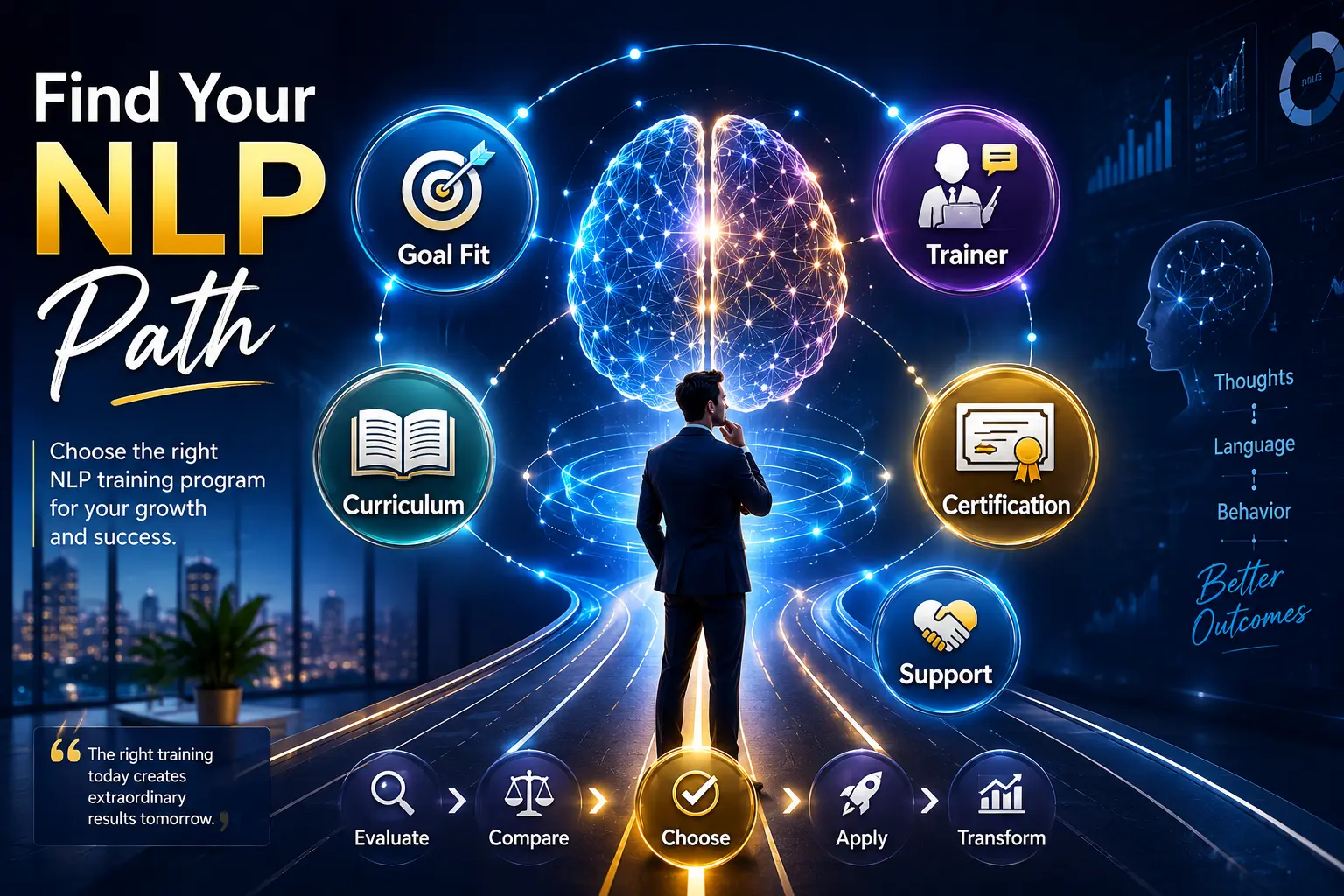
The right NLP training program aligns with your goals, provides extensive hands-on practice, is taught by experienced trainers, offers recognized certification, and includes ongoing support. Before enrolling, compare curriculum quality, trainer credentials, accreditation, learning format, and long-term value.
In today’s competitive business world, success is often determined by how well you communicate, lead, and adapt to challenges. If you’ve ever felt like you’re not fully connecting with your team or struggling to reach your full potential, Neuro-Linguistic Programming (NLP)training programs could be the solution you’ve been looking for.
Key Takeaway:
- The right NLP training program aligns with your goals, whether you want personal growth, improved communication skills, leadership development, or a professional coaching career. Choosing a program without a clear objective often leads to disappointing results. [1]
- Look for programs with credible trainers, recognized certifications, and a curriculum that covers core NLP techniques such as rapport building, anchoring, reframing, language patterns, and goal-setting strategies. [2]
- Hands-on practice is essential. High-quality NLP programs include live demonstrations, supervised exercises, role-playing, feedback sessions, and real-world application opportunities rather than relying solely on theory. [3]
- When comparing programs, evaluate learning format, duration, trainer experience, accreditation, student reviews, post-certification support, and overall value rather than focusing only on price. [4]
- The strongest NLP certifications provide ongoing mentorship, alumni communities, and continuing education opportunities that help graduates build confidence and apply NLP skills effectively after completing the course. [5]
Bottom Line: Choosing the right NLP training program requires balancing trainer credibility, practical experience, accreditation, learning format, and long-term support. The best programs focus on skill development and real-world application, helping students create meaningful personal and professional change.
- Source: How Long Does It Take to Become an NLP Practitioner?
- Source: How to Choose an NLP Certification in Toronto
- Source: Why Most NLP Certifications Fail Real-World Application
- Source: Top NLP Certification Programs in Canada
- Source: Post-Certification Support and Mentorship
NLP offers practical tools to help you understand how thoughts, language, and behavior are interconnected. It’s about more than just talking; it’s about truly listening, building trust, and positively influencing outcomes. By learning NLP, you’ll gain the skills to boost your emotional intelligence, improve your problem-solving abilities, and motivate both yourself and your team.
Whether you aim to enhance your leadership style, communicate more effectively, or navigate difficult situations easily, NLP training programs provide a structured way to achieve these goals. They equip you with the techniques to unlock better personal and professional performance and create lasting success in any field.
With NLP training, you’re not just learning a skill; you’re transforming how you approach business and life.
What Is an NLP Training Program?
An NLP training program is a structured learning experience designed to teach Neuro-Linguistic Programming techniques that improve communication, mindset, behavior, and personal effectiveness.
NLP training helps individuals understand how thoughts, language, and behavior interact to influence outcomes. These skills are commonly applied in coaching, leadership, sales, education, therapy, and personal development.
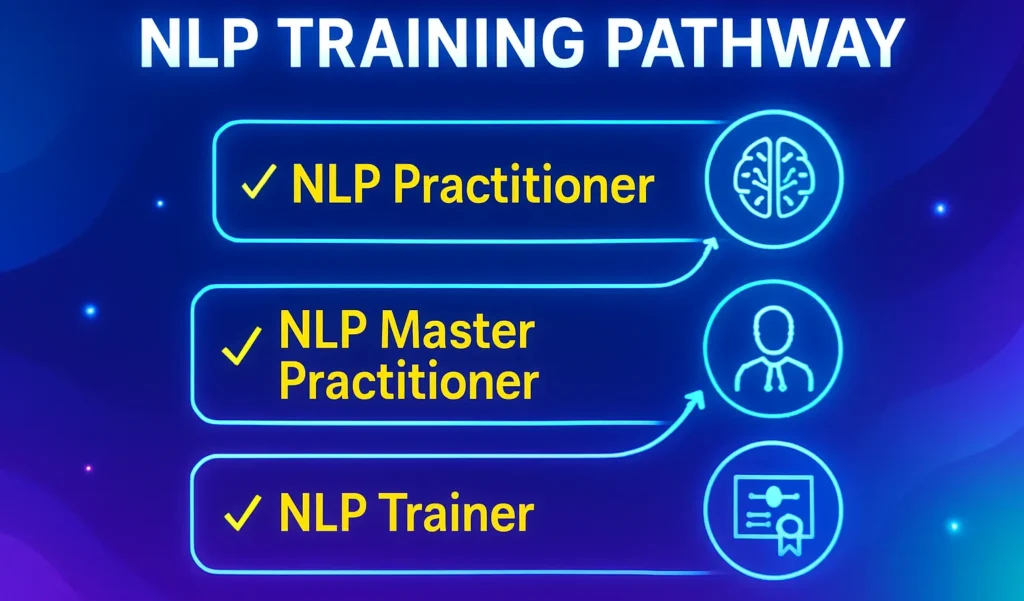
Most NLP training programs are divided into several certification levels:
| Training Level | Primary Focus | Typical Duration |
| NLP Practitioner | Foundational NLP techniques and models | 5–14 days |
| NLP Master Practitioner | Advanced behavioral change and coaching skills | Several weeks to months |
| NLP Trainer | Teaching and facilitating NLP professionally | Several months to a year |
Core NLP topics often include rapport building, anchoring, reframing, language patterns, goal setting, and communication strategies.
How NLP Training Works
Most reputable NLP training programs follow a structured learning process that combines theory with practical application.
Learn NLP Concepts
Students begin by learning foundational NLP principles, including communication models, perception, language patterns, and behavioral change techniques.
Observe Live Demonstrations
Experienced trainers demonstrate NLP techniques in real-world situations, helping participants understand how the methods work in practice.
Practice Through Exercises
Participants apply techniques with partners or small groups. Practical exercises help reinforce learning and build confidence.
Receive Feedback and Coaching
Constructive feedback allows learners to refine their skills, correct mistakes, and improve technique effectiveness.
Apply Skills in Real-Life Situations
The most effective NLP programs encourage participants to use their skills immediately in leadership, coaching, business, or personal development settings.
Programs that emphasize practical experience generally produce stronger learning outcomes than programs focused solely on theory.
Understanding Your Goals: Why Are You Seeking NLP Training?
When seeking NLP training, it’s crucial to understand your goals from the outset. Clear objectives provide direction and allow you to measure progress effectively. Whether you aim to improve communication skills, overcome personal barriers, or enhance leadership capabilities, knowing why you’re pursuing NLP is key to maximizing its benefits.
For instance, if you’re aiming to improve professional relationships, NLP techniques can help you refine how you express yourself and read others. On the other hand, if your goal is personal growth, NLP offers tools to shift limiting beliefs and create positive habits.
Being specific about your goals ensures that your training is purposeful and relevant. Whether it’s boosting confidence, breaking unproductive patterns, or achieving career success, having a clear goal allows NLP to target your needs more effectively. Each technique you learn will be tied to a concrete objective, making your journey through NLP focused and result-driven.
By understanding why you’re seeking NLP training, you align your actions with your desired outcomes, creating a more impactful learning experience.
Types of NLP Training Programs Available
When it comes to NLP training programs, the options can seem endless, but understanding the right fit for your needs is key. Let’s break down the types of NLP training programs available and see which one might resonate with you:
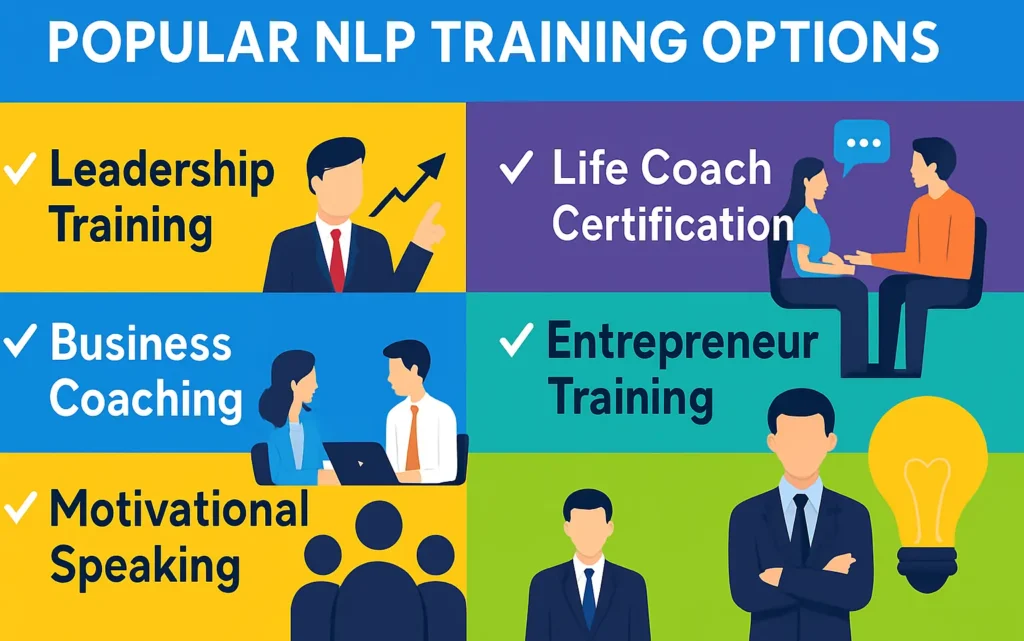
Advanced NLP Training & Certification
Already familiar with the basics of NLP? This program is designed to take your skills to the next level. Tailored for professionals and practitioners ready to master advanced techniques, this certification provides in-depth tools to elevate your influence and effectiveness. Whether you’re a coach, therapist, or business leader, this course offers practical strategies for applying NLP in real-world scenarios.
If you’re new to NLP, our guide on NLP Certification Programs explains the most common certification pathways and what each level includes.
Leadership Training
Ever wondered what separates good leaders from great ones? It’s their ability to communicate, inspire, and motivate on a deeper level. With NLP leadership training, you’ll learn how to truly connect with your team, understand their needs, and guide them toward success.
Many professionals also explore how NLP supports leadership development and organizational success in modern workplaces.
Life Coaching Certification
Thinking about becoming a life coach? This program uniquely combines NLP with life coaching, giving you a powerful framework to help clients break through personal hurdles and achieve their deepest goals. You’ll learn hands-on techniques for guiding individuals through life’s challenges, offering not just support, but strategies for real, lasting change.
NLP for Business/Entrepreneurs
Running a business is tough, and success goes beyond the numbers; it’s about understanding people. This NLP program helps entrepreneurs and business professionals sharpen decision-making, enhance negotiation skills, and build stronger, more influential relationships. You’ll gain practical tools to decode the psychology behind every interaction, allowing you to confidently lead and resolve conflicts easily.
Business Coaching
If you’re passionate about helping individuals and teams grow, this program is for you. Business coaching with NLP goes beyond traditional advice; it’s about equipping others with the mindset, tools, and strategies to thrive in any business environment. Through NLP techniques, you’ll learn how to unlock untapped potential, boost productivity, and confidently guide clients through their toughest challenges.
Motivational Speaker Training
Want to captivate an audience and leave them truly inspired? NLP-based motivational speaker training goes beyond traditional public speaking; it teaches you the art of delivering impactful messages that resonate deeply with your audience. Using NLP techniques, you’ll learn how to connect emotionally, read your audience, and deliver speeches that motivate people to take meaningful action.
Each of these NLP programs offers something unique, and the best part? They’re designed to give you practical skills you can apply immediately, no fluff, just real value. What’s your goal: mastering leadership, becoming a coach, or building a thriving business? There’s an NLP training that fits your journey!
Why Choosing the Right NLP Program Matters
The quality of your NLP training can significantly influence your results.
A comprehensive program helps you develop confidence, communication skills, coaching ability, and behavioral change techniques that can be applied in multiple areas of life and work.
Choosing the wrong program may result in limited practical skills, a weak understanding of NLP concepts, and minimal long-term value.
The right training program can help you:
- Improve communication effectiveness
- Develop stronger leadership skills
- Enhance coaching capabilities
- Build confidence in professional settings
- Improve problem-solving and decision-making
- Support personal growth and mindset development
Because NLP is a skills-based discipline, the quality of instruction and practice opportunities often matters more than the certificate itself.
NLP Training and Professional Development: Key Facts
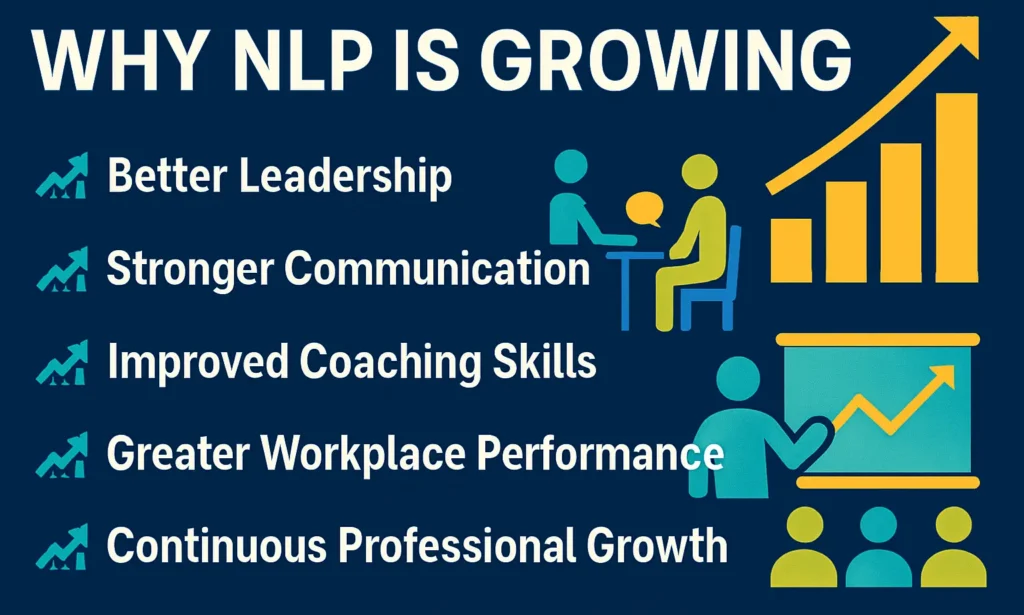
The demand for professional coaching, leadership development, and communication training continues to grow globally.
According to the International Coaching Federation (ICF), coaching is increasingly used by organizations to improve leadership effectiveness, employee engagement, and workplace performance.
Many professionals pursue NLP training to strengthen communication skills, improve decision-making, and develop greater self-awareness in leadership and coaching roles.
This growing interest reflects a broader trend toward continuous learning, professional development, and workplace adaptability.
NLP Training Program Evaluation Checklist
When comparing NLP programs, use the following framework to make an informed decision.
| Factor | What to Look For | Potential Red Flag |
| Trainer Experience | Extensive coaching, consulting, or NLP experience | Limited real-world application |
| Curriculum Quality | Comprehensive and structured learning path | Surface-level content |
| Practice Opportunities | Live exercises and supervised practice | Mostly lecture-based training |
| Accreditation | Recognized NLP organizations or associations | No recognized standards |
| Learning Format | Interactive online or in-person training | Video-only delivery |
| Student Support | Mentorship and alumni community | No ongoing support |
| Reviews and Testimonials | Consistent positive feedback | Unrealistic promises or guarantees |
Evaluating programs using multiple criteria helps prevent decisions based solely on price or marketing claims.
Common Mistakes When Choosing an NLP Training Program
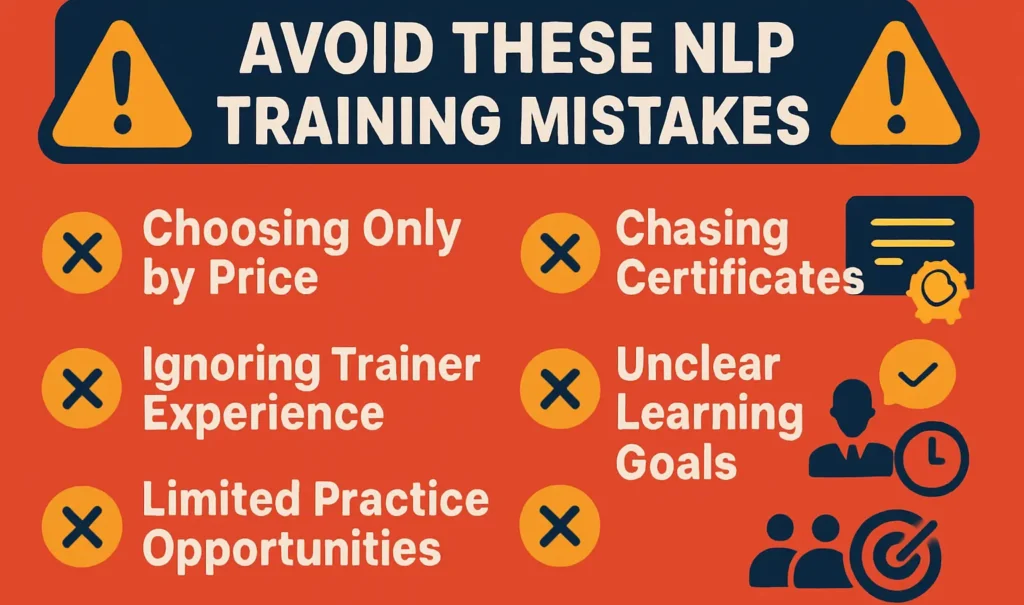
Many people select NLP training based on incomplete information. Avoid these common mistakes.
Choosing Based Only on Price
While budget matters, the lowest-cost program is not always the best value. A higher-quality program may provide better instruction, mentorship, and practical training.
Focusing Only on Certification
A certificate does not automatically translate into competence. Skills are developed through practice and application.
Ignoring Trainer Credentials
The effectiveness of a program often depends heavily on the trainer’s experience and ability to teach practical NLP applications.
Choosing Programs With Limited Practice
Watching videos alone rarely develops strong NLP skills. Look for programs that include live exercises and feedback.
Not Clarifying Your Goals
Different programs serve different purposes. Someone pursuing a coaching career may require a different learning path than someone focused on personal development.
Best Practices for Choosing an NLP Training Program
Following a structured decision-making process can help you select a program that aligns with your goals.
Define Your Desired Outcome
Identify exactly why you want NLP training.
Common goals include:
- Personal development
- Leadership improvement
- Professional coaching
- Sales and communication skills
- Business growth
Compare Multiple Providers
Review several training organizations before making a decision. Comparing options often reveals significant differences in curriculum quality and support.
Review the Curriculum Carefully
Look for programs that cover:
- Rapport building
- Anchoring
- Reframing
- Language patterns
- Goal setting
- Coaching applications
- Ethical considerations
Verify Trainer Experience
Research the trainer’s professional background, coaching experience, and industry reputation.
Speak With Former Students
Past participants can provide valuable insight into the quality of training and post-certification support.
Evaluate Ongoing Support
Strong training providers often offer mentoring, alumni communities, advanced training opportunities, and continued professional development.
Real-World Example: Comparing Two NLP Training Programs
Consider the experience of a prospective coach evaluating two different NLP certification programs.
| Program A | Program B |
| Self-paced videos | Live instructor-led training |
| No mentorship | Ongoing mentor support |
| Basic certification | Practical skill assessments |
| Limited interaction | Extensive practice sessions |
| Lower cost | Higher investment |
Initially, Program A appeared more attractive due to its lower price.
However, Program B provided live coaching demonstrations, supervised practice, detailed feedback, and continued support after certification.
As a result, participants in Program B developed greater confidence and stronger practical coaching skills.
This example illustrates why evaluating overall value is often more important than comparing price alone.
Final Thoughts: Choosing the Right NLP Training Program
Choosing the right NLP training program requires more than comparing certificates or prices. The most valuable programs combine expert instruction, practical application, comprehensive curriculum design, and long-term support.
Before making a decision, evaluate trainer credentials, curriculum depth, practice opportunities, learning format, and post-certification resources. Programs that emphasize real-world skill development are more likely to deliver meaningful personal and professional results.
By investing time in careful research, you can select an NLP training program that supports your goals, strengthens your abilities, and provides lasting value long after certification is complete.
FAQs
How do I know if an NLP training program is legitimate?
Look for experienced trainers, a structured curriculum, live practice opportunities, positive student reviews, and ongoing support after certification.
Is online NLP training effective?
Yes. Online NLP training can be highly effective when it includes live instruction, interactive exercises, and feedback from trainers.
How long does NLP Practitioner training take?
Most NLP Practitioner certifications require between five and fourteen days of intensive study or several weeks of part-time learning.
What is the difference between an NLP Practitioner and a Master Practitioner?
Practitioner training focuses on foundational NLP skills, while Master Practitioner training explores advanced behavioral change and coaching techniques.
How much does NLP training cost?
Costs vary significantly depending on the provider, location, format, and certification level. Prices typically range from several hundred to several thousand dollars.
Is accreditation important when choosing an NLP program?
Accreditation can provide additional credibility and quality assurance, but curriculum quality and trainer expertise are often equally important.
Should I choose online or in-person NLP training?
The best option depends on your schedule, learning style, and preferences. Both formats can be effective when they include practical exercises and instructor interaction.
What should I avoid when selecting an NLP course?
Avoid programs that promise instant mastery, provide little practical experience, or focus primarily on certification rather than skill development.
Is NLP training worth it for business professionals?
NLP training can help business professionals improve communication, leadership, negotiation, conflict resolution, and relationship-building skills. Many managers, entrepreneurs, consultants, and coaches use NLP techniques to better understand behavior and communicate more effectively in professional environments.