

You’re standing at a crossroads. Your business has hit a ceiling, and you know you need guidance to break through. But here’s the challenge: the business coaching market is growing at nearly 10% annually, and with no licensing requirements, anyone can call themselves a coach. How do you separate transformational coaches from expensive disappointments?
Key Takeaway:
- Hiring the right business coach yields 7x ROI and boosts metrics, but poor choices waste resources—ask targeted questions to ensure alignment and transformation over generic promises. [1]
- Experience and credentials: Probe certifications (e.g., ICF), specialized training (NLP, leadership), ongoing education, and relevance to your business stage for proven expertise. [1]
- Results and methodology: Request case studies with metrics (revenue growth, performance gains), client references, and details on customized approaches integrating mindset, strategy, and tools like NLP. [2]
- ROI and challenges: Inquire about success measurement (baselines, milestones), review frequency, and strategies for obstacles like resistance to ensure accountability and progress. [2]
Bottom Line: Use these questions to vet coaches for credentials, results, and tailored processes, safeguarding your investment and unlocking real business breakthroughs.
If you’ve felt overwhelmed by the options or worried about making a costly mistake, you’re not alone. The wrong coach wastes more than money; it costs momentum, confidence, and precious time.
In this post, you’ll discover the essential questions that reveal whether a coach can actually deliver results. No vague promises, just a clear framework to protect your investment and find the guide who’ll help you break through to your next level.
Why Hiring the Right Business Coach Matters
The stakes are real. Research from the International Coaching Federation shows that companies investing in coaching see an average return of seven times their investment. Even more compelling: 87% of executives report that coaching delivers high ROI, and 77% say it significantly impacts at least one major business metric.
But those numbers only apply when you hire the right coach.
Choose poorly, and the opposite happens. You’ll spend months in sessions that feel more like motivational speeches than strategic guidance. You’ll invest thousands without seeing measurable progress. Worse, you’ll lose faith in coaching altogether, missing out on the genuine transformation it offers.
The difference between breakthrough and breakdown comes down to asking the right questions upfront. Let’s make sure you know exactly what to ask.
What Are Your Coaching Credentials and Specialized Training?
Here’s the direct answer: Look beyond “business experience” alone. The best coaches combine formal coaching training with real-world expertise.
Coaching expertise differs from business expertise. Just because someone built a successful company doesn’t mean they can coach you to build yours. Coaching is a skill that requires training in how to ask powerful questions, create accountability structures, and guide transformational shifts in thinking and behavior.
Ask potential coaches about their certification. Are they trained by a recognized body like the International Coaching Federation? Do they have specialized credentials in business coaching, NLP, or leadership development? Why coaching certification matters goes beyond credentials; it shows they’ve invested in mastering the craft of coaching, not just sharing war stories.
But don’t stop at certifications alone. Ask about ongoing education. The best coaches stay current with new methodologies, research, and tools. They’re continuous learners themselves, which means they’ll bring fresh approaches to your challenges rather than recycling outdated playbooks.
Experience vs. Certification: What Matters More?
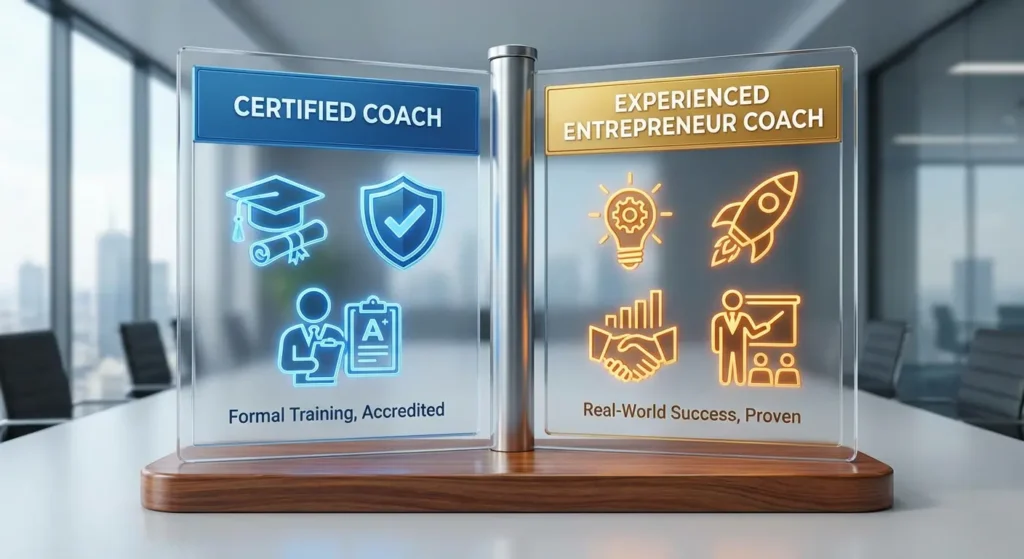
Both matter, but for different reasons. Certification proves they can coach. Experience proves they understand your world.
Ideally, you want someone who’s navigated challenges similar to yours. If you’re scaling past $1M in revenue, a coach who’s only worked with startups might miss the nuances. If you’re facing leadership challenges in a corporate environment, someone with only solopreneur experience may struggle to relate.
Ask: “Have you worked with businesses at my stage? What unique challenges did they face?” The answer reveals whether they truly understand your context or are guessing.
Can You Share Specific Client Results and Success Stories?
Testimonials are nice. Metrics are better.
When experienced coaches who’ve navigated challenges talk about client results, they get specific. They don’t just say “my clients achieve breakthroughs,” they explain what those breakthroughs look like in concrete terms.
Ask: “Can you share a case study of someone with challenges similar to mine? What were their starting metrics, and what changed?” Look for coaches who can describe the before-and-after with precision.
One client I worked with, Darren, came to coaching feeling stuck in his career despite a high income. He was blocked from promotions and couldn’t break through to starting his own business. Through identifying and eliminating his goal blocks, he experienced radical shifts in his thinking and behaviors that opened doors to the abundance he’d been chasing for years. That’s the kind of specific transformation you want to hear about.
Beyond Testimonials: Asking for Measurable Outcomes
Anyone can collect glowing reviews. The real question is: what changed, and by how much?
Press for numbers. Did a client’s revenue increase? By what percentage? Did team performance improve? How was it measured? Did leadership confidence grow? What specific behaviors shifted?
If a coach hesitates or falls back on vague language about “mindset shifts” without tying them to results, that’s a red flag. Transformation is real, but it should lead to tangible outcomes you can measure.
The Case Study Test
Here’s a powerful move: ask if you can speak with a past client. Not for a scripted testimonial, but for a real conversation about their experience.
Great coaches have clients who are eager to share their journey. If a coach can’t provide references or seems uncomfortable with the request, ask yourself why. The best partnerships create advocates, not just satisfied customers.
How Do You Measure ROI and Track Progress?

The direct answer: Great coaches use clear metrics, milestones, and accountability systems. They make progress visible, not vague.
One of the biggest mistakes in hiring a coach is choosing someone who talks about “transformation” without defining what success looks like or how to measure ROI from business coaching. You need a coach who establishes baselines, sets measurable goals, and tracks your movement toward them.
Ask: “How will we measure success? What metrics will we track? How often will we review progress?” The answer should be specific. If they say “you’ll feel different” or “you’ll know when you see it,” push for more. Feelings matter, but they’re not enough to justify your investment.
The best coaches create accountability structures that keep you moving forward. They might use weekly check-ins, monthly progress reviews, or specific tracking tools. They help you define what success means for your business, whether that’s revenue growth, improved team performance, or stronger leadership presence and then measure it consistently.
Warning signs appear when coaches make vague promises. “I’ll help you transform your business” sounds nice, but what does that mean? By when? Using what metrics? The continuous improvement approach means constantly evaluating what’s working and adjusting what isn’t and that requires measurement.
Another client, Heather, had prior NLP training but felt confused about how to integrate the techniques into her work. After working with a coach who emphasized clear methodology and measurable application, she gained unexpected business insights and a practical toolbox she could immediately use. That clarity came from having specific outcomes to track, not just concepts to discuss.
What Is Your Coaching Philosophy and Methodology?
Every coach approaches transformation differently. Some focus on mindset. Others emphasize strategy. The best integrate both and they can clearly explain their approach.

Ask: “What’s your coaching philosophy? Walk me through your typical process with a new client.” Listen carefully to the answer. Do they have a structured methodology, or do they “go with the flow”? Both can work, but you need to know what you’re signing up for.
Understanding Their Approach
Some coaches are pure “coaching”; they ask questions and help you discover your own answers. Others are more consultative, offering direct advice and strategies. Many blend the two.
NLP-based coaching methodologies, for example, combine powerful questioning with specific techniques for rewiring limiting beliefs and anchoring new behaviors. Understanding a coach’s toolkit helps you assess whether their methods align with your learning style and needs.
Be wary of coaches who say they don’t have a philosophy at all. That usually means they’re winging it. Even if they adapt to each client, they should have core principles and proven frameworks that guide their work.
Cookie-Cutter vs. Customized Programs
Here’s a critical question: “Do you use the same program for all clients, or do you customize your approach?”
Some coaches offer packaged programs for six months, twelve sessions, same curriculum for everyone. That can work if the program directly addresses your needs. But if you’re facing unique challenges, you want a coach who can adapt their methods to your situation.
Ask how they tailor their approach. What intake process do they use to understand your specific needs? How do they adjust when something isn’t working? The answer reveals whether they’re truly invested in your individual success or just moving you through a system.
What Challenges Do Your Clients Typically Face and How Do You Help Them Overcome These?
The direct answer: The best coaches anticipate obstacles and have proven strategies for navigating them.
This question reveals how realistic a coach is about the transformation process. If they claim everything goes smoothly, they’re either inexperienced or not being honest. Real growth involves obstacles, time constraints, mindset resistance, unexpected business crises, and accountability gaps.
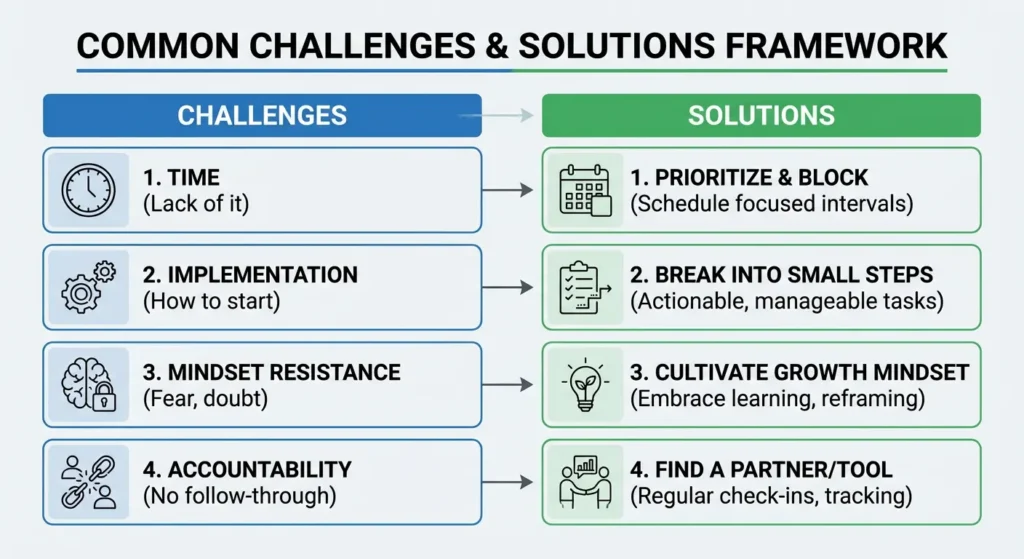
Evaluate potential coaches by how they talk about challenges. Do they normalize struggle? Do they have specific strategies for when clients hit walls? Do they prepare you for the inevitable tough moments?
Mike struggled with anxiety and self-doubt that were sabotaging his career growth. His coach used NLP techniques to address the mental noise and limiting beliefs. The result? Eliminated anxiety and transformed workplace confidence. But that didn’t happen overnight; it required working through resistance, building new mental patterns, and practicing uncomfortable situations.
Ask: “What happens when clients struggle to implement what we discuss? How do you handle it when someone falls off track?” You want a coach who sees setbacks as part of the process, not as failure.
Common challenges include carving out time for coaching work, maintaining momentum during business emergencies, and pushing through when progress feels slow. How will your coach help you navigate these? If they haven’t thought it through, you’ll be navigating alone when it matters most.
Red flag: Coaches who haven’t considered implementation barriers. If they assume you’ll just “do the work” without addressing why most people don’t, they’re setting you up for frustration. The best coaches build accountability, anticipate resistance, and have strategies ready for when motivation wanes.
Making Your Decision with Confidence
You now have a framework that separates transformational coaches from expensive disappointments. The right questions reveal credentials that matter, results that are measurable, methodologies that fit your needs, and accountability systems that ensure progress.
Here’s what this means for you: Don’t settle for motivational speeches disguised as coaching. Don’t accept vague promises of “transformation” without metrics. Don’t hire based on charisma alone; look for proven systems, specific results, and clear processes.
The transformational impact of expert coaching comes from finding someone who combines training with experience, strategy with accountability, and empowerment with practical tools. Someone who’s not just walked the path but knows how to guide you through yours.
Your next breakthrough starts with asking the right questions. Armed with this framework, you can confidently evaluate any business coach and protect your investment. How business coaching drives profitability isn’t magic; it’s the result of choosing the right guide and committing to the process.
Ready to transform your business with coaching that actually delivers results? The questions you ask today determine the success you create tomorrow. Choose wisely, and unleash your power.
Frequently Asked Questions
How much does a business coach typically cost?
Business coaching typically ranges from $200 to $1,000+ per session, or $3,000 to $25,000+ for package programs. Costs vary based on the coach’s experience, credentials, specialization, and program length. Investment level should align with expected ROI remember that quality coaching delivers an average 7X return on investment.
How long does it take to see results from business coaching?
Most clients begin seeing measurable results within 3 to 6 months of consistent coaching. Initial mindset shifts and clarity often appear within weeks, while larger business transformations like revenue growth or leadership improvements typically manifest over 6 to 12 months. Results depend on your commitment, implementation speed, and the complexity of your goals.
What’s the difference between a business coach and a consultant?
A business coach guides you to discover your own solutions through powerful questioning and accountability, focusing on leadership development and mindset. A consultant analyzes your business and provides direct advice, strategies, and sometimes implementation support. Many effective coaches blend both approaches, offering strategic guidance alongside transformational coaching.
Do I need a business coach or a life coach?
Choose a business coach if your primary challenges involve revenue growth, leadership, strategy, team management, or scaling operations. Choose a life coach for personal development, work-life balance, relationships, or career transitions. If business challenges stem from mindset or confidence issues, look for coaches trained in both business strategy and personal transformation techniques like NLP.
How often should I meet with my business coach?
Most effective coaching relationships involve bi-weekly or weekly sessions, typically 60 to 90 minutes each. Weekly sessions provide momentum and consistent accountability, while bi-weekly sessions allow more time for implementation between sessions. Frequency should match your goals’ urgency and your capacity to implement strategies. More frequent sessions accelerate results but require stronger commitment.