

You’ve built your business on personal relationships. Your customers know your name. You remember their preferences. There’s something authentic about the way you do business that technology can’t replicate, or can it?
Key Takeaway:
- Digital transformation is no longer optional for small businesses — it’s essential for survival and growth. Companies that embrace digital tools and strategies consistently outperform those that resist change. [1]
- The biggest benefits include increased efficiency, reduced operational costs, better customer experience, higher revenue through online sales, improved data-driven decision making, and the ability to compete with larger corporations. [1]
- Successful digital transformation for small businesses starts small and focused: optimizing your website for conversions, implementing CRM and automation tools, leveraging social media and email marketing, adopting cloud-based operations, and using data analytics to understand customer behavior. [2]
- The key is to treat digital transformation as an ongoing strategy rather than a one-time project. Small businesses that build a culture of continuous improvement and learning with technology gain a massive competitive advantage. [2]
Bottom Line: Digital transformation is the smartest investment small businesses can make today. Starting with the right tools and a clear strategy allows even small teams to operate more efficiently, serve customers better, increase revenue, and compete successfully in the modern marketplace.
Here’s the reality: 94% of Canadian small businesses are investing in technology right now. But here’s what most aren’t talking about: only 10% are actually succeeding at full integration. The gap isn’t about having the right software or the newest AI tools. It’s about leadership. When I work with business owners stuck in this exact spot, they tell me the same thing: “I don’t want to lose what makes us special.” I get it. I’ve walked the path from traditional approaches to embracing transformation without sacrificing authenticity. The shift isn’t about abandoning your values; it’s about amplifying them through leadership training that develops transformational mindsets.
Digital transformation for small businesses isn’t a technology problem. It’s a leadership challenge that requires specific mindset shifts and NLP techniques for business transformation, which provide the exact tools to navigate this change while keeping your team engaged and your customer relationships strong. This is about becoming the kind of leader who can guide people through uncertainty, not just implement new systems.
Why Digital Transformation Fails for Most Small Businesses (It’s Not the Technology)
Walk into any small business today and you’ll find technology everywhere. Cloud accounting software. Social media accounts. Maybe even a CRM system that costs thousands. But talk to the owner and you’ll hear frustration: “We bought the tools, but nothing really changed.”
Sound familiar?
The Real Problem: Leadership Mindset, Not Tech Tools
The technology works. What doesn’t work is trying to bolt digital tools onto an unchanged leadership approach. A recent study of 1,683 Canadian business owners found something revealing: while the vast majority have started using digital tools, only 10% qualify as “Leaders” businesses that have fully integrated technology across all core functions. Another 45% are “Implementers,” using tools in some areas but not extensively.
The difference isn’t the budget. It’s not even the technology itself. It’s the leadership mindset driving adoption.
When Canadian small businesses are leading globally in technology adoption, with 94% prioritizing tech investment compared to 87% worldwide but most still struggle with integration, we’re looking at a leadership gap, not a technology gap.
The Cost of Standing Still (And the Reward of Getting It Right)
Let me give you the numbers that matter. Businesses that successfully transform see productivity increases of 29% on average. They generate $1.60 for every dollar invested in digital tools. The “Leaders” who fully integrate? They’re seeing $2.40 back for every dollar spent, which is 1.7 times higher returns than their less-integrated competitors.
But here’s the catch: 55% of businesses need up to two years to see returns. That’s two years of leading through uncertainty. Two years of helping your team adapt. Two years of maintaining customer trust while systems change. Technology implementation takes weeks. Leadership transformation takes commitment.
This explains why many small businesses struggle to scale. They invest in tools expecting instant results, but transformation without the right leadership mindset becomes just another expense line.
The Leadership Mindset Shift Required for Digital Transformation
When I work with business owners on transformation, we don’t start with software selection. We start with identity. Who are you as a leader? How do you respond to change? What beliefs are holding you back?
One business professional I worked with, Darren, felt stuck despite having all the right resources. Through identifying and eliminating his “goal blocks”, limiting beliefs about what was possible, he experienced radical shifts in thinking and behavior that transformed his career trajectory. The same principle applies to business transformation: the technology is available, but mental blocks about change often keep leaders stuck.
Here’s what this means for you: your mindset shapes everything that follows.
From Directive Management to Transformational Leadership
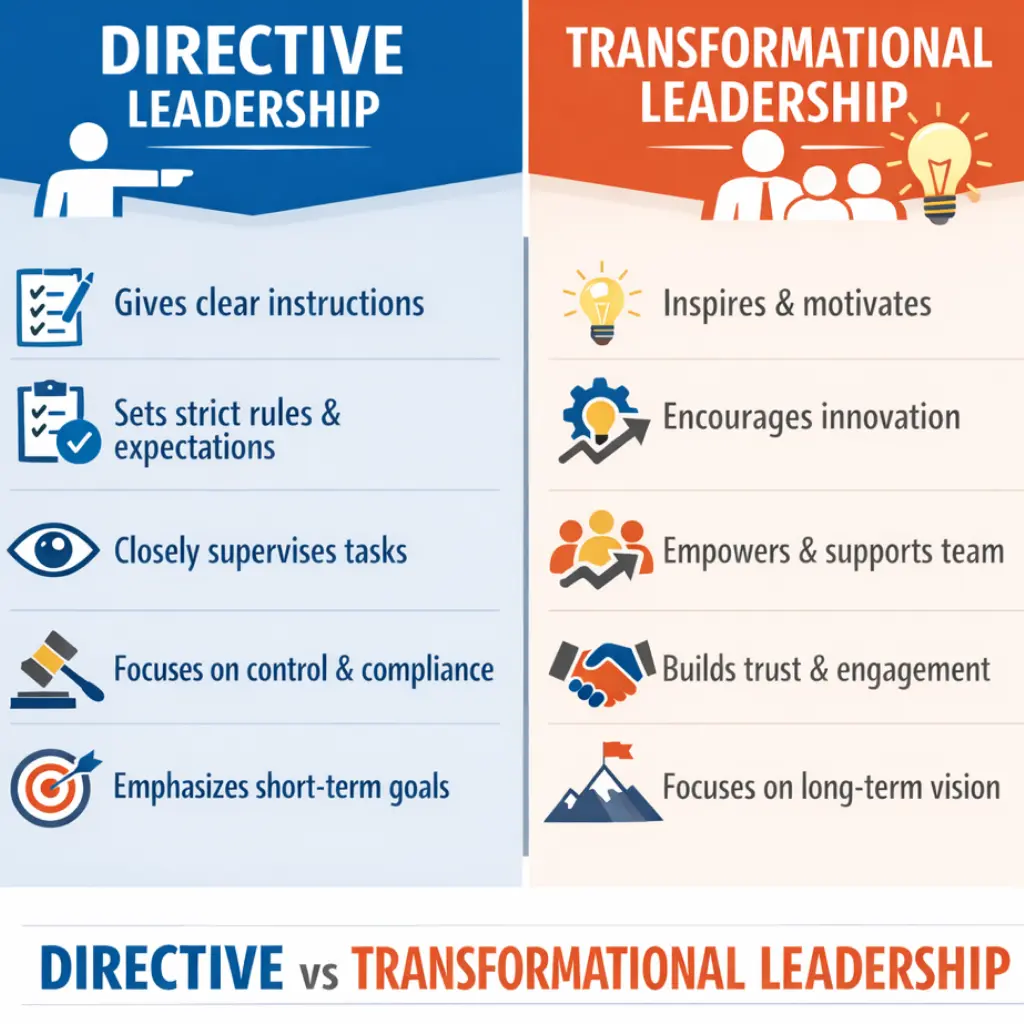
Traditional management says, “Here’s the new system. Learn it by Friday.”
Transformational leadership asks: “How can we solve this problem together? What if there’s a better way?”
Business leaders must adopt a transformational mindset that goes beyond simply implementing technology. This means shifting from telling people what to do to inspiring them to embrace what’s possible. It’s the difference between compliance and commitment.
Research on organizational change shows that one of the biggest challenges is bridging the cultural gap between old ways of working and new approaches. Leaders must shift from directive management to transformational leadership, from commanding to coaching, from controlling to empowering.
And the data backs this up. Digital leaders invest significantly more time in transformation efforts, spending 42% of their work week on digital initiatives compared to just 5% for those lagging behind. This isn’t about finding more hours in the day. It’s about prioritizing leadership over operations.
Cultivating a Growth Mindset in Your Team
A global management survey revealed that 93% of workers across industries say being digitally savvy is essential to performing well. But here’s the insight most miss: digitally savvy workforces expect digital transformation to reflect and respect their concerns and values, not just boost business capabilities.
Your team isn’t resisting technology. They’re resisting change that feels imposed rather than collaborative.
A growth mindset means treating failures as learning opportunities, not disasters. When you implement a new system, and it doesn’t work perfectly on day one, traditional leadership panics. Transformational leadership asks: “What did we learn? How do we adjust?”
This is where developing an entrepreneurial mindset through NLP becomes invaluable. NLP provides specific techniques for identifying and eliminating limiting beliefs, both yours and your team’s, that stand between current reality and successful transformation.
Creating Safe Spaces for Experimentation
Innovation doesn’t happen when people are afraid to fail. Corporate leadership coaching helps leaders build environments where experimentation is encouraged, where small pilots come before major rollouts, and where “test and learn” becomes the operating principle.
Think about it: when was the last time you tried something new in your business, knowing it might not work? If the answer is “I can’t afford failures,” you’re operating from scarcity, not abundance. Digital transformation requires calculated risks. Your job as a leader is to make those risks small enough to be safe, but meaningful enough to teach.
Start with pilot programs. Choose one process, one department, one customer segment. Test. Learn. Adjust. Then scale. This approach builds confidence in your team and gives you proof points to share as you expand.
How to Maintain Authenticity While Going Digital
This is the fear I hear most: “If I automate everything, won’t I lose the personal touch that makes my business special?”
Short answer: only if you do it wrong.
Digital Tools Should Enhance (Not Replace) Human Connection
Business transformation research shows that successful digital transformation isn’t about replacing processes; it’s about reimagining how your business relates to and interacts with customers. The technology should free you up for more meaningful human interaction, not less.
Think about your customer relationships. What takes time but doesn’t add value? Data entry. Searching for past orders. Remembering details across multiple spreadsheets. These tasks steal time from actual relationship-building.
Now imagine this: a customer calls, and before they finish introducing themselves, you’re looking at their complete history. You know what they bought, what they loved, and what didn’t work. You remember their preferences because your CRM does. Now you can spend the conversation actually helping them, not searching for information.
That’s using digital to enhance authenticity, not replace it.
The Personal Touch in a Digital World
Your personal touch isn’t about doing everything manually. It’s about genuine care, attention to detail, and making customers feel valued. Technology that gives you more time for these moments actually amplifies your authenticity.
Some examples:
- Automated reminders that let you follow up personally at the perfect time
- Analytics that reveal which customers need attention before they have to ask
- Systems that handle routine questions instantly, freeing your team for complex, relationship-building conversations
The question isn’t “Will I lose my personal touch?” It’s “How can I use these tools to be even more present for my customers?”
Case Example: Using CRM to Personalize, Not Automate Away Care
One of the biggest transformations I see is when business owners realize CRM isn’t about cold automation, it’s about warm personalization at scale.
Before CRM: You remember your top 20 customers perfectly. Everyone else gets generic service.
With CRM, you remember everyone. You know when they last purchased, what matters to them, and when to reach out. Your business feels personal to 200 customers, not just 20.
The technology doesn’t make you less authentic. It makes your authenticity scalable.
Your Small Business Advantage: Agility
Here’s the good news that gets buried in all the digital transformation hype: you’re not behind. You’re actually better positioned than large corporations for successful transformation.
Why Small Businesses Can Adapt Faster Than Large Corporations
Small businesses have a huge advantage in agility. Large companies have massive investments in legacy systems, complex approval processes, and organizational inertia. You don’t.
You can decide on Monday to try a new approach and implement it by Wednesday. Large corporations need committees, budgets, stakeholder buy-in, and six months of planning for the same decision.
A Small Business Majority survey shows that 52% of small business leaders expect AI to streamline operations and automate tasks. But unlike big corporations, you can test these tools immediately. No enterprise-wide rollout. No change management consultants are billing $300 per hour. Just you, making smart decisions quickly.
Strategic Thinking: Start Small, Build Momentum
Remember when I said transformation doesn’t require comprehensive overhauls? Here’s your strategy:
Identify your biggest pain point. What takes too much time? What causes the most errors? What frustrates your team daily?
Find one tool to solve it. Not a complete system overhaul. One specific solution for one specific problem.
Implement it fully. Don’t half-adopt technology. Choose it, commit to it, train your team, and use it consistently for 90 days.
Measure results. Did it save time? Reduce errors? Improve customer satisfaction? Get concrete data.
Share the win. Let your team see the success. Use it to build enthusiasm for the next change.
This approach builds momentum. Each small success makes the next change easier to embrace.
The Portfolio Approach to Digital Investments
Think like an investor. You wouldn’t put all your money in one stock, and you shouldn’t bet your entire business on one massive transformation project.
Spread your investments across multiple initiatives. Some will deliver immediate returns. Others will take longer. A few might fail, and that’s okay because they’re small enough not to sink you.
This portfolio approach means you’re always learning, always adapting, but never risking everything on one bet. It’s strategic, measured, and sustainable.
How do I start digital transformation without overwhelming my team?
Start with involvement, not announcements.
Before you buy any technology, talk to your team. What frustrates them? Where do they waste time? What would make their jobs easier? Digital transformation that begins with listening has a much higher success rate than a transformation that begins with executive decisions.
Then start small. Choose one process that affects everyone but isn’t mission-critical. Maybe it’s scheduling, internal communication, or expense tracking. Something that matters but won’t break the business if the first attempt isn’t perfect.
Implement with training and support. Don’t just buy software and expect people to figure it out. Invest in proper training. Give people time to learn. Celebrate early adopters who help others.
Build in feedback loops. After the first month, ask: What’s working? What isn’t? What needs to change? Then actually make those changes. Show your team that their input matters.
This approach transforms “change happening to us” into “improvements we’re creating together.” That’s how you avoid overwhelming people.
What leadership skills are most important for digital transformation?
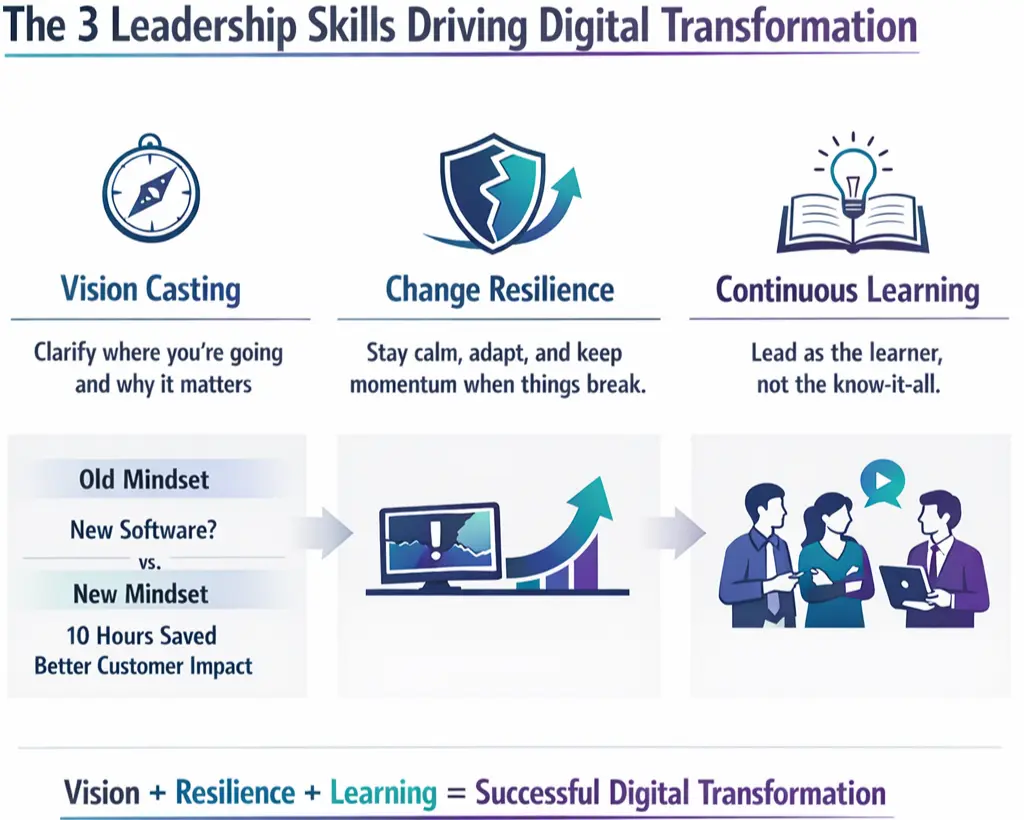
Three skills matter more than any others:
Vision casting. You need to articulate where you’re going and why it matters. Not “We’re implementing new software,” but “We’re freeing up 10 hours per week so we can serve customers better and you can focus on work that matters.”
Change resilience. Things will go wrong. Systems will glitch. The first approach might not work. Your ability to stay calm, adjust, and keep moving forward sets the tone for your entire team.
Continuous learning. If you position yourself as the expert who has all the answers, you’ll struggle. Position yourself as the lead learner who’s figuring this out alongside everyone else, and you’ll build trust and collaboration.
These aren’t skills you’re born with. They’re developed through practice, coaching, and intentional growth. That’s exactly what programs focused on leadership development provide: the frameworks and techniques to build these capabilities systematically.
How can I keep my business’s personal touch while adopting digital tools?
Your personal touch is your advantage. Protect it fiercely, but understand what it actually is.
Personal touch isn’t a manual process. It’s genuine care, attention to detail, and making people feel valued. Digital tools that give you better information and more time actually enhance your ability to be personal.
The key is intentionality. When you adopt any digital tool, ask: “How does this give me more capacity for genuine human connection?” If the answer is unclear, reconsider the tool.
Automate the transactional. Personalize the relational. Let systems handle routine tasks, so you have more energy and attention for moments that matter: the customer who needs advice, the employee who needs encouragement, the decision that requires wisdom.
Your customers don’t want you to remember their order number. They want you to remember what matters to them. Technology helps you do exactly that.
What’s the typical ROI timeline for digital transformation in small businesses?
Based on a recent Microsoft study of Canadian SMBs, 71% of small and medium-sized businesses are now using AI and digital tools actively. The data on returns is encouraging:
55% of businesses see ROI within the first two years. That’s faster than most people expect. The key is measuring correctly, not just financial returns, but time saved, errors reduced, and customer satisfaction improved.
Within the first year, businesses report an average 29% productivity increase. That’s significant. If your team of five people gains 29% more productive hours, that’s like adding more than one full-time employee without the hiring costs.
The businesses that see the fastest returns share common traits: they start with clear objectives, measure consistently, and adjust quickly when something isn’t working. They treat transformation as a learning process, not a one-time implementation.
Here’s what matters more than timeline: momentum. Quick wins in months 2-3 build enthusiasm that carries you through the longer-term changes. That’s why starting small and building momentum works better than comprehensive overhauls.
FAQs
What does digital transformation actually mean for small businesses?
Why do most small business digital transformation efforts fail?
How can small business leaders start digital transformation without overwhelming their team?
Can digital transformation improve customer relationships instead of harming them?
What leadership skills are most important for successful digital transformation?
Conclusion
Digital transformation for small businesses isn’t about becoming a tech company. It’s about becoming a more effective, more resilient, more customer-focused version of yourself.
The technology exists. The tools work. What determines success is your leadership mindset, your willingness to embrace change, guide your team through uncertainty, and maintain your authentic values while adopting new approaches.
You have advantages large corporations don’t: agility, direct customer relationships, and the ability to make decisions quickly. When you combine these advantages with transformational leadership skills, you’re not just surviving digital disruption; you’re thriving because of it.
The journey starts with a single decision: to lead differently. To see technology as an amplifier of your strengths rather than a replacement for your humanity. To build a culture where experimentation is safe, learning is continuous, and growth is inevitable.
You’ve already taken the first step by reading this. The next step is action. Whether that’s addressing one pain point with a new tool, having a conversation with your team about their frustrations, or seeking business coaching support to develop your transformation leadership skills, take decisive action today.
Because here’s what I know from walking this path myself and guiding countless others: the business owners who unleash their potential through digital transformation aren’t the ones with the biggest budgets or the fanciest tools. They’re the ones with the courage to lead through change while staying true to what makes them special.
That’s the transformation that matters. And it starts with you.