

Picture two versions of yourself. In the first, you’re drowning in client work at 11 PM, turning away opportunities because there aren’t enough hours in the day, and wondering if this is sustainable. In the second, you’re leading a capable team, focusing on strategy and growth, and watching your business thrive without requiring every minute of your attention.
Key Takeaway:
- Scaling a service business in Ontario requires systematic moves beyond just working harder—focus on repeatable processes, hiring the right people, leveraging technology, and building recurring revenue streams to grow profitably without burnout. [1]
- Core strategies: Document SOPs for every service to enable delegation; hire strategically (virtual assistants, specialists) using Ontario incentives (e.g., Canada-Ontario Job Grant); implement CRM/project tools (ClickUp, Asana, HubSpot) to automate workflows; shift to value-based pricing and retainers for predictable cash flow; outsource non-core tasks (bookkeeping, marketing). [1]
- Ontario advantages: Access to government funding (SR&ED tax credits, NOHFC grants, Digital Main Street), strong talent pool in Toronto/Ottawa/Waterloo, and growing demand in digital services, consulting, home services, and health/wellness—target 20–30% annual growth with 60–70% gross margins by systematizing delivery. [2]
- Common pitfalls: Scaling too fast without processes (leads to quality drop, client churn); underpricing services; ignoring compliance (WSIB, HST, employment standards); neglecting personal bandwidth—use a 90-day sprint model: Q1 systematize, Q2 hire/train, Q3 automate/market, Q4 optimize/profit. [2]
Bottom Line: Scaling a service business in Ontario is achievable and profitable with clear systems, smart hiring, tech leverage, and recurring revenue—focus on repeatable delivery and Ontario-specific incentives to build a sustainable, high-margin operation without sacrificing quality or sanity.
- Source: Unleash Your Power – How to Scale a Service Business in Ontario
- Source: Article Details / FAQs
The gap between these two realities? It’s not just hiring people. It’s mastering three interconnected skills: strategic hiring, effective delegation, and the psychological shift from doing everything to leading confidently. For Ontario service professionals, coaches, consultants, and specialists, this transition determines whether your business stagnates at your personal capacity or scales to genuine impact and freedom.
I’ve walked this path myself, and I’ve coached countless professionals through it. The struggle is real, but so is the breakthrough. Through business coaching and leadership training, I’ve seen what works and what keeps talented people stuck. You’re about to discover the roadmap that transforms overwhelmed solo operators into confident team leaders.
When to Know It’s Time to Scale Your Service Business
You hit a ceiling that doesn’t announce itself with fanfare. One day, you realize you’re working harder than ever, yet your revenue hasn’t budged in months. You’re turning down clients. You haven’t taken a real weekend off in six months. Your calendar looks like a game of Tetris, and sleep feels like a luxury you can’t afford.
This is the invisible ceiling that every service professional encounters. When you ARE the product, you can’t simply manufacture more of yourself. Your expertise, your time, your energy, they’re all finite. The math is brutal: more clients equal more hours, which eventually equals burnout.
Here are three unmistakable signals that scaling isn’t optional anymore. First, you’re consistently referring work to competitors because you can’t take on more clients. That’s money walking out the door. Second, you’re spending over 60 hours per week in client delivery, leaving zero time for business development or strategic thinking. Third, your revenue has plateaued for three consecutive quarters despite strong market demand.
Research shows that 70% of startups fail because they scale at the wrong time or in the wrong way. The key is assessing your financial readiness before making the leap. You need cash reserves to cover at least three months of new employee costs, including salary, benefits, equipment, and the productivity dip during training. Your cashflow must be predictable enough that you can pay people consistently, not just when clients pay you.
I remember hitting this moment in my own journey. I was passionate about the work, but the business was consuming me. The breakthrough came when I realized that staying small wasn’t humble, it was limiting my impact. If your expertise can truly transform lives, keeping it bottled up in your solo practice isn’t serving anyone.
Strategic Hiring: Building Your First Team in Ontario
Determining Your First Hire
The question isn’t whether to hire, but whom to hire first. Your instinct might be to clone yourself, someone who can deliver your services exactly as you do. Resist this urge. Your first hire should handle the work that drains your energy or sits outside your zone of genius.
Start by tracking your time for two weeks. Categorize every task into four buckets: work only you can do, work you’re good at but others could handle, administrative tasks, and busywork. Your first hire should tackle that second or third category.
For coaches and consultants, common first hires include a virtual assistant to handle scheduling and client communications, an administrative coordinator to manage systems and invoicing, or a junior practitioner to handle initial client consultations or specific program components. The key is finding someone who complements your strengths rather than duplicates them.
In Ontario, you’ll need to navigate some practical requirements. Apply for a Business Number through the Canada Revenue Agency if you haven’t already. Register for a payroll program account. Understand your obligations under the Employment Standards Act, which covers minimum wage, overtime, vacation time, and termination requirements. These aren’t obstacles; they’re the foundation of treating your team members properly.
The Hiring Process That Protects Your Culture
Your job description matters more than you think. Beyond listing tasks, it should communicate your values and what makes your business different. What matters to you? How do you treat clients? What does success look like in this role? The right person will read this and think, “This is exactly where I want to be.”
During interviews, skip the generic questions. Instead, explore alignment. Ask: “Tell me about a time you went beyond what was required to help someone achieve their goal.” Or: “Describe a situation where you had to learn something completely new. How did you approach it?” These questions reveal character, adaptability, and alignment with service-oriented values.
Once you’ve made an offer, the real work begins. Using NLP approaches to team development can help you communicate effectively from day one. Pay attention to how your new team member receives information, what motivates them, and how they process feedback. This awareness prevents misalignment before it becomes a problem.
Ontario Funding Resources for Growth
Here’s something many Ontario entrepreneurs don’t realize: significant funding exists specifically to support business growth. The Federal Economic Development Agency for Southern Ontario (FedDev Ontario) operates the Scale-Up Platform, providing over $47.5 million through organizations like Invest Ottawa, Communitech, and MaRS Discovery District.
These programs offer more than money. They provide mentorship, connections to capital, talent development resources, and strategic guidance. If you’re scaling a service business with growth potential, exploring these Ontario business growth funding options is strategic, not opportunistic.
Mastering Delegation: From Control to Clarity
The Delegation Mindset Shift
Let’s be honest about why delegation feels impossible. You’ve built your reputation on quality. You care deeply about your clients’ results. You’ve developed systems that work. And somewhere in your mind, a voice whispers: “If I want it done right, I need to do it myself.”
That voice is costing you your business’s future.
Service professionals struggle with delegation because their identity is wrapped up in being the person who does the work. But here’s the truth: the skills that got you here won’t get you where you want to go. Your perfectionism, your hands-on approach, and your ability to do everything became obstacles the moment you decided to scale.
The real cost of not delegating isn’t just your time. It’s the opportunities you miss, the strategic thinking you can’t do, the business development that doesn’t happen. Research shows that business owners who master delegation save 15-20 hours per week. What could you build with an extra 15-20 hours?
I coached a client named Darren who felt completely stuck despite a well-paying job. He couldn’t see how his need to control everything connected to his stagnation. Through identifying his goal blocks around success and delegation, he experienced radical shifts in his thinking and behavior. He stopped asking “Can I trust them to do it right?” and started asking “How can I set them up to succeed?” That shift transformed not just his career but every relationship in his life.
Reframe the narrative: You’re not losing control. You’re gaining leverage. You’re not becoming less valuable. You’re multiplying your impact.
The Eisenhower Matrix for Service Businesses
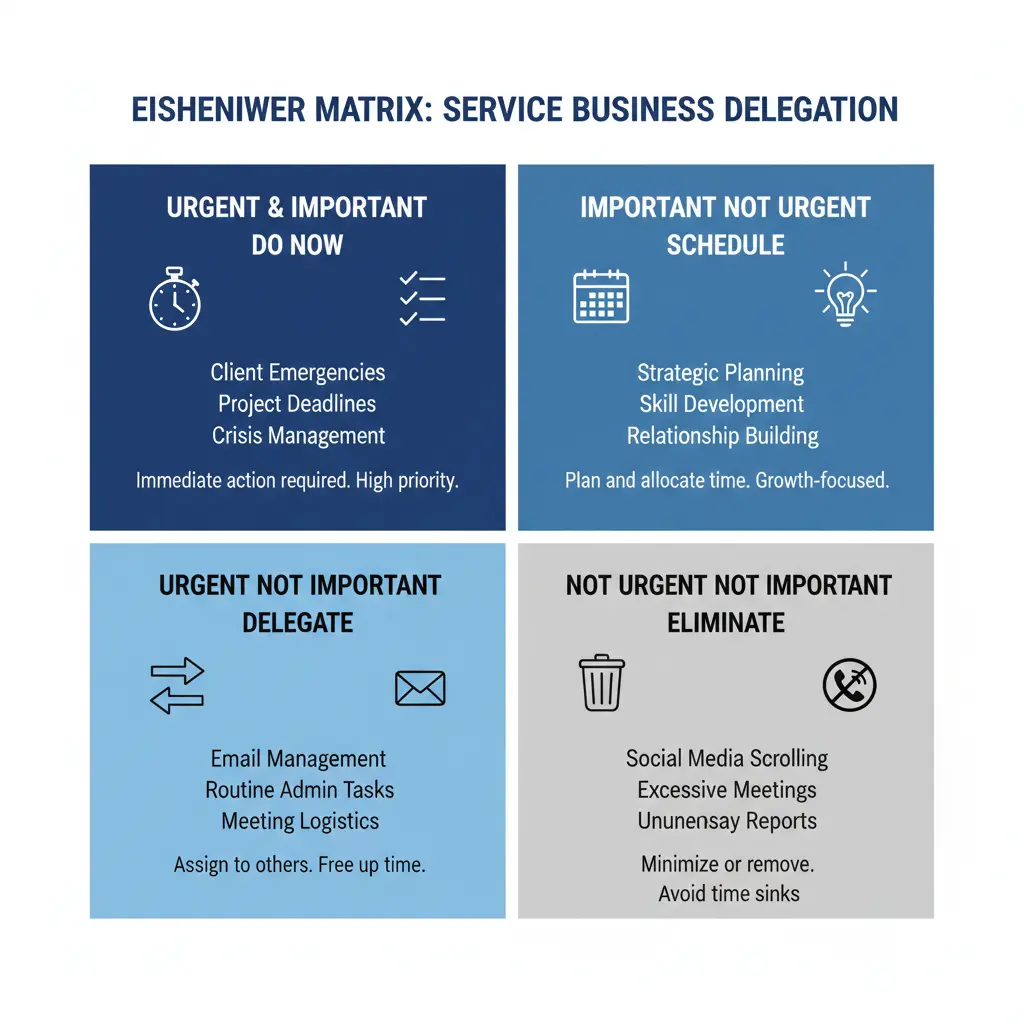
The Eisenhower Matrix provides a practical framework for deciding what stays on your plate and what gets delegated. It divides tasks into four quadrants based on urgency and importance.
Urgent and Important tasks demand your immediate attention. Client emergencies, critical deadlines, and strategic decisions that impact business direction these you handle personally.
Important but Not Urgent activities shape your future. Strategic planning, relationship building, skill development, system creation. These often get neglected, but they’re where sustainable growth lives. Schedule these, protect the time, and as trust builds, delegate some to key team members.
Urgent but Not Important tasks need doing now but don’t require your specific expertise. Email management, scheduling, routine client communications, and basic bookkeeping. This is your primary delegation target. These tasks eat your day but don’t leverage your unique value.
Not Urgent and Not Important activities should be eliminated entirely. Compulsive inbox checking, low-value networking events, and perfectionism on details that don’t impact outcomes. Cut these ruthlessly.
The proven delegation frameworks work because they force clarity. When you map your actual work into these quadrants, the path forward becomes obvious.
Creating Delegation Systems That Work
Effective delegation isn’t about dumping tasks on people and hoping for the best. It requires structure, clarity, and follow-through.
Start with the SMART framework for every delegated task. Specific: What exactly needs to happen? Measurable: How will you know it’s done well? Achievable: Does this person have the skills or resources? Relevant: How does this connect to larger goals? Time-bound: When is it due?
Document your processes through Standard Operating Procedures. These don’t need to be elaborate; a simple Google Doc outlining the steps, the tools, and the decision points works perfectly. When someone asks,s “How do I do this?”, you hand them the SOP instead of spending 30 minutes explaining. Even better, they can improve the process and update the document.
Establish clear communication protocols. How often will you check in? What communication channel for different types of questions? What decisions can they make independently, versus what requires your input? These boundaries prevent both micromanagement and abandonment.
Then comes the hardest part: stepping back. Schedule regular check-ins rather than constant monitoring. Ask “What support do you need?” instead of “Did you do it my way?” Celebrate progress and handle mistakes as learning opportunities. Your team members need space to develop their own approach within your frameworks.
Apply strategic goal-setting frameworks to your delegation practice. Set clear outcomes, measure progress, and refine the process. Delegation is a skill that improves with intentional practice.
The Psychological Shift: From Solo to Leader
Embracing Your New Role as Navigator
The transition from solopreneur to team leader requires a fundamental identity shift. You were the driver, controlling every detail from the wheel. Now you need to become the navigator, deciding where to go while your team executes the route.
As the navigator, your job is to answer critical questions: Where are we headed? Why does this matter? What should we tackle next? What obstacles do we need to avoid? You’re not less involved, you’re involved differently. Your decisions shape everything, but you’re no longer implementing every detail.
This shift starts with self-awareness, which research shows is the most important capability leaders develop. Understanding your strengths allows you to build a team that complements rather than duplicates you. Recognizing your weaknesses helps you identify where you need support. Knowing your triggers and default reactions makes you predictable and trustworthy as a leader.
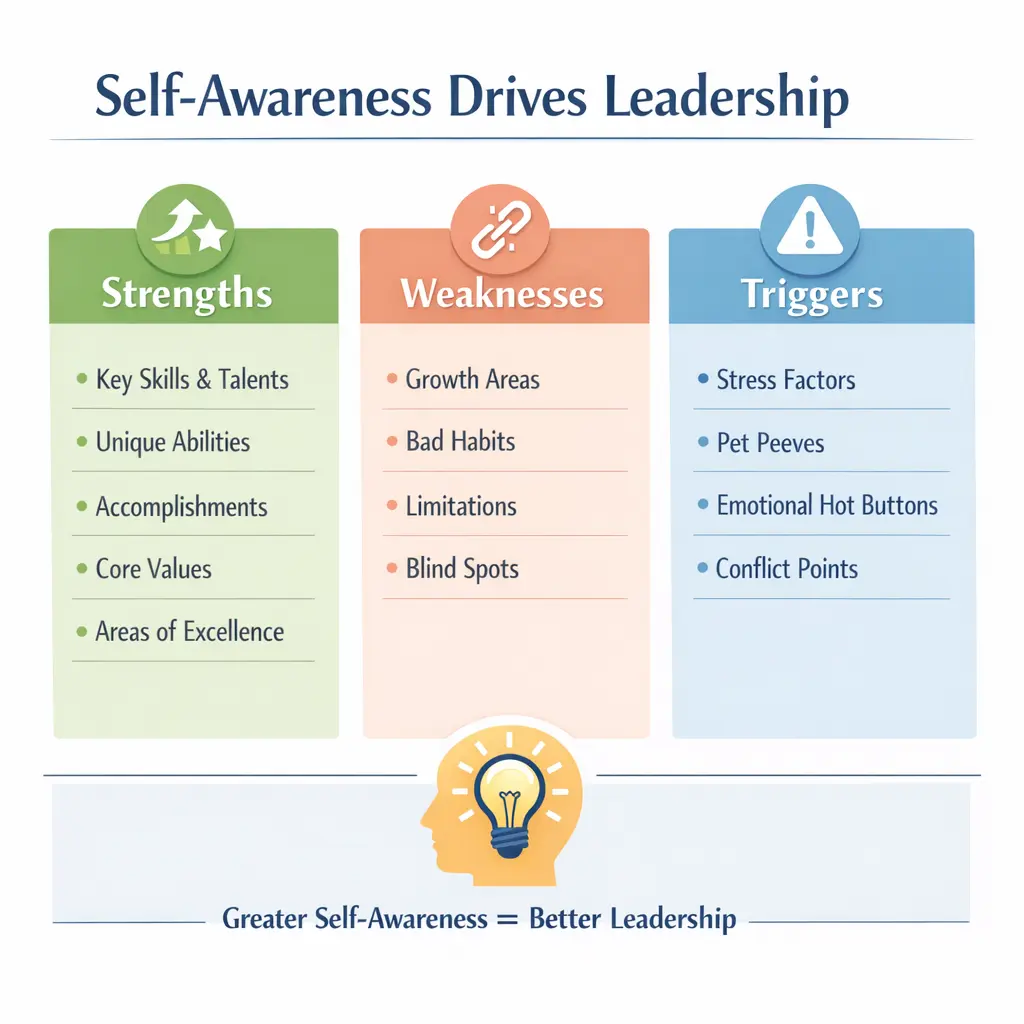
Self-awareness also means understanding that meetings aren’t wasted time; they’re how you multiply your influence. Every conversation where you provide direction, every check-in where you offer feedback, every moment you help someone work through a challenge is you leading. You’re not “getting less done.” You’re enabling five people to accomplish what you never could alone.
Building Trust Through Systems, Not Micromanagement
Trust isn’t given blindly. It’s built through clear expectations, consistent follow-through, and demonstrated competence over time. Your job is to create the conditions where trust can develop naturally.
Start by setting crystal-clear expectations upfront. What does success look like for this task? What’s the deadline? What resources are available? What decisions can they make independently? What requires consultation? When expectations are fuzzy, people fill in the gaps with assumptions, and disappointment follows.
Create feedback loops that support growth. Schedule brief weekly check-ins to review progress, address roadblocks, and adjust course as needed. Give specific, actionable feedback: “The client presentation was strong. Next time, lead with the outcome data in slide two; it’s your strongest point.” Avoid vague praise or criticism.
When mistakes happen and they will respond with curiosity, not blame. “Help me understand what happened” opens dialogue. “What would you do differently next time?” builds learning. “What do you need from me to prevent this?” transfers ownership. The team members who feel psychologically safe to fail learn fastest and contribute most.
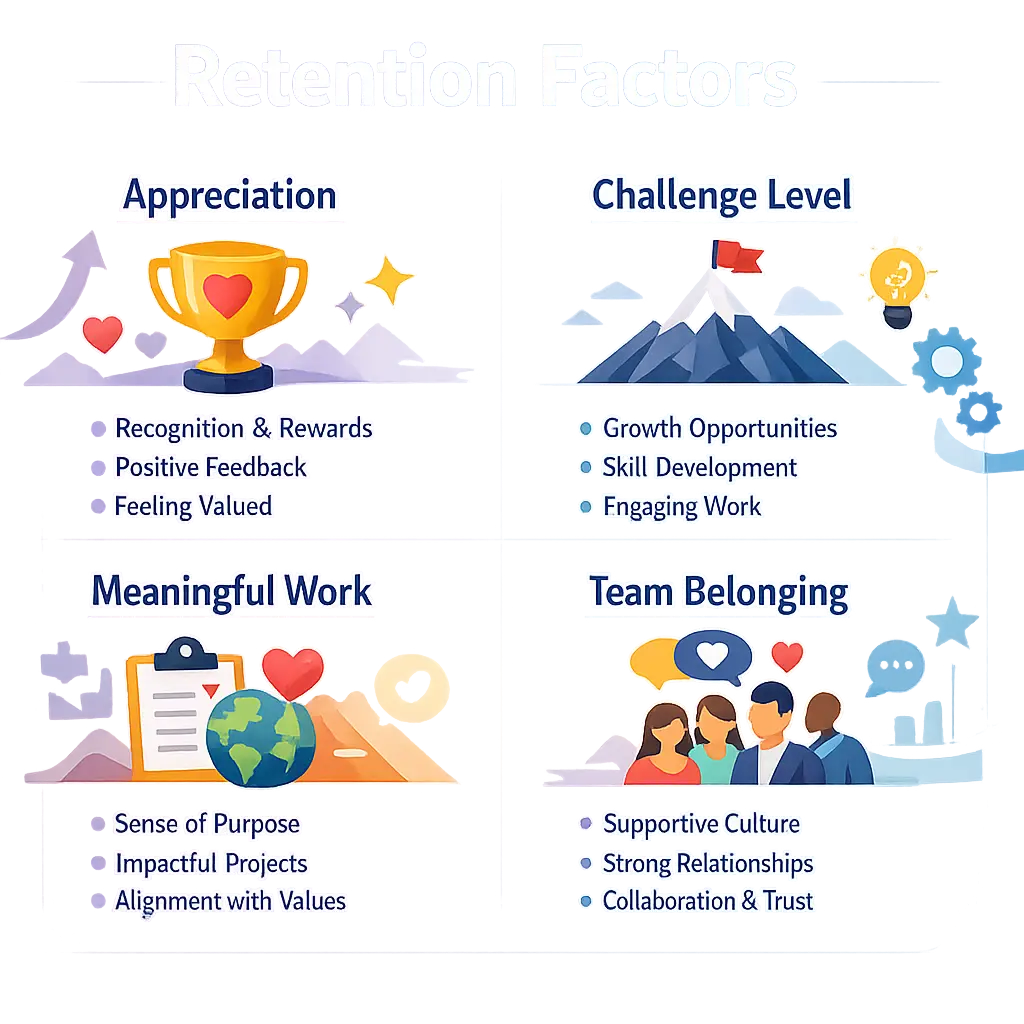
Implement techniques for employee retention from day one. People stay where they feel valued, challenged appropriately, and connected to meaningful work. Your role is creating that environment through authentic appreciation, growth opportunities, and a clear mission.
Managing Your Identity Transition
Letting go of being “the person who does everything” feels like losing a piece of yourself. Your competence, your worth, your identity, they’ve been tied to your ability to execute. Now you’re asking yourself to find fulfillment in other people’s execution.
This is normal. It’s also necessary.
Start asking yourself one question every Friday: “Did I personally do any work this week that I didn’t have to do?” If the answer is yes, that’s your delegation target for next week. This simple practice, shared in these essential mindset shifts for entrepreneurs, forces continuous improvement.
Find new sources of fulfillment. Instead of pride in completing tasks, take pride in developing people. Instead of satisfaction from perfect execution, find satisfaction in strategic wins. Instead of identity from doing, build identity from enabling. Your team’s growth becomes your growth. Their wins become your wins.
The compounding effect of this shift is remarkable. When you free up 20 hours per week from execution, you can invest in relationships that bring in bigger clients. You can develop new service offerings. You can finally build those systems you’ve been meaning to create. Your business transforms from a job you created for yourself into an asset that works whether you’re present or not.
What Should I Focus on as the Business Owner While My Team Handles Operations?
When you successfully delegate operations, your calendar opens up. What fills that space determines whether your business merely survives or genuinely thrives.
Strategic planning moves to the top. You’re thinking three to five years out instead of three days ahead. Where does your market need to go? How does your business need to evolve? What capabilities do you need to build now to serve that future? This thinking happens only when you’re not buried in delivery.
Business development becomes a priority. You’re cultivating relationships with ideal clients, creating strategic partnerships, speaking at events, and building your reputation. These activities generate exponential returns but never happen when you’re maxed out with client work.
Financial management requires your attention. You’re analyzing profitability by service line, identifying trends in your numbers, and making data-informed decisions about pricing and investment. The insights that come from truly understanding your numbers transform how you run everything.
Team development stays on your plate. You’re coaching team members, identifying training needs, fostering culture, and planning for growth. Your team’s capabilities determine your business’s ceiling, which makes their development strategic work.
Marketing strategy shapes everything. You’re defining positioning, creating content that attracts ideal clients, and building systems that generate leads predictably. Marketing done consistently compounds over time, but it requires protected time to execute well.
Quality assurance ensures your reputation stays intact. You’re reviewing client feedback, refining processes based on what you’re learning, and maintaining the standards that make your business excellent. This work prevents the quality drift that destroys businesses during growth.
How Do I Know If I Hired the Wrong Person?
Sometimes, despite your best efforts, a hire doesn’t work out. Recognizing this early prevents prolonged pain for everyone involved.
Red flags typically emerge within the first 30-60 days. Consistent missed deadlines without communication. Inability to follow documented processes even after multiple explanations. Resistance to feedbackis framed as defensiveness. Misalignment with core values shows up in how they treat clients or team members.
Distinguish between performance issues and cultural fit problems. Performance issues can often be solved through additional training, clearer expectations, or better systems. Cultural misalignment, with fundamentally different values about how work gets done, rarely improves with time.
Before concluding you hired wrong, examine your process. Did you provide adequate onboarding? Are your expectations clearly documented? Have you given specific, actionable feedback? Is this person set up to succeed, or are they drowning in ambiguity? Sometimes the issue isn’t the person, it’s the system.
When you determine someone isn’t the right fit, act quickly and kindly. Prolonging a bad fit serves no one. The wrong team member in the wrong role is miserable. Your clients suffer. Your business suffers. Having an honest conversation and parting ways professionally is more compassionate than slowly grinding toward inevitable termination.
The experience isn’t a failure; it’s data. What did you learn about your hiring process? What questions should you ask differently? What warning signs can you watch for? Every difficult personnel situation improves your ability to build a stronger team going forward.
FAQs
1. When is the right time to hire my first employee for a service business in Ontario?
You should consider hiring when you are consistently turning away clients or spending more than 50% of your time on non-revenue-generating tasks like admin or scheduling. In Ontario, financial readiness is key: ensure you have at least three months of cash reserves to cover the new hire’s salary, benefits, and equipment, as there is often a productivity dip during the initial training phase.
2. What are the legal requirements for hiring employees in Ontario?
To hire legally in Ontario, you must:
Apply for a Business Number (BN) through the Canada Revenue Agency (CRA).
Register for a payroll program account to handle income tax, CPP, and EI deductions.
Ensure compliance with the Ontario Employment Standards Act (ESA) regarding minimum wage, vacation pay, and overtime.
Register with the Workplace Safety and Insurance Board (WSIB) if your industry requires it.
3. How do I decide which tasks to delegate first?
Use the Eisenhower Matrix to categorize your workload. Focus on delegating tasks that are Urgent but Not Important (Quadrant 3), such as routine emails, invoicing, and scheduling. These tasks are essential for operations but do not require your specific “zone of genius.” By offloading these, you free up 15–20 hours per week for strategic growth and high-level client delivery.
4. Are there government grants or funding available for scaling a business in Ontario?
Yes, Ontario entrepreneurs can access several growth-oriented resources. A primary option is the FedDev Ontario Scale-Up Platform, which has allocated over $47.5 million to help businesses expand through organizations like Invest Ottawa, MaRS, and Communitech. Additionally, the Canada Ontario Job Grant (COJG) can provide financial support to help cover the costs of training new or existing employees as you scale.
5. How can I stop micromanaging and trust my new team?
The shift from “doer” to “leader” requires building systems of clarity, not control. Instead of hovering, create Standard Operating Procedures (SOPs) that document your processes. Use the SMART framework (Specific, Measurable, Achievable, Relevant, Time-bound) to set clear expectations. By establishing weekly check-ins and using curious feedback loops (e.g., “What support do you need to reach this goal?”), You empower your team to own their results.
Conclusion
The transition from solo operator to team leader isn’t just about business mechanics. It’s about becoming someone new, someone who leads rather than just executes, who multiplies impact rather than maximizing personal output, who builds something bigger than any individual contribution.
You’ve learned the three essential elements: strategic hiring that complements your strengths, delegation systems that create leverage, and the psychological shifts that allow you to step into leadership with confidence. These aren’t separate skills. They reinforce each other, creating momentum that transforms your business.
I’ve watched countless service professionals make this journey. The ones who succeed aren’t the most talented or the hardest working. They’re the ones willing to release their grip on doing everything and embrace the messy, rewarding work of leading people toward a shared vision.
If I could transform from someone struggling with confidence and clarity into a leader who guides others toward their breakthroughs, you can make this transition too. The overwhelmed version of you scrolling emails at midnight doesn’t have to be your forever reality. The confident leader version exists; you just need to give yourself permission to become that person.
Your Ontario service business holds potential that your solo efforts will never fully realize. Building a team isn’t about working less or cashing out. It’s about increasing your impact, serving more people, and creating something sustainable that doesn’t require your constant presence to survive.
Ready to transform how you lead and scale? Whether you need support with team management skills, strategic planning, or overcoming the common growth barriers for small businesses, Unleash Your Power provides the coaching and training that turns capable professionals into confident leaders.
Unleash Your Power: Stand Out, Take Action, and Create the Success You Want