
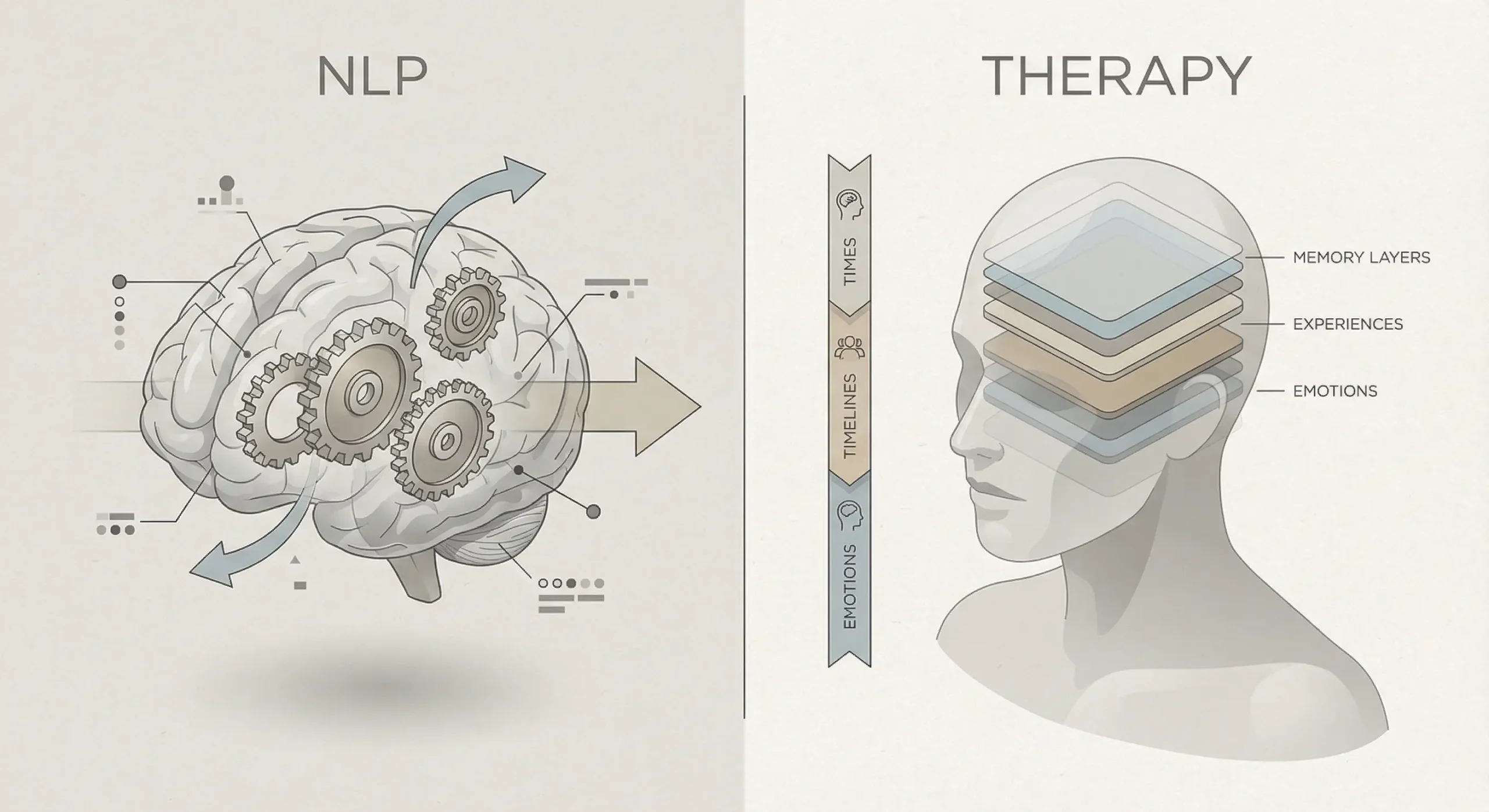
If you’re exploring NLP training or considering whether Neuro-Linguistic Programming is right for you, you’ve probably wondered about NLP vs. traditional therapy. How does NLP differ from traditional therapy? Is one better than the other? Should you choose NLP over therapy, or can they work together?
Key Takeaway:
- NLP (Neuro-Linguistic Programming) is a practical, solution-focused approach emphasizing “how” to change patterns for future success, using rapid techniques like anchoring and reframing ideal for behavioral shifts, performance enhancement, and goal achievement in weeks to months. [1]
- Traditional therapy explores “why” issues arise through past experiences and trauma, focusing on emotional healing, insight, and symptom reduction suited for clinical conditions like depression, anxiety, or PTSD, often requiring months to years with licensed professionals. [1]
- Neither is superior; NLP excels in quick, actionable tools for communication, confidence, and limiting beliefs (e.g., public speaking anxiety resolved rapidly), while therapy provides deep relational healing and diagnostics many benefit from combining both for past resolution and future skills. [2]
- Choose NLP for non-clinical goals like professional growth or habit change; opt for therapy if dealing with diagnosed mental health issues or deep trauma NLP cannot replace licensed treatment but complements it effectively. [2]
Bottom Line: NLP offers fast, practical tools for forward-focused change, while traditional therapy provides in depth healing for past-rooted issues combine them for comprehensive personal transformation based on your specific needs and goals.
These are important questions, and the answers aren’t as simple as “one is better.” Both NLP and traditional therapy offer powerful paths to personal transformation, but they approach change from fundamentally different angles. Understanding these differences helps you make informed decisions about your own development journey, whether you’re seeking personal growth, considering NLP certification, or simply exploring your options.
This educational comparison walks you through the core differences in approach, timeline, methodology, and outcomes without bias toward either method. You’ll understand when each approach shines, its limitations, and how they can complement each other for comprehensive transformation.
What Is NLP and What Is Traditional Therapy?
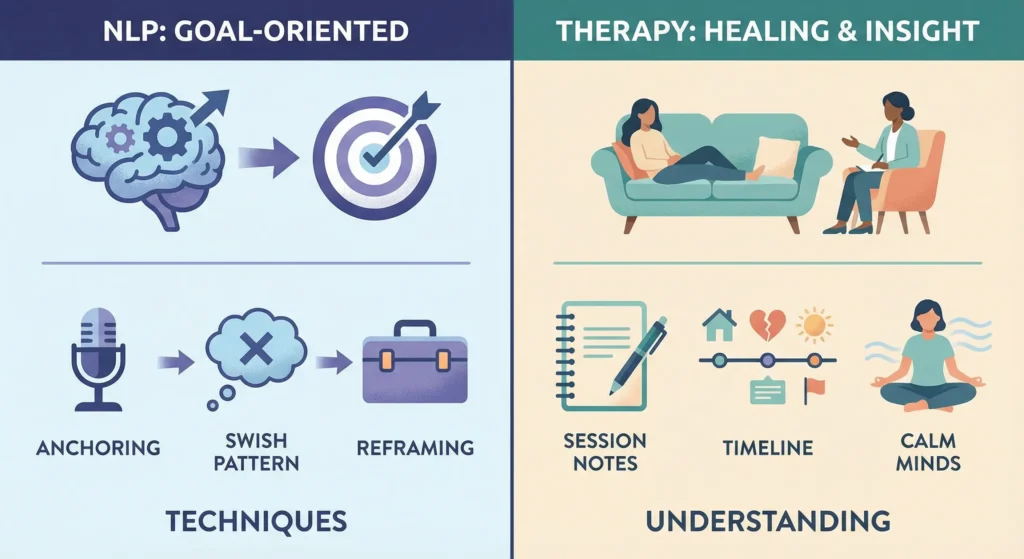
Before comparing these approaches, let’s establish clear definitions of what each one actually is.
Neuro-Linguistic Programming: Programming Your Mind for Success
Neuro-Linguistic Programming is a practical, solution-focused approach that studies how successful people achieve results and creates replicable techniques anyone can learn. The name breaks down into three components: “Neuro” refers to your nervous system and how you process information through your five senses. “Linguistic” relates to how language shapes your thinking and communication patterns. “Programming” describes the behavioral patterns you’ve learned that can be changed or optimized.
NLP emerged in the 1970s when Richard Bandler and John Grinder studied exceptional therapists, communicators, and change agents to identify what made them effective. They discovered specific patterns of language, behavior, and thought that produced consistent results. These patterns became the foundation of NLP techniques, practical tools for changing beliefs, managing emotions, improving communication, and achieving goals.
The core premise is simple yet powerful: if someone can do something excellently, that excellence can be modeled and taught to others. NLP provides the framework for understanding and replicating success patterns. This is why NLP is transformative for personal development, business performance, and interpersonal effectiveness.
Traditional Therapy: Healing Through Understanding
Traditional therapy encompasses various psychological approaches, including cognitive-behavioral therapy, psychodynamic therapy, person-centered therapy, and many others. These methods are typically provided by licensed mental health professionals, psychologists, psychiatrists, licensed clinical social workers, and counselors.
Therapy generally focuses on understanding the root causes of current struggles by exploring past experiences, childhood development, trauma, and unconscious patterns. The therapeutic relationship itself becomes a vehicle for healing, providing a safe space for processing emotions, gaining insight, and developing healthier coping mechanisms.
Traditional therapy often involves diagnostic assessments, may include medication management when working with psychiatrists, and follows established clinical protocols backed by decades of research. It’s particularly effective for treating diagnosed mental health conditions like depression, anxiety disorders, PTSD, and other clinical issues that require professional intervention.
How Do NLP and Traditional Therapy Differ in Approach?
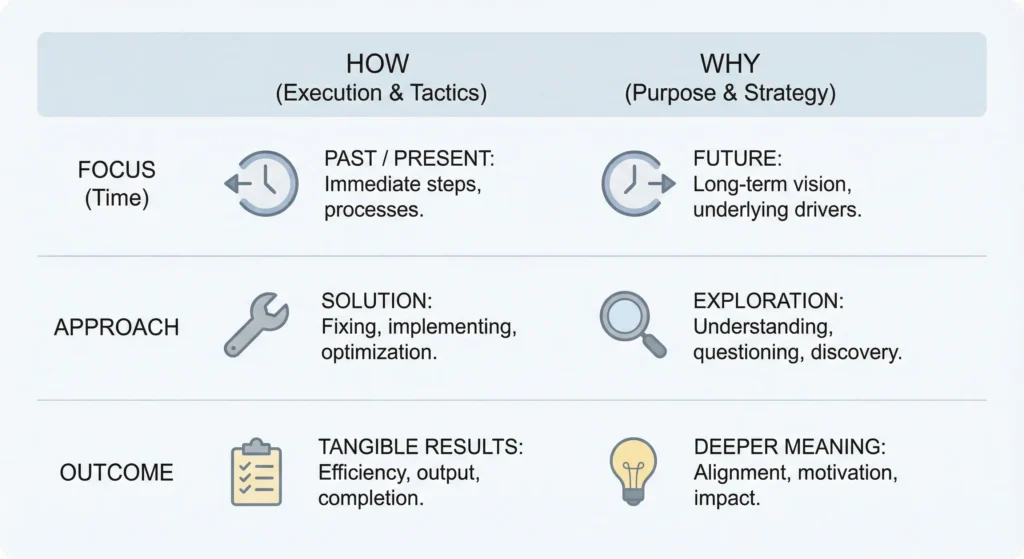
The fundamental difference lies in focus and direction. NLP concentrates on “how” you create your current experience and “how” to change it, while traditional therapy explores “why” you think and behave as you do.
NLP takes a forward-focused methodology that asks: “What do you want instead?” and “How can we get you there?” It doesn’t require extensive history-taking or deep exploration of past trauma. Instead, NLP practitioners help you identify the specific thinking patterns, beliefs, and behaviors that create your current results, then teach you techniques to modify those patterns directly.
This future-thinking perspective means NLP sessions focus on outcomes and solutions rather than analysis and understanding. If you’re struggling with public speaking anxiety, NLP doesn’t spend months exploring why you developed that fear. Instead, it teaches you techniques like anchoring positive states, reframing the experience, and modeling successful patterns of confident speakers to create immediate change.
Traditional therapy typically takes the opposite approach. It explores your past to understand present behavior. Why do you react strongly to criticism? What childhood experiences shaped your self-worth? How do unresolved issues from previous relationships affect current ones? Through this understanding, you gradually develop insight that leads to behavioral change.
The methodological differences extend to session structure. NLP training emphasizes specific techniques with clear steps, swish patterns, timeline therapy, belief change processes, and submodality shifts. You learn what to do and practice until competent. Traditional therapy varies significantly based on the therapeutic approach, with some methods highly structured and others more exploratory and conversational.
Neither approach is inherently superior. They serve different purposes and appeal to different needs. Some people need to understand their past to heal. Others find that understanding alone doesn’t create the change they need, and practical tools for different results now.
Timeline and Duration: How Quickly Do Results Appear?
One of the most striking differences between NLP and traditional therapy is the expected timeline for change.
NLP is designed for efficiency. Research and practitioner experience suggest that rapid results with NLP techniques can occur within weeks to months of consistent practice, with some individuals experiencing immediate shifts during or after sessions. This doesn’t mean NLP is superficial it means the techniques target specific patterns directly rather than working through layers of understanding first.
One of our clients, Mike, struggled with anxiety and self-doubt that affected his relationships and career. Through NLP techniques addressing his limiting beliefs and mental patterns, his anxiety disappeared and he now communicates with confidence transformation that happened in weeks, not years.
The speed comes from NLP’s focus on “how” rather than “why.” When you learn to interrupt a negative thought pattern and replace it with a resourceful one, change can be immediate. When you shift a limiting belief using submodality techniques, the effect is often dramatic and lasting. When you anchor a confident state you can access on demand, that resource becomes available instantly.
Traditional therapy typically requires longer timeframes, often months to years, depending on the issues being addressed and the therapeutic approach used. This extended timeline isn’t a weakness; it reflects the depth of work being done. Processing trauma, resolving deep-seated patterns, healing attachment wounds, and developing genuine self-awareness takes time.
The therapeutic relationship itself is part of the healing process in traditional therapy. Building trust, feeling safe enough to be vulnerable, and experiencing consistent support create change that goes beyond technique application. These relational elements can’t be rushed.
What “results” means also differs. In NLP, results often look like specific behavioral changes: you speak confidently in meetings, you no longer procrastinate on important projects, you maintain emotional control in challenging situations. In therapy, results might look like reduced symptom severity, improved relationships, greater self-compassion, or the ability to process difficult emotions without being overwhelmed.
Both timelines have value. Sometimes you need rapid, practical change. Sometimes you need sustained, deep healing. Understanding your specific needs helps determine which timeline serves you better.
When Should You Choose NLP vs. Traditional Therapy?
This is perhaps the most important question, and the answer depends entirely on your specific situation and goals.
Choose NLP when you’re focused on performance enhancement, skill development, and specific behavioral changes. NLP excels at helping you break through limiting beliefs that hold you back from success, improve communication skills for leadership and relationships, increase confidence in specific contexts like public speaking or sales, enhance emotional management and resilience, and achieve ambitious goals by modeling excellence.
NLP is also ideal when you want practical tools you can apply immediately. NLP techniques for personal growth give you a mental and emotional toolkit you control. You’re not dependent on ongoing sessions; you learn the techniques and use them independently.
If you’re an entrepreneur, business leader, coach, or professional seeking to elevate your performance and impact, NLP provides the frameworks and strategies that create measurable improvements quickly. Many people pursue NLP certification training specifically to enhance their professional capabilities and help others transform.
Traditional therapy becomes essential when you’re dealing with clinical mental health conditions. If you’re experiencing clinical depression that affects your daily functioning, anxiety disorders that significantly impair your life, trauma or PTSD that requires professional processing, serious mental health conditions like bipolar disorder or schizophrenia, or suicidal thoughts or self-harm behaviors, you need professional mental health support from licensed therapists or psychiatrists.
Therapy is also valuable when you want to understand yourself more deeply, heal relational wounds, work through grief and loss with professional support, or address long-standing patterns rooted in childhood or past experiences. The exploratory nature of therapy creates space for insight and healing that goes beyond behavior change.
Here’s the truth many people miss: these approaches aren’t mutually exclusive. The most powerful personal development often combines both. You might work with a therapist to process past trauma while learning NLP techniques to manage current stress and build confidence. You might complete NLP training to enhance your coaching practice while engaging in therapy for your own emotional health.
The complementary approach recognizes that you can benefit from understanding your past while building practical skills for your future. Deep healing and rapid change can coexist in your transformation journey.
Can NLP Replace Traditional Therapy?
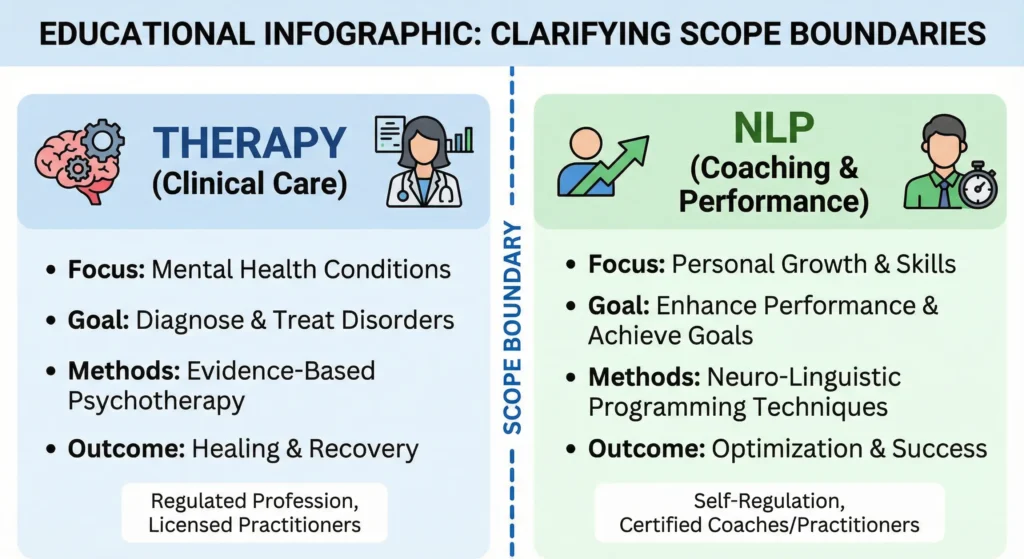
Let’s be direct: No, NLP cannot replace traditional therapy for clinical mental health conditions.
This distinction is crucial. NLP is not recognized as a form of psychotherapy by mental health regulatory bodies. NLP practitioners are not licensed mental health professionals unless they also hold separate credentials as therapists, psychologists, or counselors. NLP certification, while valuable, does not qualify someone to diagnose or treat mental health disorders.
If you’re struggling with serious mental health issues, you need professional help from licensed practitioners who can provide an appropriate diagnosis, treatment planning, and clinical intervention. This isn’t a limitation of NLP; it’s simply outside its scope and purpose. NLP was never designed to replace therapy; it was created as a complementary approach focused on modeling excellence and accelerating personal development.
That said, many licensed therapists incorporate NLP techniques into their clinical practice. They recognize that NLP offers powerful tools for rapid change that can enhance traditional therapeutic work. When used by qualified professionals within appropriate contexts, NLP and therapy work beautifully together.
The key is understanding what you’re dealing with. Performance anxiety about presentations? NLP can transform that quickly. Clinical anxiety disorder requiring diagnosis and potentially medication? You need a licensed professional. Limiting beliefs about money holding you back from business success? NLP provides effective techniques. Deep-seated trauma from childhood abuse? Work with a qualified trauma therapist.
Be honest about your needs. If you’re unsure whether your challenges require clinical intervention, consult with a licensed mental health professional for assessment. There’s no shame in needing therapy it’s actually a sign of wisdom and self-awareness to recognize when professional mental health support is appropriate.
Frequently Asked Questions (FAQs)
1. Can NLP help with clinical depression or anxiety?
No. NLP is not a substitute for clinical mental health treatment. While it offers tools for mindset management, clinical conditions require a licensed therapist or psychiatrist for diagnosis and medical oversight.
2. Which is better for professional growth?
NLP is generally superior for professional development, as it focuses on modeling excellence, improving communication, and breaking through limiting beliefs that hinder leadership or sales performance.
3. Do I have to choose just one?
Not at all. Many high-performers work with a therapist for emotional health and an NLP coach for strategic performance. They can work in tandem to provide both deep healing and practical action.
4. Is NLP “fake” therapy?
No, because it isn’t trying to be therapy. NLP is a methodology for modeling human excellence and communication. It is a separate discipline used in coaching, business, and personal development.
5. How do I know if I need therapy instead of NLP?
If your struggles significantly impair your daily ability to function, involve self-harm, or are rooted in severe past trauma, you should consult a licensed mental health professional first.
Understanding Your Path Forward
You now understand the core differences between NLP and traditional therapy. NLP focuses on practical, future-oriented change through modeling success patterns and learning specific techniques. Traditional therapy emphasizes understanding through exploring past experiences and the therapeutic relationship itself. NLP creates rapid results for specific behavioral and performance goals, while therapy provides sustained healing for mental health conditions and deep emotional work.
Neither approach is universally better they serve different purposes and excel in different contexts. The most powerful transformation often combines both approaches, using therapy for deep healing and NLP for practical skill-building and performance enhancement.
Here’s what matters most: you have options. Understanding these differences empowers you to make informed decisions about your personal development journey. You can choose the approach that fits your specific needs, timeline, and goals. You can work with both simultaneously if that serves you. You have the clarity to move forward confidently.
If you’re drawn to NLP’s practical, action-oriented approach for personal transformation or professional development, you’re in the right place. NLP provides tools you can learn, practice, and apply immediately for measurable results in your life, work, and relationships.
Ready to experience NLP’s transformative power? Explore our NLP training programs in Canada and life coach training certification to master the techniques that create rapid, lasting change. Whether you’re seeking personal transformation or professional certification, your journey starts with a single decisive step. Take it today.