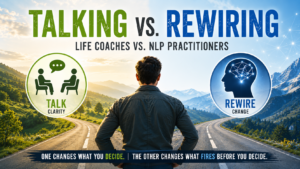
Scroll through enough coaching content online and you’ll eventually run into a promise like this one: “Release your trauma in a single session.” It sounds appealing, especially if you’ve been carrying something heavy for a long time and just want relief. But here’s the truth: claims like that deserve a healthy dose of skepticism.
I’ve spent over 20 years teaching NLP and working with clients on confidence, mindset, and communication. In that time, I’ve seen these tools genuinely change how people show up in their careers and relationships. I’ve also seen coaching promises get stretched way past what the techniques can actually deliver, especially when the word “trauma” enters the conversation.
Key Takeaway:
- NLP techniques such as anchoring and reframing may support confidence, mindset, and emotional regulation around everyday stress, limiting beliefs, and difficult experiences, but they should not be presented as treatments for clinical trauma. [1]
- Everyday emotional wounds and clinical trauma such as PTSD or complex PTSD are different. Coaching techniques may help with manageable stress and personal growth, while clinical trauma typically requires assessment and evidence-based treatment from a qualified mental health professional. [1]
- Current research does not support NLP as a clinical treatment for PTSD, generalized anxiety disorder, or depression. Evidence-based approaches recommended for PTSD include trauma-focused cognitive behavioral therapy and EMDR, making it important to match the type of support to the problem being addressed. [2]
- Coaching and therapy can complement each other when appropriate. A therapist can address clinical trauma, while an NLP coach can support goals such as confidence, communication, emotional resilience, and forward momentum within the coach’s professional scope. [3]
Bottom Line: NLP techniques may be useful for everyday stress, limiting beliefs, confidence, and emotional regulation, but they are not a clinically validated treatment for PTSD or complex trauma. The safest approach is to use coaching within its scope and seek qualified mental health care when clinical trauma symptoms are present.
- Source: Unleash Your Power – Can NLP Techniques Help With Emotional Trauma?
- Source: NICE – Post-traumatic stress disorder: recommendations
- Source: FAQs Section
So let’s separate what’s real from what’s marketing. In this article, you’ll learn what NLP techniques can realistically help with, what the current research actually says about NLP and trauma, and when the right next step is professional therapy instead of coaching. You deserve clarity, not hype.
What Do We Mean by Emotional Trauma?
“Trauma” gets used these days loosely, and that loose usage is part of the problem. Before we talk about what NLP can or can’t do, it helps to know what we’re actually talking about.
Everyday Emotional Wounds vs. Clinical Trauma
Not every painful experience rises to the level of a clinical condition, and that distinction matters more than people realize.
| Everyday Emotional Wounds | Clinical Trauma (PTSD / Complex PTSD) |
| Painful memories that still sting but don’t disrupt daily life | Intrusive flashbacks, nightmares, or dissociation |
| Limiting beliefs formed from past setbacks or criticism | Diagnosable conditions requiring clinical treatment |
| Stress responses tied to specific triggers (public speaking, conflict) | Symptoms that interfere with work, relationships, and safety |
| Often improves with mindset work, reflection, and coaching | Typically requires licensed, trauma-focused treatment |
Why the Difference Matters
Here’s what this means for you: the tools that help someone reframe a fear of public speaking are not the same tools needed to treat post-traumatic stress disorder. Using coaching techniques where clinical treatment is needed doesn’t just fall short, it can leave the real issue unaddressed. That’s why the distinction between coaching and therapy isn’t just semantics. It’s about matching the right support to the right challenge.
Where NLP May Support Emotional Growth
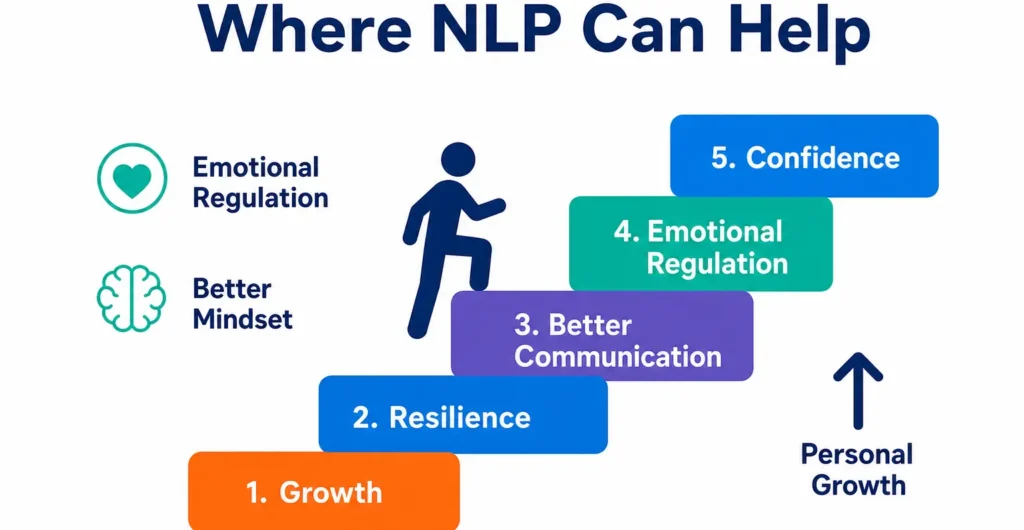
For professionals, entrepreneurs, and leaders dealing with everyday emotional wounds, NLP techniques can be genuinely useful. Let’s look at where they tend to shine.
Anchoring for Emotional Regulation
Anchoring works by linking a physical or mental cue to a specific emotional state, so you can call up that state when you need it. Think of the leader who touches their thumb and index finger together before walking into a high-stakes meeting, drawing on a feeling of calm they’ve practiced building. Or the entrepreneur who uses a steady breath and a mental image to settle nerves before a big pitch.
This isn’t about erasing pain from the past. It’s about giving you a practical tool to manage everyday stress responses in the present.
Reframing Limiting Beliefs
Reframing helps you look at a situation from a different angle, which can loosen the grip of thoughts like “I’m not good enough” or “I always mess this up.” These limiting beliefs often show up as fear of failure, imposter syndrome, perfectionism, or lingering doubt after a business setback.
One of my clients, Shirley Z., described how a breakthrough session helped her express her emotions honestly and stay present instead of holding onto past experiences. That kind of shift- learning to process what’s already happened so it stops running the show- is exactly what reframing is designed to support.
If you want to dig deeper into this process, I’ve written more about identifying the limiting beliefs holding you back and working through them with NLP.
Try This: Simple Confidence Anchor
- Recall a specific moment when you felt genuinely confident.
- Step into that memory: what did you see, hear, and feel?
- As the feeling peaks, press your thumb and middle finger together.
- Release, then repeat the process two or three times to strengthen the association.
- Use the same gesture before a stressful moment to help recall that state.
This exercise is designed for everyday stress and confidence, not for processing traumatic experiences. If a memory brings up overwhelming distress rather than manageable discomfort, that’s a signal to work with a licensed professional instead.
Why the Nervous System Matters in Emotional Healing
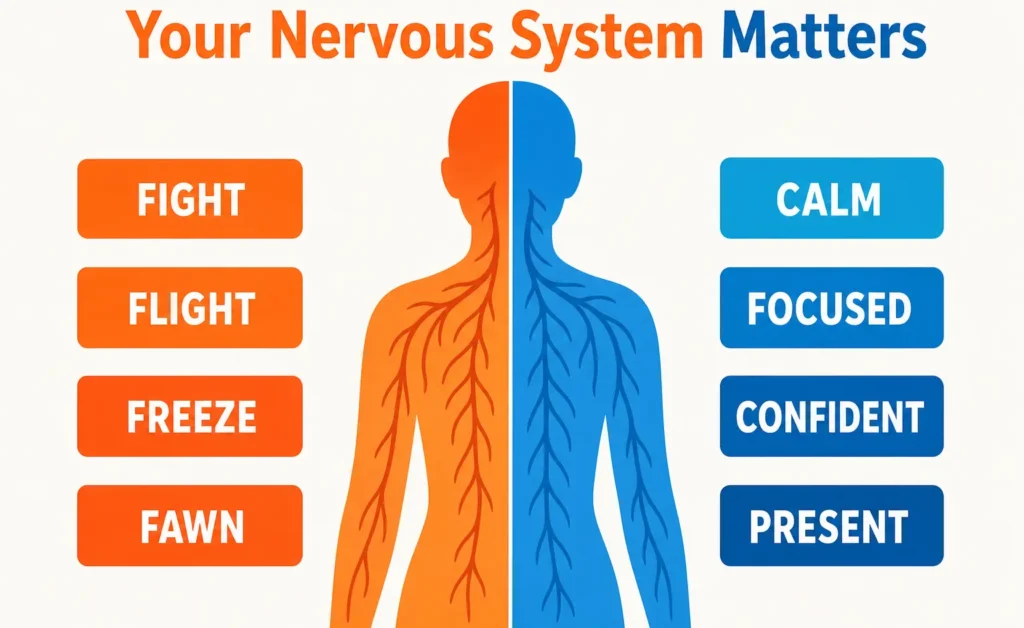
When you’re under stress, your nervous system automatically shifts into survival mode. This can trigger familiar responses often described as fight, flight, freeze or fawn, even when the situation isn’t physically dangerous. A difficult meeting, public speaking engagement, or conflict at work can all activate these protective patterns.
When this happens, it becomes harder to think clearly, stay confident, or make thoughtful decisions. That’s why simply telling yourself to “calm down” or “think positively” often isn’t enough.
This is where some NLP techniques may be helpful. Tools like anchoring, visualization, and reframing are designed to help you regulate your emotional state so you can respond more calmly to everyday challenges. They don’t erase difficult memories or treat trauma, but they may help reduce the intensity of stress in the present moment.
Understanding the role of the nervous system also explains why NLP coaching focuses on building emotional resilience and practical coping strategies rather than serving as a replacement for trauma-focused therapy.
Data and Findings
Personal experience and coaching outcomes can be meaningful, but they don’t replace clinical research, and it’s worth being upfront about what that research shows.
- No clinical evidence for PTSD, GAD, or depression. A Rapid Response review by the Canadian Agency for Drugs and Technologies in Health screened hundreds of citations and found no clinical evidence supporting NLP as a treatment for PTSD, generalized anxiety disorder, or depression, and no clinical guidelines recommending its use for PTSD or GAD.
- Meta-analyses consistently fall short. According to Wikipedia’s summary of the research literature, numerous literature reviews and meta-analyses have failed to show evidence for NLP’s underlying assumptions or its effectiveness as a therapeutic method, and the consensus scientific view treats it as pseudoscience.
- NICE recommends trauma-focused CBT and EMDR, not NLP. The UK’s National Institute for Health and Care Excellence guideline on PTSD recommends trauma-focused cognitive behavioral therapy and EMDR as the frontline psychological treatments for confirmed PTSD, with NLP absent from those recommendations entirely.
None of this means NLP tools are worthless. Many coaches and clients find real value in the communication and mindset techniques NLP offers, and that value doesn’t depend on NLP being a substitute for clinical care. It just means we should be honest about the difference between “this helped me manage stress” and “this is a proven treatment for a diagnosable condition.”
Coaching vs Therapy: Knowing the Difference
Understanding this distinction helps you choose the right support for what you’re actually facing.
| Coaching | Therapy |
| Future-focused, goal-oriented | May explore and address past trauma directly |
| Builds performance, confidence, and mindset | Provides mental health treatment |
| Doesn’t diagnose or treat conditions | Licensed clinicians diagnose and treat |
| A support model, working alongside your life | A medical model, treating a clinical need |
When NLP Reaches Its Limits
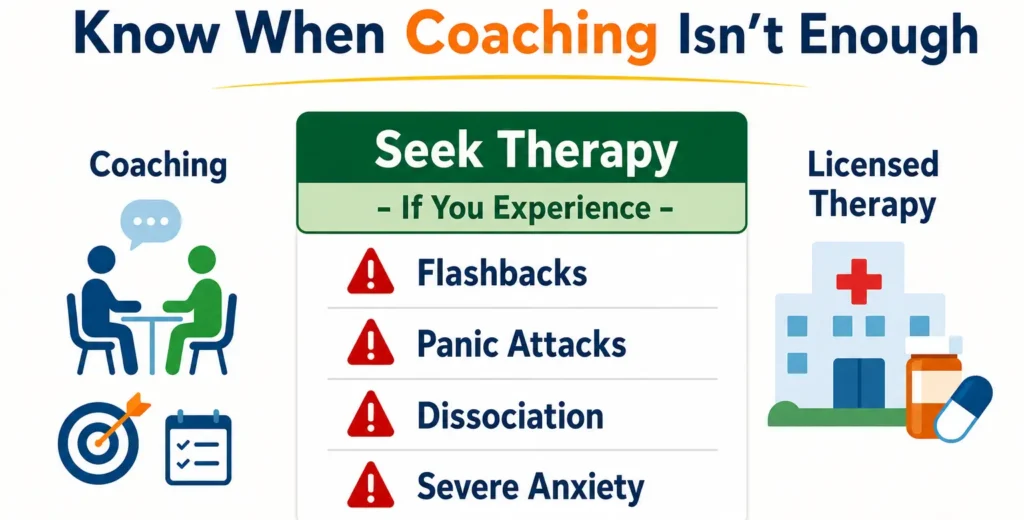
Good coaching includes knowing when coaching isn’t enough. That’s not a limitation of the practitioner; it’s a mark of ethical practice.
Signs Professional Mental Health Support Is Needed
Certain signs point clearly toward therapy rather than coaching: flashbacks or intrusive memories, panic attacks, dissociation, severe or persistent anxiety, and an inability to function in daily life. If you’re experiencing thoughts of suicide or self-harm, please reach out to a crisis line or emergency services right away rather than waiting for a coaching session.
Recognizing these signs isn’t about gatekeeping support. It’s about making sure you get support that actually matches what you’re dealing with.
Can NLP and Therapy Work Together?
Coaching and therapy aren’t rivals. Trauma-informed coaches understand their scope, recognize when a client’s needs go beyond that scope, and refer out when necessary. In practice, this often looks like a therapist addressing clinical trauma while a coach supports the mindset, confidence, and forward momentum piece alongside that clinical work. You’re not alone in navigating this, and you don’t have to choose just one form of support.
Try This: 5-4-3-2-1 Grounding Exercise
Name five things you can see, four you can touch, three you can hear, two you can smell, and one you can taste. This simple sequence brings your attention back to the present moment when stress or overwhelm starts to build.
This is a stabilizing technique, not a treatment. It can help you feel steadier in the moment, but it isn’t a substitute for addressing the root cause with the right kind of professional support.
Healthy Habits That Complement NLP Coaching
NLP techniques can help you change unhelpful thought patterns and respond more effectively to everyday challenges, but lasting emotional resilience is rarely built through one approach alone. Simple daily habits can reinforce the progress you make through coaching and make it easier to manage stress over time.
Some of the most effective habits include:
- Prioritize quality sleep: A well-rested brain is better equipped to regulate emotions, solve problems, and adapt to change.
- Stay physically active: Regular exercise can reduce stress, improve mood, and support overall mental well-being.
- Practice mindfulness or deep breathing: Even a few minutes each day can help you become more aware of your thoughts and emotional responses.
- Reflect through journaling: Writing about your experiences can help you identify recurring patterns, limiting beliefs, and areas for growth.
- Maintain supportive relationships: Talking with trusted friends, family members, or mentors can provide perspective and emotional support during difficult times.
These habits won’t eliminate life’s challenges, but they can strengthen the foundation that makes coaching techniques more effective. When combined with realistic expectations and consistent practice, they can help you build greater confidence, resilience, and emotional well-being.
Common Misconceptions About NLP and Emotional Trauma
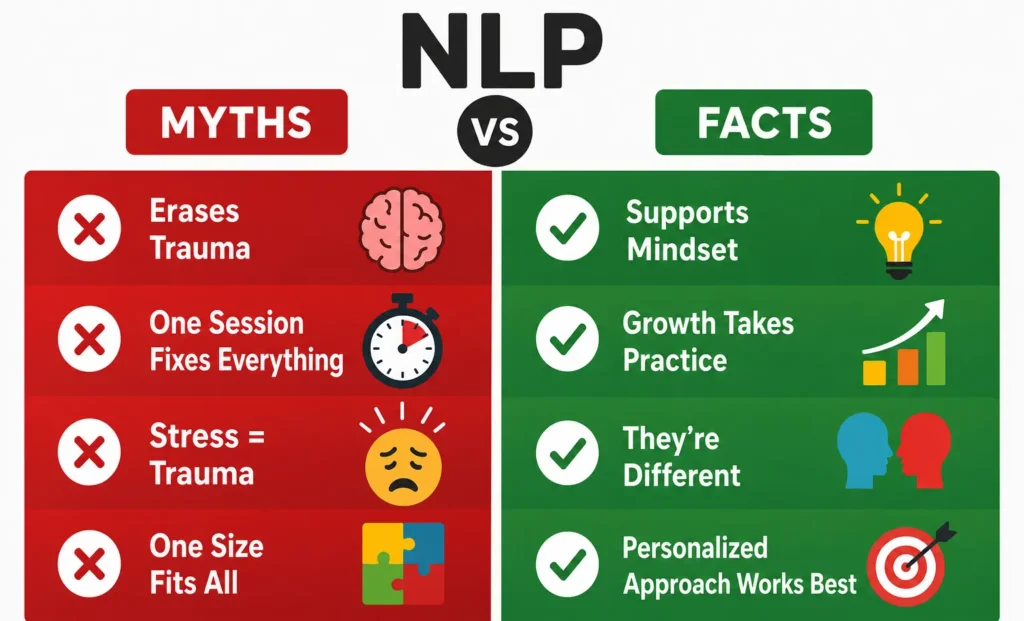
Because NLP is often discussed alongside personal transformation, it’s easy to find conflicting information online. Separating common myths from realistic expectations can help you make more informed decisions about whether NLP coaching is right for you.
Myth: NLP Can Erase Traumatic Memories
NLP doesn’t remove or erase memories. Some techniques may help people change how they respond to certain thoughts or situations, but traumatic memories themselves aren’t deleted. Treating trauma-related disorders requires approaches supported by clinical evidence.
Myth: One Session Can Solve Every Emotional Challenge
Some people experience meaningful breakthroughs quickly, especially when working on confidence, communication, or limiting beliefs. However, lasting personal growth usually takes ongoing practice and the consistent application of new habits.
Myth: Feeling Stressed Automatically Means You’ve Experienced Trauma
Stress, disappointment, grief, burnout, and clinical trauma are different experiences. While they can sometimes produce similar emotional reactions, they don’t require the same type of support. Understanding that distinction helps you choose the most appropriate path forward, whether that’s coaching, therapy, or a combination of both.
Why You’ll Find Conflicting Advice Online
If you’ve searched this topic before landing here, you’ve probably noticed the internet is full of contradictions. Some sites promise instant trauma release. Others dismiss NLP entirely. Here’s what this means for you: a lot of that noise comes down to the gap between marketing and evidence.
Coaching success stories are real and worth sharing, but a single testimonial isn’t the same as a clinical study. Ethical practitioners avoid promising trauma cures precisely because they understand that gap. The goal isn’t to oversell a technique; it’s to help you get real results while being honest about what those results can and can’t include.
When NLP May Be a Good Fit
Not every emotional challenge requires the same type of support. NLP coaching is generally most effective when you’re looking to improve how you think, communicate, and respond to everyday situations rather than treat a mental health condition.
You may benefit from NLP coaching if you’re looking to:
- Build confidence before presentations, interviews, or important conversations.
- Overcome limiting beliefs that hold you back personally or professionally.
- Manage everyday stress more effectively through practical mindset techniques.
- Improve communication and strengthen relationships at work or home.
- Develop greater emotional resilience after setbacks or disappointments.
- Create healthier habits and move toward specific personal or career goals.
If you’re experiencing symptoms such as flashbacks, panic attacks, dissociation, severe anxiety, or other signs of clinical trauma, it’s important to seek support from a licensed mental health professional. Coaching can still play a valuable role alongside therapy, but it shouldn’t replace evidence-based treatment when clinical care is needed.
Frequently Asked Questions
Can NLP cure PTSD?
No. Current research doesn’t support NLP as a clinical treatment for PTSD, and recognized clinical guidelines point instead to trauma-focused approaches like EMDR and trauma-focused CBT. If you suspect you have PTSD, a licensed mental health professional is the right place to start.
Is NLP the same as therapy?
No. NLP coaching is future-focused and goal-oriented, while therapy operates under a medical model that can diagnose and treat mental health conditions. Coaches don’t diagnose or treat clinical conditions, even when they use NLP techniques.
Can NLP and therapy be used together?
Yes, for many people they work well side by side. A therapist can address clinical trauma directly, while a coach supports confidence, communication, and forward momentum in daily life. Just make sure your coach understands and respects that boundary.
How long does NLP take to work?
It varies by individual and by goal. Some people notice a shift in confidence or mindset after just a few sessions, while deeper patterns take longer and consistent practice. Coaching isn’t a medical treatment, so there’s no fixed timeline the way there might be with a clinical protocol.
Is NLP safe for complex trauma?
If you’re navigating complex trauma, work with a licensed professional first, and make sure any coaching you pursue happens alongside that care rather than in place of it. A responsible coach will support that collaboration rather than discourage it.
Conclusion
NLP techniques like anchoring and reframing can genuinely support your confidence, mindset, and emotional regulation around everyday stress and limiting beliefs. What they aren’t is a clinically validated treatment for PTSD or complex trauma. Choosing the right kind of support for the right kind of challenge isn’t a compromise; it’s how you get better outcomes.
If you’re a professional, entrepreneur, or aspiring coach ready to strengthen your confidence and break through the beliefs holding you back, Unleash Your Power offers practical, NLP-based coaching built for exactly that. And if what you’re carrying goes deeper than mindset work can reach, take that as a sign of strength, not failure, and reach out to a licensed therapist who can meet you there.
Unleash Your Power: Stand Out, Take Action, and Create the Success You Want.