
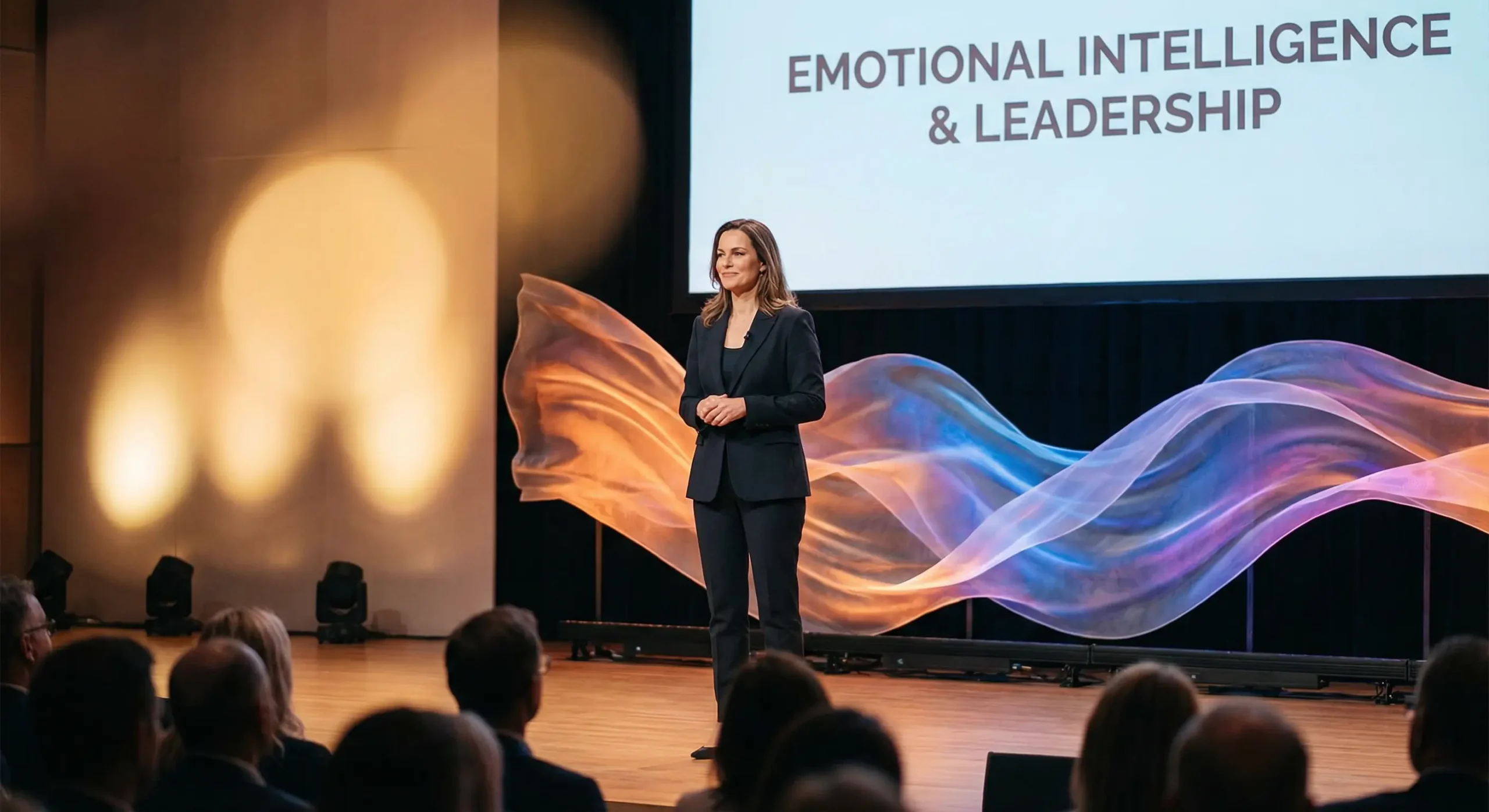
Leaders with high emotional intelligence earn an average of $29,000 more per year than their counterparts. But here’s what most people misunderstand: emotional intelligence isn’t about suppressing your emotions or becoming overly agreeable. It’s about mastering your internal state so you can lead with clarity, connect authentically, and make decisions from a place of strength rather than reactivity.
Key Takeaway:
- Anchoring creates a mental shortcut to positive emotions by linking a physical trigger (like touching your thumb and finger) to a confident memory, allowing instant access to calm or focus during stressful situations. [1]
- Reframing transforms negative thoughts into empowering perspectives, such as viewing a challenge as an opportunity for growth, helping leaders recover quickly from setbacks and maintain motivation. [1]
- Meta-modeling uses targeted questions to uncover hidden assumptions behind emotional reactions, enabling clearer thinking and reducing overreactions by challenging generalizations like “always” or “never.” [1]
- Sensory acuity sharpens awareness of subtle emotional cues in body language and facial expressions, improving self-regulation and empathy to better understand and respond to others’ feelings. [1]
- Perceptual positions involve shifting viewpoints from your own to another’s and an objective observer’s to build empathy, resolve conflicts, and make balanced decisions in team dynamics. [1]
- Pattern interrupts break negative thought loops with unexpected actions or questions, creating space to reframe and anchor positive states for more resourceful responses under pressure. [1]
- Rapport-building mirrors others’ body language, tone, and words ethically to foster trust and connection, enhancing communication and influence in leadership interactions. [1]
Bottom Line: These 7 NLP-based emotional intelligence techniques empower leaders to master emotions, build stronger relationships, and boost performance start with one like anchoring for 30 days to see transformative results.
Recent workplace research reveals that emotional intelligence accounts for 58% of job performance across all roles. For aspiring coaches, business leaders, and entrepreneurs, this isn’t just an advantage; it’s the skill that separates those who struggle from those who thrive.
In this guide, you’ll discover seven proven emotional intelligence techniques grounded in Neuro-Linguistic Programming that will elevate your leadership, deepen your professional relationships, and unlock the potential you’ve been holding back. These aren’t theoretical concepts; they’re practical tools you can apply starting today.
Why Emotional Intelligence Separates Good Leaders from Great Ones

Research from Harvard’s Division of Continuing Education identifies four core components of emotional intelligence: self-awareness, self-regulation, social awareness, and relationship management. Self-awareness forms the foundation; without understanding your own emotional patterns, you can’t effectively manage them or influence others.
Here’s the reality: Harvard Business School research shows that 90% of top performers have high emotional intelligence. Meanwhile, the world’s largest emotional intelligence study found that global EI scores have declined 5.54% from 2019 to 2023. As emotional intelligence becomes rarer, it becomes more valuable.
For aspiring coaches and entrepreneurs, this creates an unprecedented opportunity. While others struggle with reactive leadership and strained relationships, you can stand out by developing the emotional mastery that clients, teams, and partners desperately need. The demand for emotionally intelligent leaders is growing six times faster than other skills and leadership training programs that integrate emotional intelligence are now essential investments for serious professionals.
The question isn’t whether you need emotional intelligence. It’s whether you’re ready to develop it systematically using proven techniques that create lasting change.
What Are the Most Effective Emotional Intelligence Techniques?
The most effective emotional intelligence techniques combine self-awareness practices with NLP-based tools like anchoring, reframing, and perceptual positions to create lasting behavioral change. Unlike generic advice to “be more empathetic” or “control your emotions,” these techniques give you specific mental processes that rewire how you perceive, process, and respond to emotional situations.
NLP makes emotional intelligence development faster and more sustainable because it works with your neurology, not against it. Instead of forcing yourself to “stay calm” through willpower alone, you learn to trigger resourceful states on command, shift limiting perspectives instantly, and build genuine rapport without pretending to be someone you’re not.
Here are the seven techniques we’ll explore:
- Anchoring – Trigger confident, calm states instantly
- Reframing – Transform negative emotions into insights
- Meta-Modeling – Uncover hidden emotional patterns
- Sensory Acuity – Read yourself and others accurately
- Perceptual Positions – Build genuine empathy
- Pattern Interrupts – Break destructive emotional cycles
- Rapport-Building – Connect authentically with anyone
These aren’t isolated tricks. They’re integrated skills taught in comprehensive NLP training that work together to give you complete emotional mastery. Let’s break down each technique so you can start applying them immediately.
Technique 1: Anchoring for Instant Emotional Control
What Is Anchoring and Why It Works
Anchoring is a foundational NLP technique that creates a neurological link between a specific trigger and a desired emotional state. Think of how a particular song can instantly transport you back to a meaningful moment that’s a naturally occurring anchor. Through NLP-based emotional intelligence development, you learn to deliberately create these associations, giving you instant access to confidence, calm, or focus whenever you need it.
The technique works because your nervous system doesn’t distinguish between “real” experiences and vividly recalled ones. When you anchor a resourceful state, you’re essentially creating a shortcut that your brain can use to access that state on demand without waiting for external circumstances to change.
How to Create Your Confidence Anchor
Try this now: Recall a specific time when you felt absolutely confident and capable. Make the memory vivid, see what you saw, hear what you heard, feel what you felt. As the feeling peaks, press your thumb and forefinger together firmly for five seconds. Repeat this process three times with different confidence memories, using the same physical touch each time.
Now you have an anchor. Before your next important conversation or presentation, press your thumb and forefinger together, take a deep breath, and notice how quickly that confident state returns. This simple technique from advanced NLP techniques can transform your leadership presence in moments.
Technique 2: Reframing to Transform Negative Emotions

The Power of Perspective Shifts
Reframing changes the meaning you assign to situations without changing the facts. When you’re stuck in frustration, anxiety, or self-doubt, you’re not experiencing the situation itself you’re experiencing your interpretation of it. Emotional intelligence research shows that leaders who master reframing recover from setbacks 60% faster than those who don’t.
The most powerful reframe shifts problems into feedback. Instead of “This client rejected my proposal, I’m not good enough,” try “This client’s feedback shows me exactly what to improve. I’m one step closer to the right approach.” Same situation, completely different emotional response and action plan.
Practical Reframing Exercise for Daily Challenges
Keep a reframing journal for one week. Each evening, identify one challenging situation and write three alternative interpretations. At first, this feels forced. Within days, your brain starts generating reframes automatically. You’re training yourself to see obstacles as opportunities and criticism as information, the hallmark of emotionally intelligent leadership.
How Do You Develop Self-Awareness Without Overthinking?
Use Meta-Modeling questions and sensory acuity to observe your patterns objectively, then practice daily emotional check-ins without judgment. The key is observation, not analysis. Evidence-based emotional intelligence practices emphasize that self-awareness grows through noticing, not through endless introspection.
Technique 3: Meta-Modeling for Self-Discovery
Meta-Modeling asks precise questions that reveal hidden assumptions and beliefs driving your emotions. When you catch yourself thinking, “I always mess up presentations,” ask: “Always? Every single one? What specifically happens?” This challenges the generalization and forces your brain to look at specific, solvable behaviors instead of vague identity statements.
The technique dismantles limiting beliefs by exposing their logical flaws. You’re not becoming more positive; you’re becoming more accurate about reality, which naturally reduces unnecessary emotional suffering.
Technique 4: Sensory Acuity to Read Yourself and Others
Sensory acuity means paying attention to micro-signals, facial expressions, breathing patterns, muscle tension and vocal tone shifts. Health psychology experts note that developing this skill dramatically improves both self-regulation and social awareness.
Start with yourself. Notice what happens in your body right before you get defensive or anxious. Does your jaw tighten? Does your breathing become shallow? These early warning signals give you a window to intervene before the emotional cascade takes over.
One client struggled with anxiety and constant mental noise that blocked clear thinking through developing emotional self-awareness with NLP techniques. He transformed his career trajectory and now communicates with confidence. The shift came from learning to notice the physical signs of anxiety early and applying anchoring techniques before the spiral began.
Technique 5: Perceptual Positions for Building Empathy

The Three Positions That Change Everything
Proven NLP techniques for emotional mastery include Perceptual Positions, a structured way to view situations from three distinct perspectives:
First Position: Your own viewpoint with your emotions, needs, and concerns
Second Position: The other person’s perspective, imagining their thoughts and feelings
Third Position: An objective observer watching the interaction neutrally
Most conflicts and misunderstandings happen because we’re stuck in the first position. By mentally stepping through all three positions, you gain insights that transform how you approach difficult conversations and decisions.
Using This in Real Conversations
Before addressing a challenging situation with a team member or client, spend two minutes experiencing it from all three positions. Notice how the second position reveals concerns you hadn’t considered. Notice how the third position shows you the dynamics you were too emotionally invested to see. This isn’t just empathy; it’s strategic emotional intelligence that leads to better outcomes.
Technique 6: Pattern Interrupts to Manage Emotional Triggers
Breaking Negative Thought Cycles
Pattern interrupts disrupt automatic emotional responses by introducing unexpected stimuli. When you notice yourself spiraling into worry, frustration, or self-criticism, the pattern interrupt creates a momentary break that lets you choose a different response.
The technique can be physical (snapping a rubber band on your wrist, standing up suddenly), cognitive (asking an absurd question like “What color is Tuesday?”), or behavioral (doing something completely unexpected). The interrupt doesn’t solve the problem; it creates space for you to engage your prefrontal cortex instead of reacting from your amygdala.
Creating New Response Patterns
Pair pattern interrupts with reframing and anchoring for maximum impact. When you catch a negative thought pattern, interrupt it, then immediately reframe the situation and trigger a resourceful anchor. This three-step sequence rewires your automatic responses faster than any technique alone. Within weeks, your default emotional patterns shift from reactive to resourceful.
Technique 7: Rapport-Building Through Mirroring and Matching
The Science of Connection
Rapport is the foundation of emotional intelligence in relationships. Without it, even the most insightful feedback lands poorly and the best ideas get dismissed. Mirroring and matching create unconscious trust by subtly reflecting another person’s body language, vocal patterns, and communication style.
This isn’t manipulation, it’s meeting people where they are. When someone speaks slowly and thoughtfully, matching their pace shows respect for their processing style. When someone is animated and energetic, responding with similar energy demonstrates engagement. NLP communication strategies explain that people feel most understood when their communication preferences are honored.
Ethical Application in Leadership
The key is authenticity. Don’t become a chameleon, losing your identity; maintain your values and boundaries while becoming flexible in how you connect. Match about 60% of the time, then lead gradually toward your preferred pace and style. This builds trust first, then guides the interaction toward productive outcomes.
Aspiring coaches particularly benefit from mastering this technique. Your ability to create instant rapport determines whether clients open up or stay guarded, whether they trust your guidance or remain skeptical. The best life coach training certification programs dedicate significant time to developing this core emotional intelligence skill.
FAQs
What is the best way to improve emotional intelligence?
The best way to improve emotional intelligence is through daily practice of self-awareness and NLP techniques. Start with anchoring: link a physical gesture to a confident emotional state, then trigger it before important interactions. Practice reframing challenges into opportunities. Focus on one technique for 30 days before adding another. Consistent practice yields better results than sporadic effort across multiple skills.
How long does it take to develop emotional intelligence?
You can see initial improvements in emotional intelligence within 7-30 days of consistent practice. Techniques like anchoring and reframing produce noticeable results within the first week. Building deep emotional mastery typically takes 3-6 months of deliberate practice. However, emotional intelligence is a lifelong skill that top performers continue refining throughout their careers.
Can emotional intelligence be learned or is it innate?
Yes, emotional intelligence is learnable. Unlike IQ, which remains relatively stable, your EQ can improve significantly through training and practice. Research from Harvard confirms that structured emotional intelligence training produces measurable improvements. The four core components, self-awareness, self-regulation, social awareness and relationship management, are all developable skills, not fixed traits.
What are examples of emotional intelligence in leadership?
Emotionally intelligent leaders notice team energy shifts and adjust their approach accordingly. They view conflicts from multiple perspectives before intervening. They reframe setbacks as learning opportunities for their teams. They build rapport by matching communication styles. They remain calm under pressure and create psychological safety where team members can express concerns openly.
How does NLP improve emotional intelligence?
NLP improves emotional intelligence by providing actionable techniques that rewire emotional responses. Anchoring triggers resourceful states on command. Meta-modeling uncovers limiting beliefs. Sensory acuity improves emotional reading skills. Perceptual positions build genuine empathy. These techniques create faster, more measurable improvements than traditional approaches by working with your neurology rather than relying solely on willpower.
What is the difference between IQ and emotional intelligence?
IQ measures cognitive abilities like logic and reasoning. It’s relatively fixed and predicts academic success. Emotional intelligence (EQ) measures your ability to recognize and manage emotions in yourself and others. It’s developable and predicts workplace success. Research shows EQ accounts for 58% of job performance, while IQ has limited correlation with career achievement beyond entry-level roles.

Conclusion
Emotional intelligence isn’t a personality trait; you’re born with it’s a set of learnable skills that compound over time. The seven techniques you’ve explored here aren’t theory. They’re the foundation of genuine transformation, used by top performers across industries to lead with impact, build trust effortlessly, and navigate complexity with confidence.
You now have NLP-backed tools that give you immediate access to resourceful emotional states, the ability to reframe challenges into opportunities, and the social awareness to read rooms and build rapport naturally. These are the skills that differentiate leaders who inspire loyalty from those who create compliance, coaches who catalyze breakthroughs from those who offer generic advice, and entrepreneurs who build lasting ventures from those who burn out.
Start with one technique this week. Create your confidence anchor and use it before three important interactions. Notice what shifts. Then layer in reframing for your biggest recurring challenge. Within thirty days of consistent practice, you’ll see measurable changes in how you show up, how others respond to you, and how you navigate pressure.
According to leadership psychology research, emotional intelligence is a lifelong journey, not a destination. The leaders who commit to continuous growth in this area create ripple effects throughout their organizations, families, and communities. Your transformation starts today and the impact extends far beyond what you can currently imagine.
Which technique will you master first?